When Time Becomes Space
POKLONG ANADING, DATU ARELLANO, HENRIELLE BALTAZAR PAGKALIWANGAN, BUEN CALUBAYAN, MARIA CRUZ, DINA GADIA, TONY GODFREY, NILO ILARDE, LOU LIM, LILING LIU, PAM YAN SANTOS, GERARDO TAN, OCA VILLAMIEL, JEMIMA YABES
POKLONG ANADING, DATU ARELLANO, HENRIELLE BALTAZAR PAGKALIWANGAN, BUEN CALUBAYAN, MARIA CRUZ, DINA GADIA, TONY GODFREY, NILO ILARDE, LOU LIM, LILING LIU, PAM YAN SANTOS, GERARDO TAN, OCA VILLAMIEL, JEMIMA YABES
POKLONG ANADING, DATU ARELLANO, HENRIELLE BALTAZAR PAGKALIWANGAN, BUEN CALUBAYAN, MARIA CRUZ, DINA GADIA, TONY GODFREY, NILO ILARDE, LOU LIM, LILING LIU, PAM YAN SANTOS, GERARDO TAN, OCA VILLAMIEL, JEMIMA YABES
22 November - 31 December
Curated by
Tony Godfrey
22 November - 31 December
WHEN TIME BECOMES SPACE
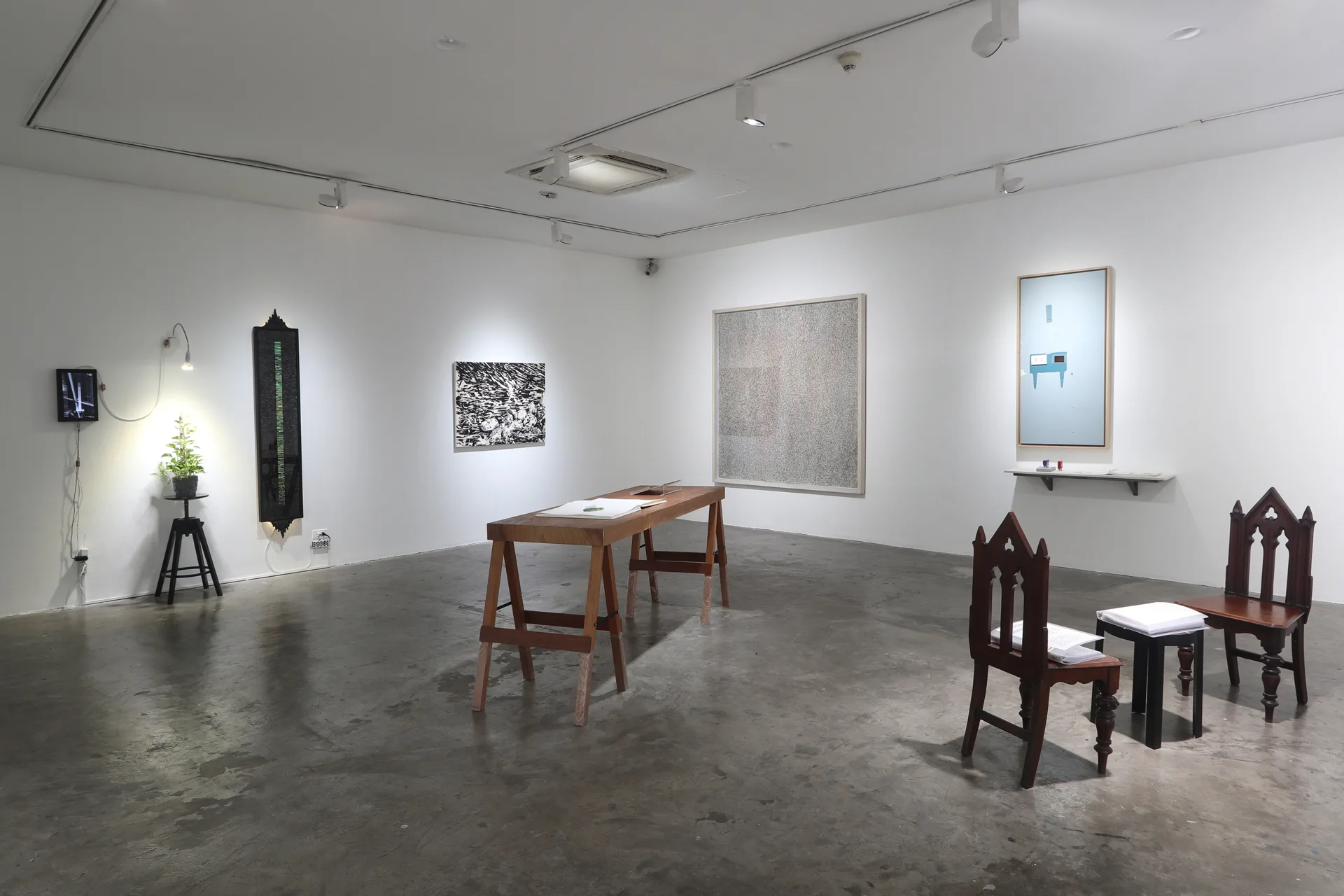
Art has always been about Time: preserving images and objects against the ravages of Time (the pharaohs of Ancient Egypt were big on that) or meditating on Time’s ravages (look at all those seventeenth century European paintings of rotting fruit, skulls, candles and hourglasses.) This is an exhibition about how we experience time nowadays. It’s a thinking exhibition. It’s not just for looking but also thinking about what it means to exist in time. Some of the works may seem hard to grasp at first: here are some short notes to help.
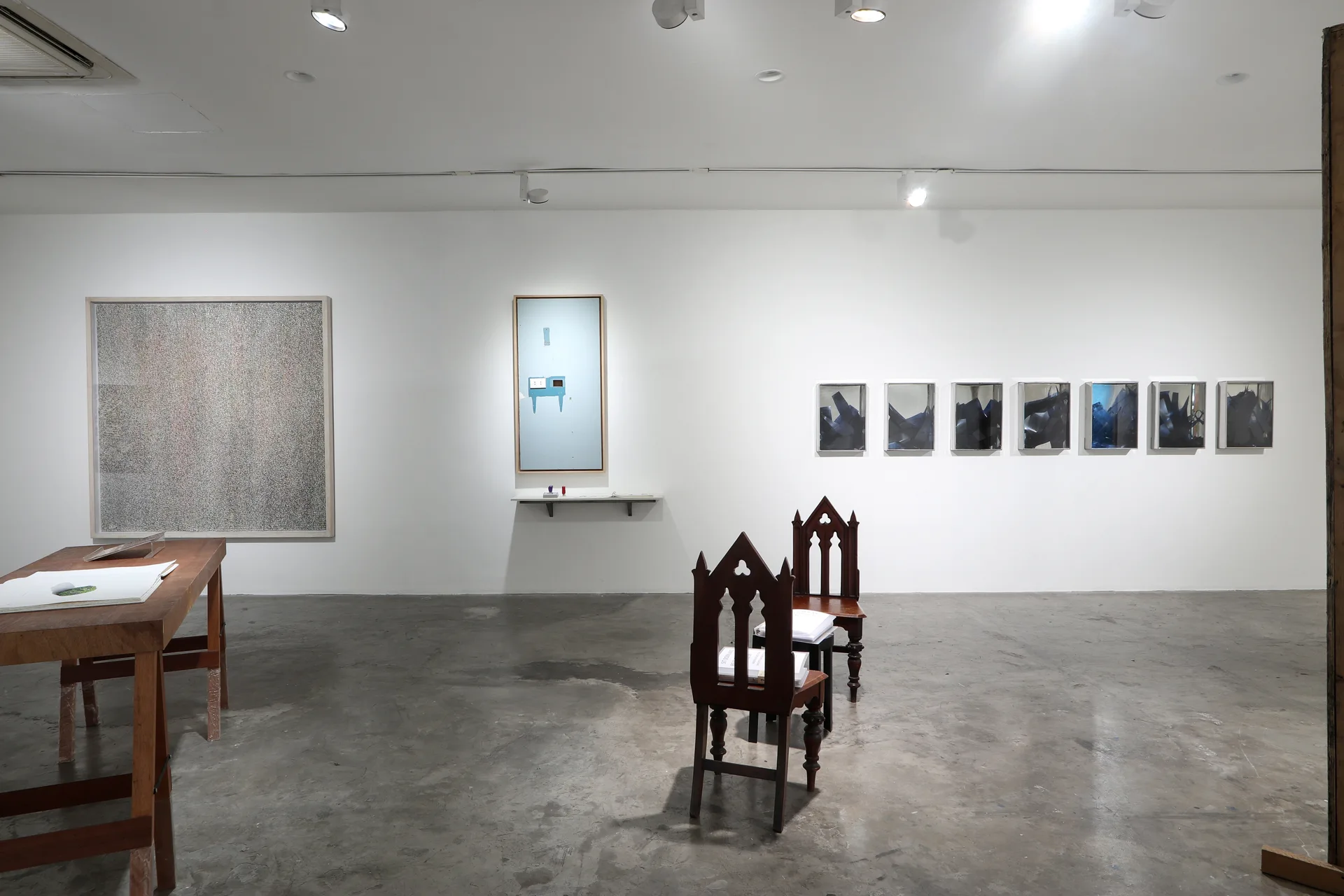
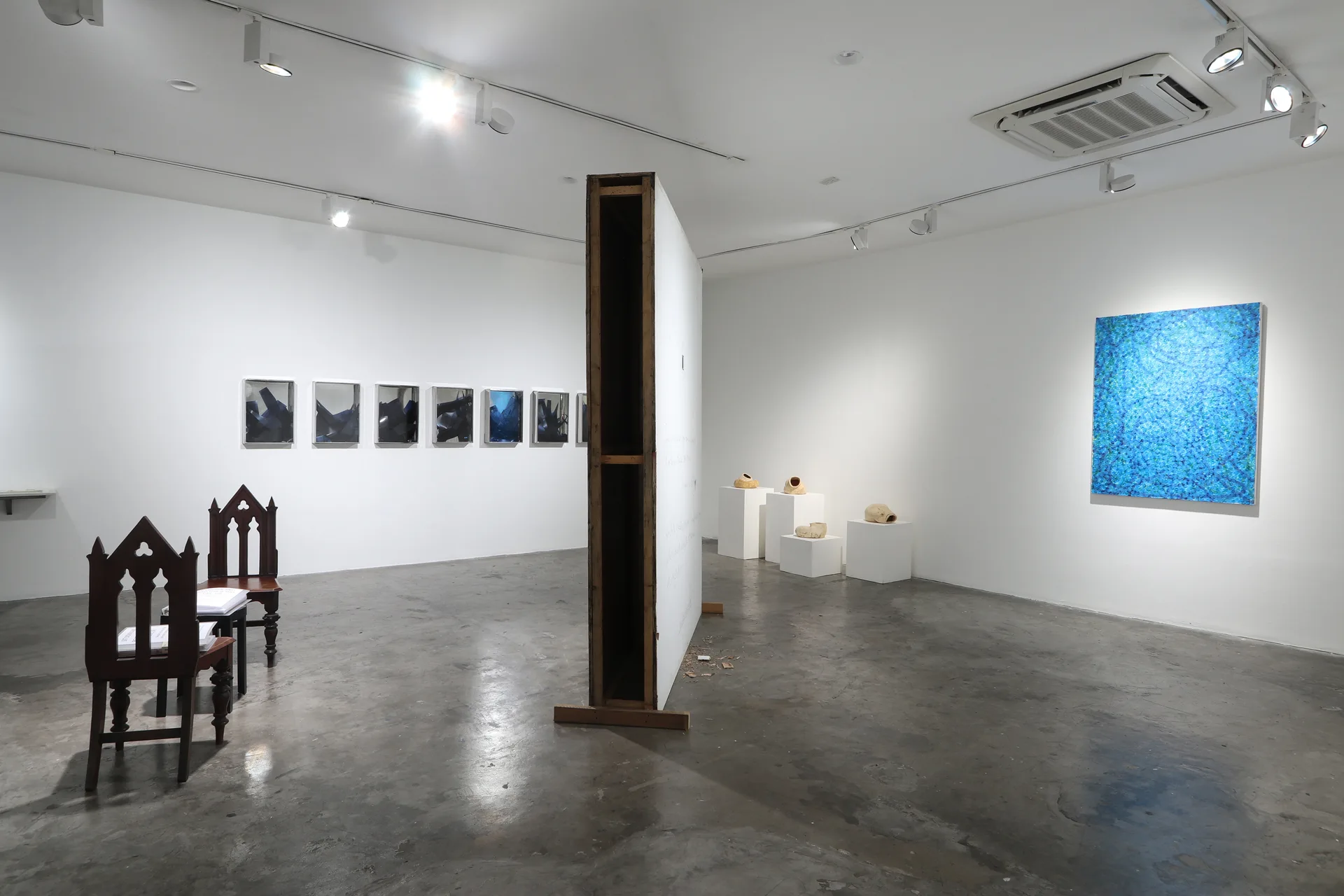
Poklong Anading presents seven metal drawers. Drawers are where we put things from the past, preserving them for future use or reference. Sealed with glass as these are they become time capsules. What is inside them are cut up photographs of tower cranes, those tall machines that in creating the ever-rising city swing their arms around, above like the hands of a clock.
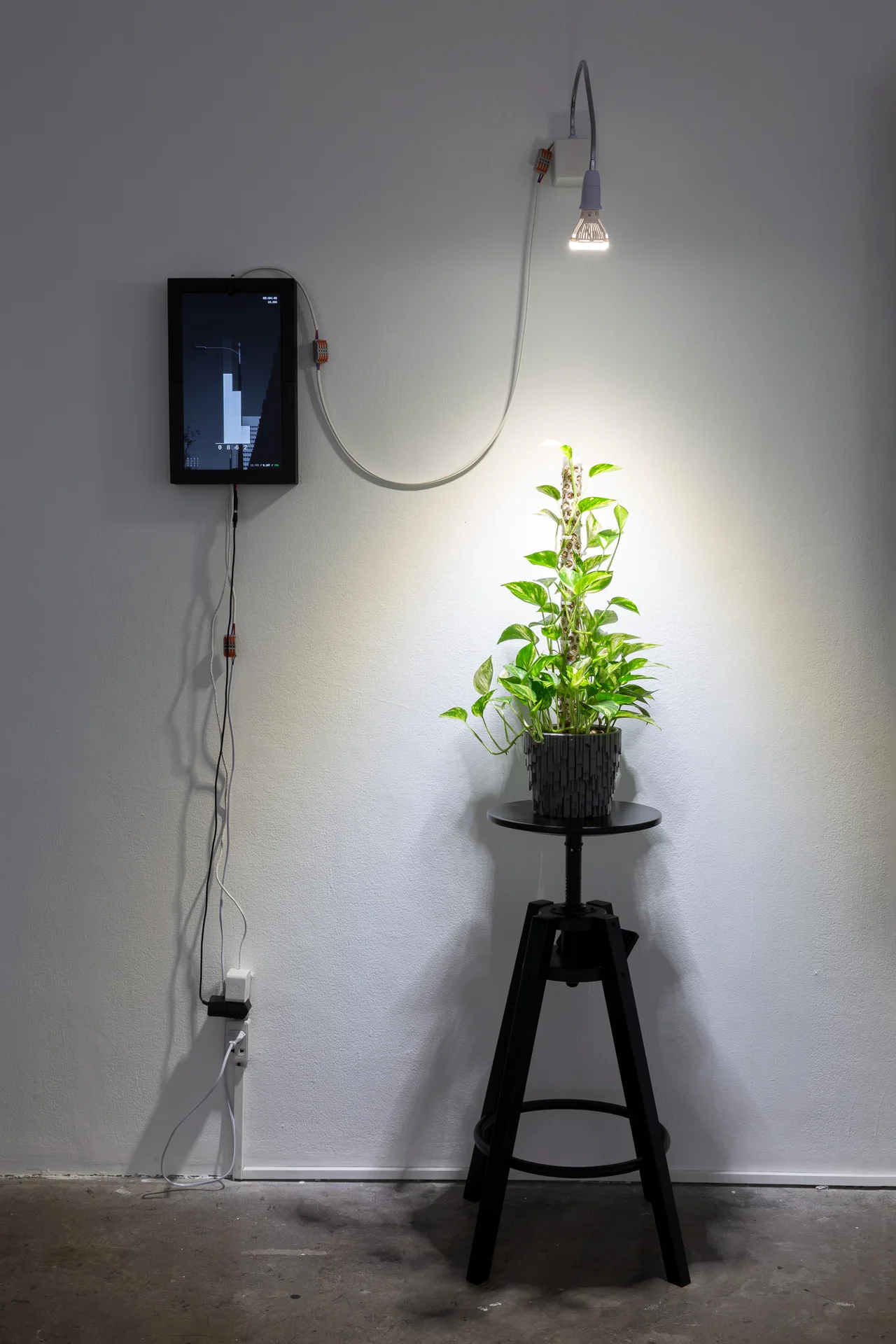
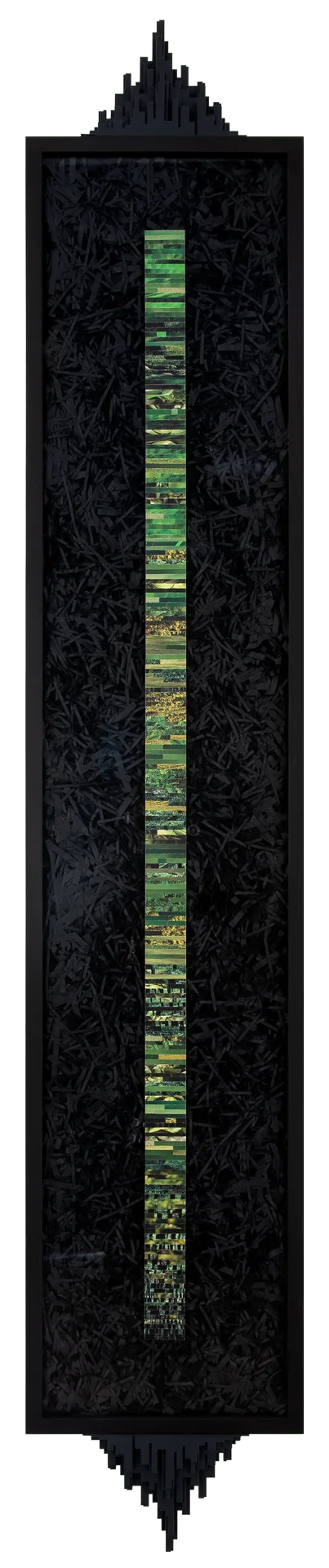
Datu Arellano shows two works, in one a tower is made of hundreds of collage strips, not of brick or concrete but of the fading and growing greens of nature’s seasons that repeat so endlessly. The other work is an enclosed ecosystem. A computer coded to produce random numbers goes “ching!” every time it hits sixteen and sends electricity to a light that turns on, giving succour to a plant growing below. (Almost everything here, even the 3D printed pot, is hand made by him: it is a self-made enclosed ecosystem.)
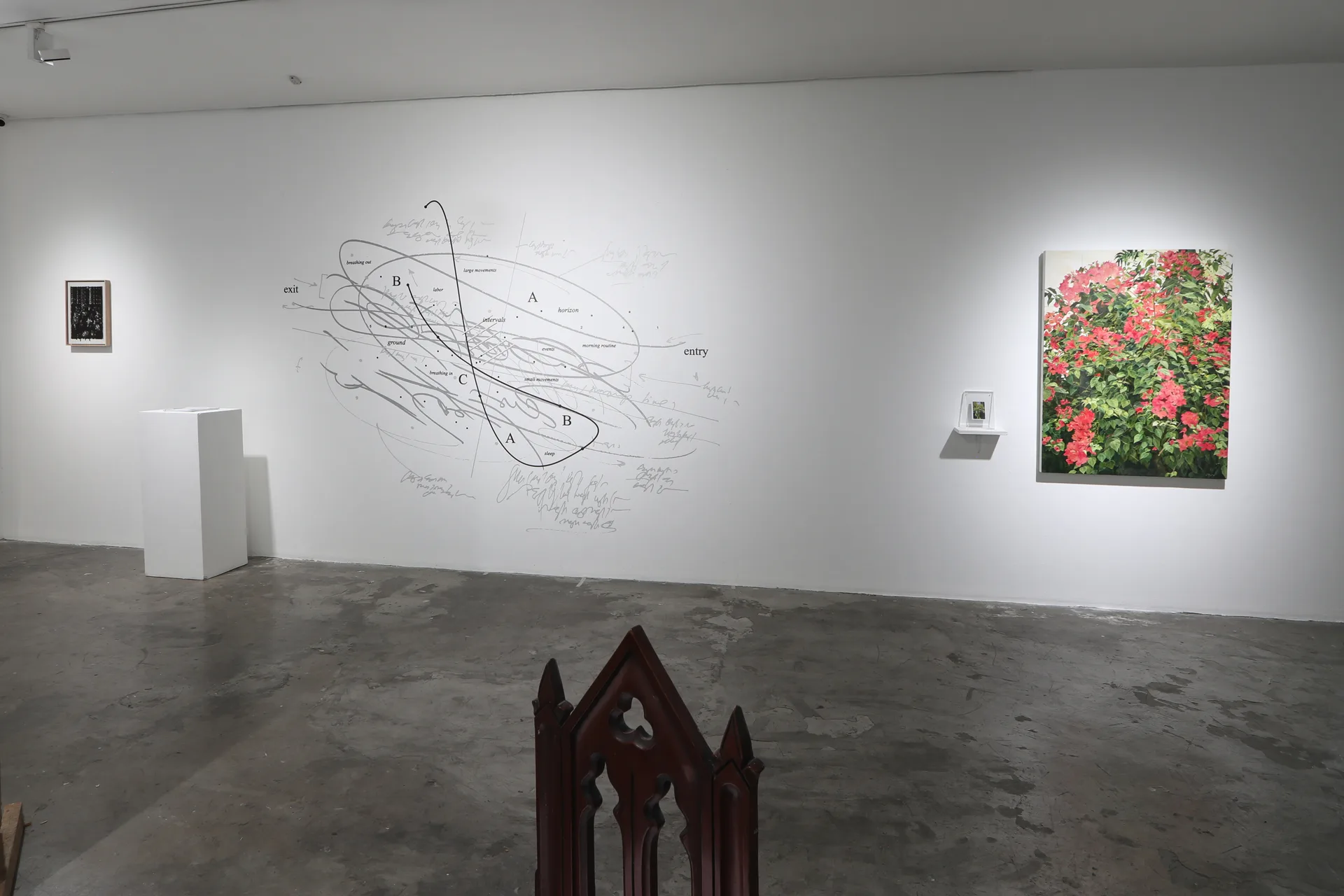
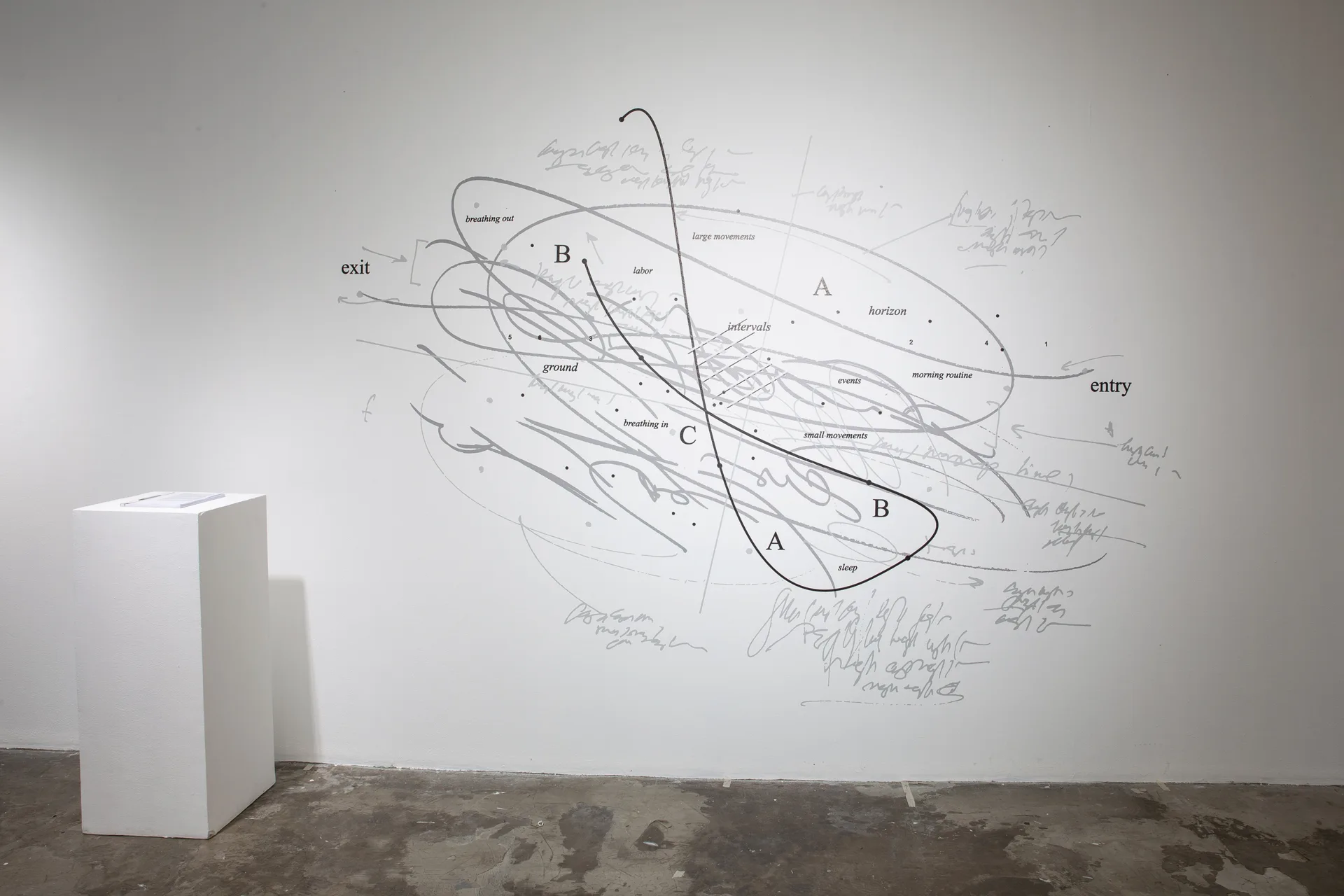
Buen Calubayan provides his own explanatory book beside his wall drawing How to waste time. One in a series of wall drawings about understanding and improving the rhythms we use to structure time, and our life, this work deals especially with making sense of boredom and empty time.
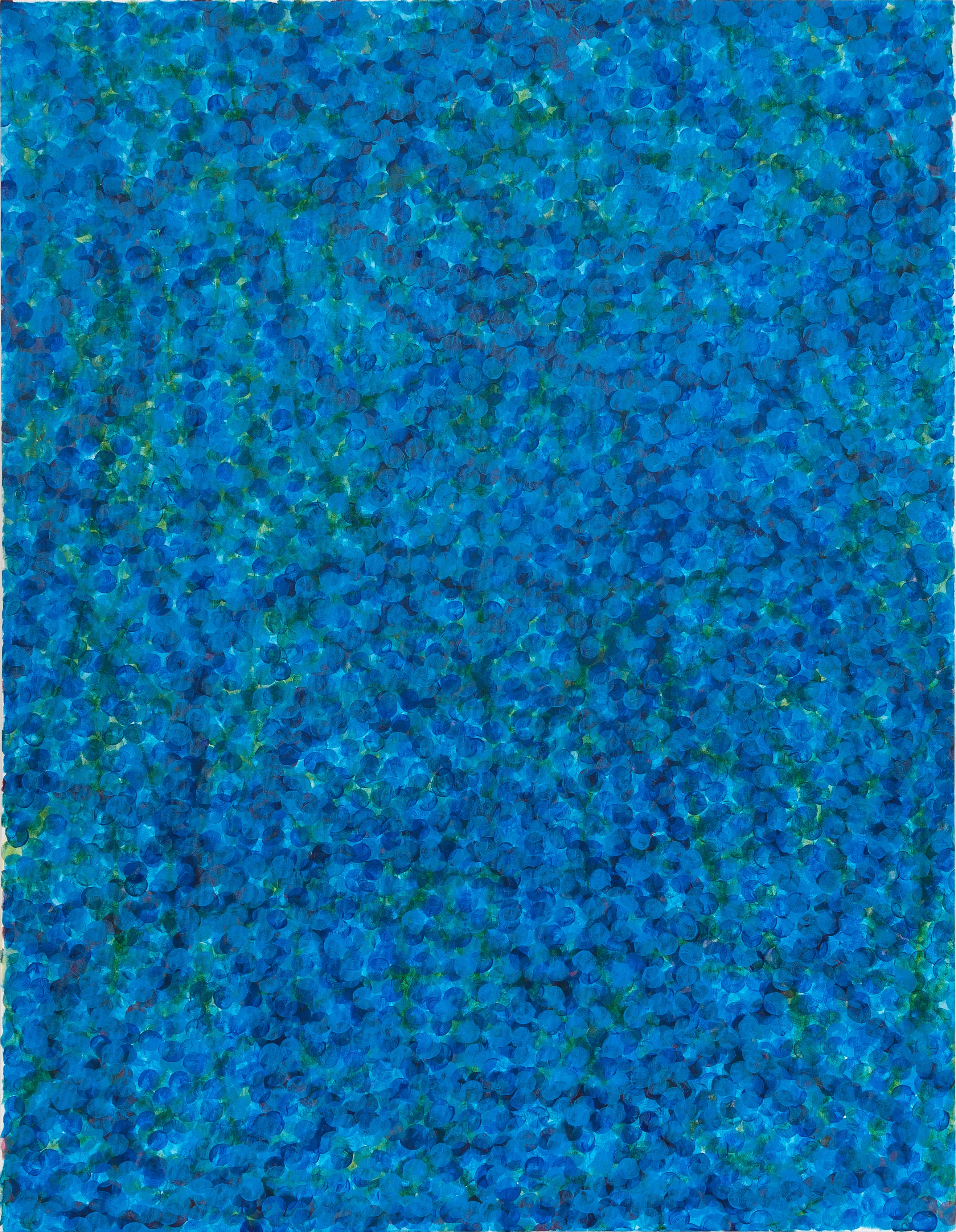
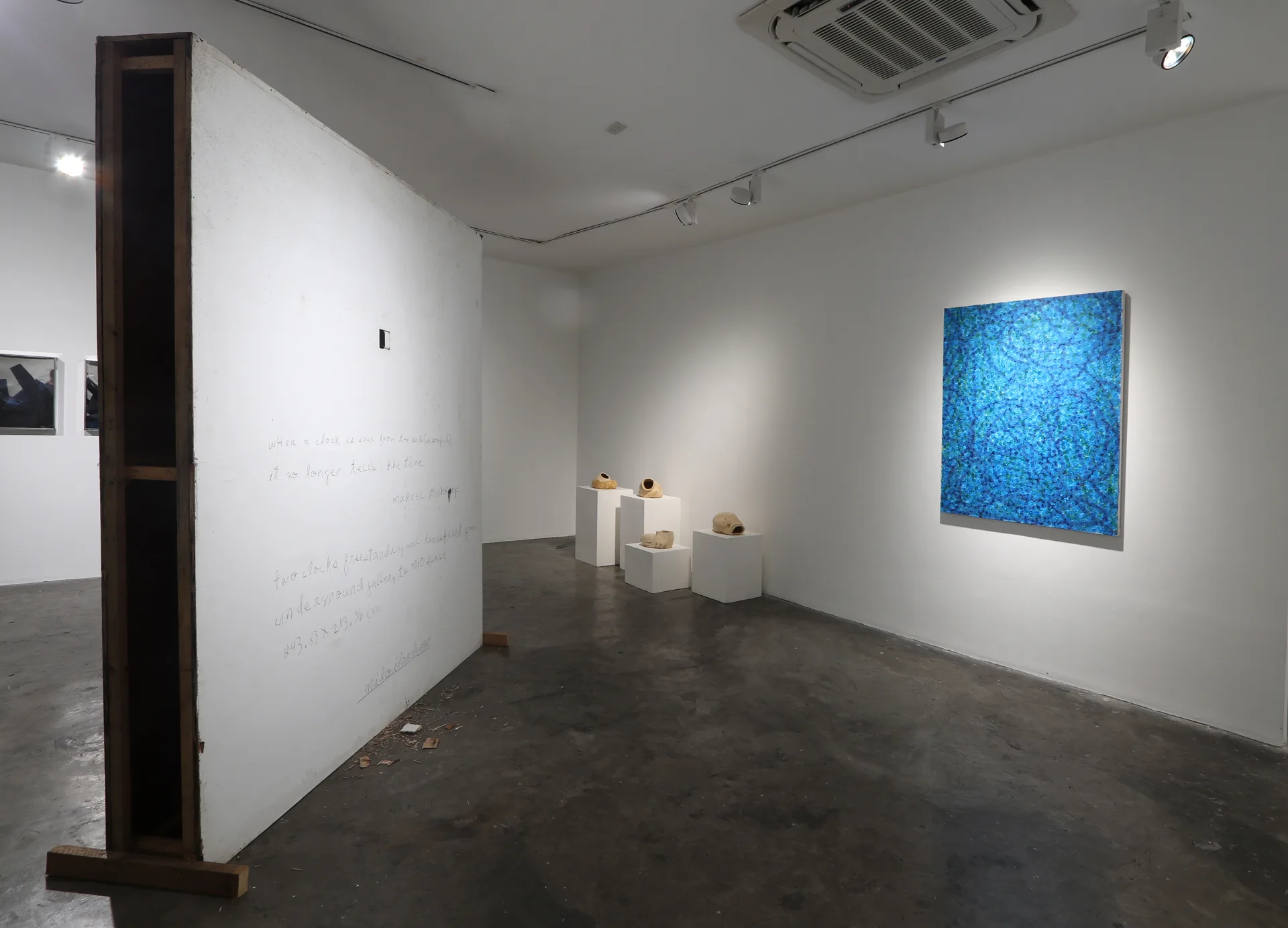
How many spots or circles are there in Maria Cruz’s painting? 6,840. Each circle is created by tracing a coin and filling it in. She counts them as she paints them. Counting out to measure both the supposed value of the painting and the time needed to paint it. She has been making such coin paintings since 2006 – a series entitled One Million Dollars. Blue, I recall, is the colour of the Virgin Mary’s gown and the colour associated with that aspirant of infinity, Yves Klein.
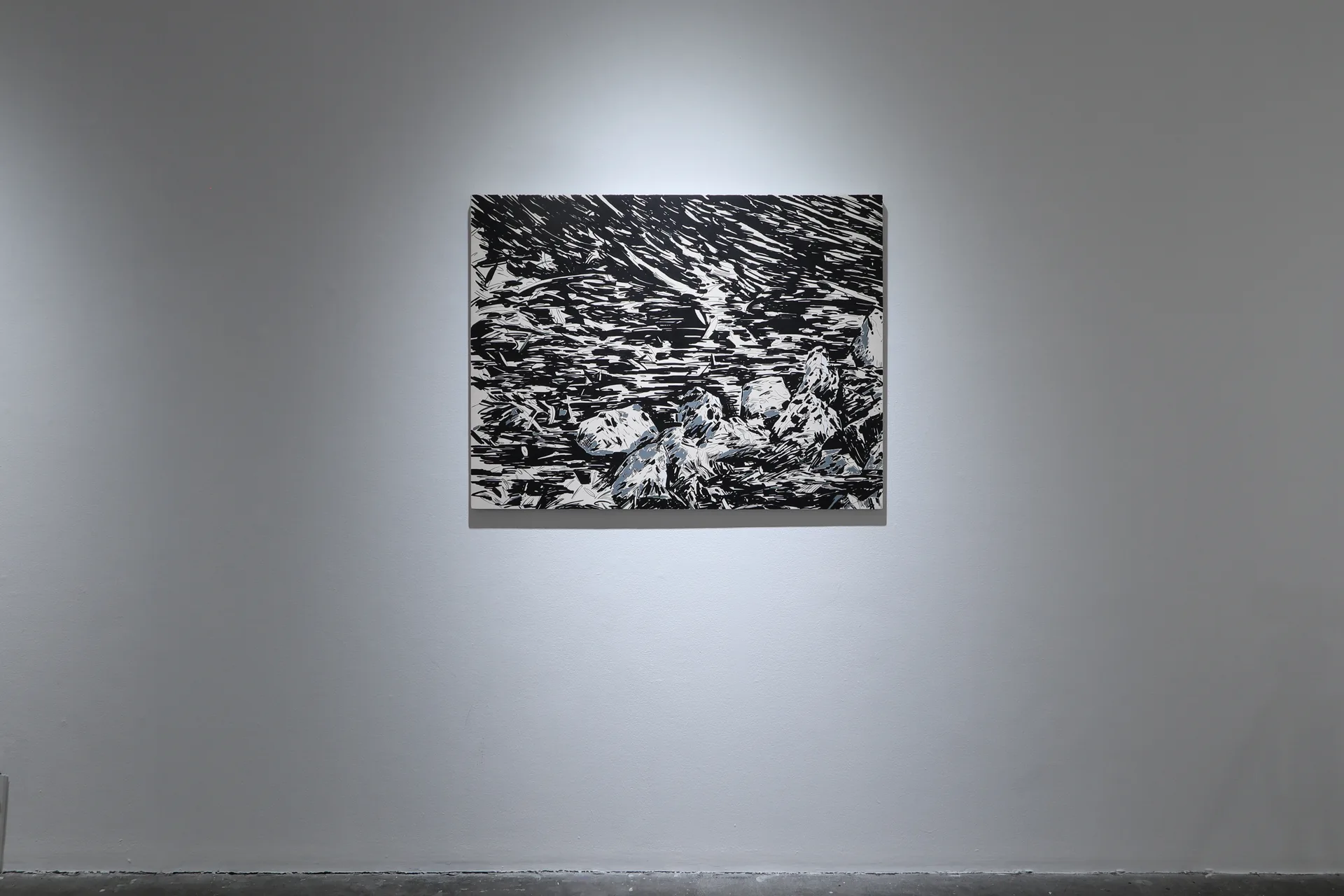
When I first saw Dina Gadia’s painting of water and rocks, I thought of what the ancient Greek philosopher Heraclitus said, “you never step in the same river twice.” Water like time is always moving, always changing. How she paints, for me, also accentuates that.
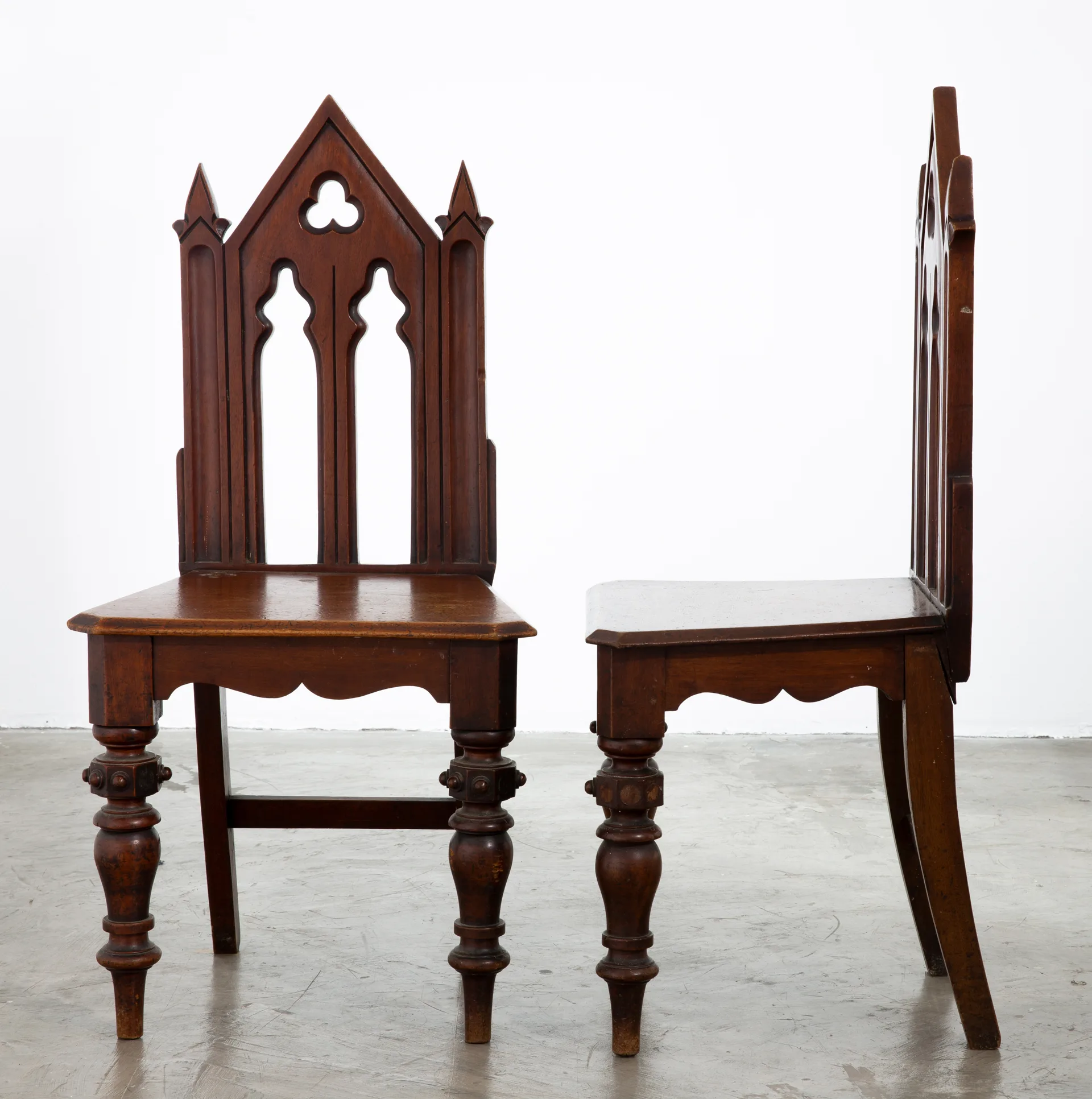
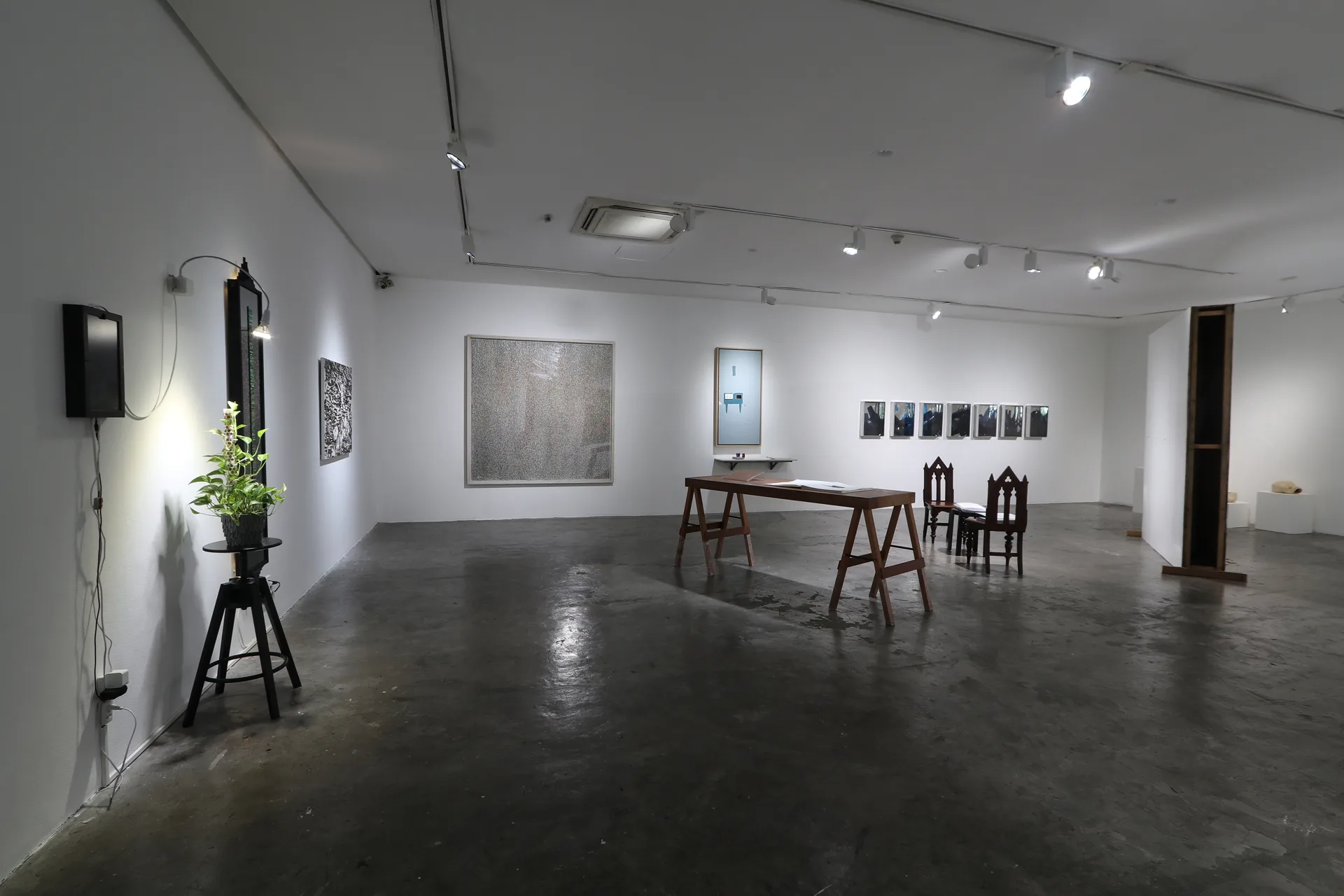
The two odd chairs I, Tony Godfrey, have placed in the gallery may mean nothing to you. To me they recall past times. They belonged to my father who died forty-five years ago. He was a priest. I am sure it amused him that the chair-backs look like church fronts. Feel free to read the fourteen letters placed her that I sent the artists as we made this exhibition. Or just rest your legs and have a think.
Standing in the middle of the exhibition like a geological erratic is the free-standing wall from Underground Gallery, brought by Nilo Ilarde. The title is from Duchamp: “When a clock is seen from the side (in profile) it no longer tells the time.” It is a sort of used readymade, an object heavy with memories of past exhibitions. He has cut a hole in it and inserted two clocks, embracing together just like, he notes, the two figures in Brancusi’s Kiss. The cleaners have been instructed to leave the evidence of his cutting: the sawdust and splinters on the floor.
Liu Liling, an artist from Singapore, trained as a painter, uses photographic tools such as printers and scanners, but rarely a camera, to create surfaces. In these works, she began by printing on coated surfaces. “Because the ink cannot bite the surface, it sits atop and dries slowly—a process that can take six months or longer.” She watches the gradual, subtle changes, and waits. She is patient. Her work is about light; silent of any ostensible subject, it is meditative, slow art.
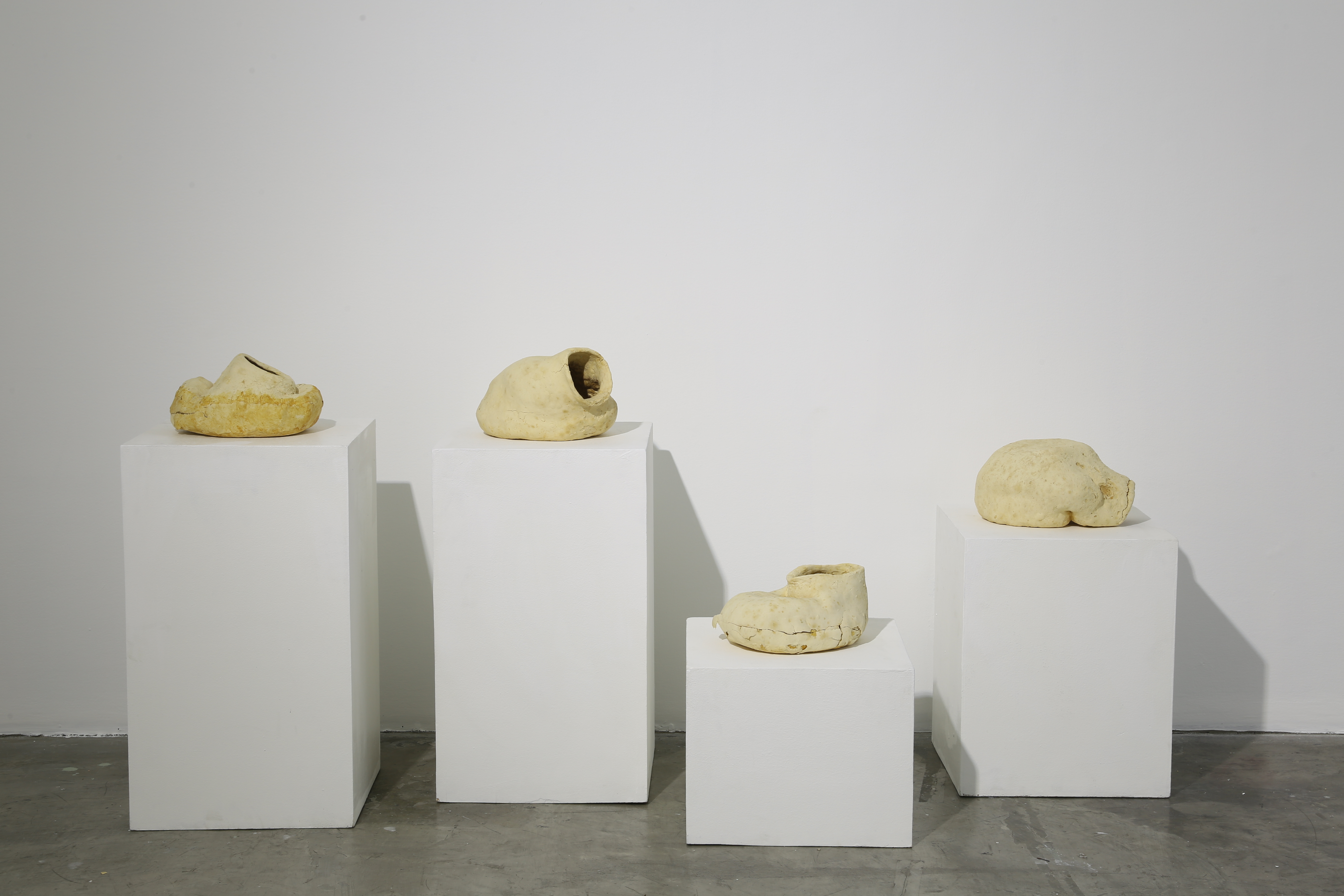
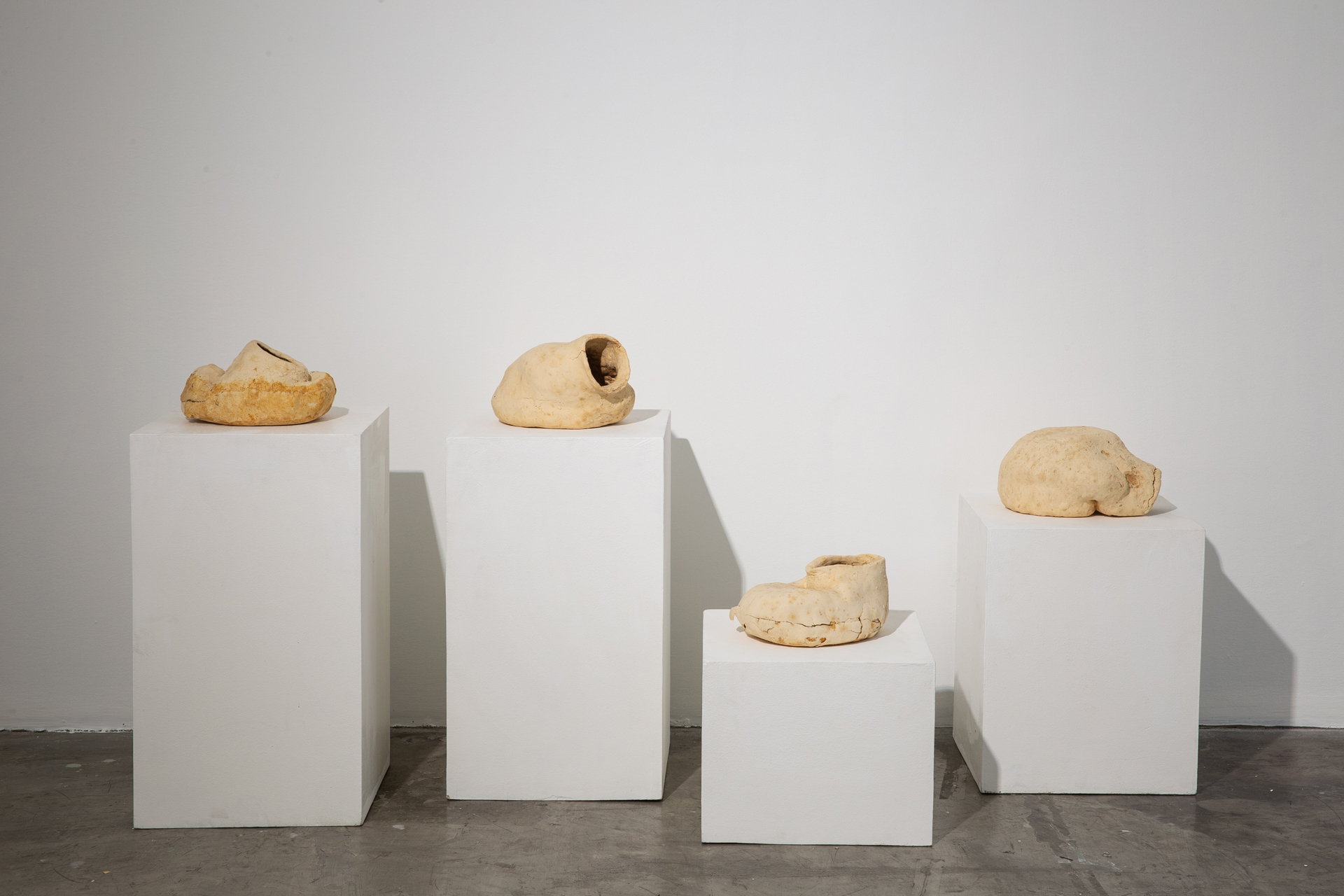
In South Korea, in 2016 Lou Lim exhibited eight vessels made with unleavened bread. As she writes, “four have already succumbed to time.” She is exhibiting the remaining four because, “they carry with them the memory of places and time they have moved through.” Their age and slow ongoing decay are very apparent. We might also be reminded that every Sunday bread and flesh can be synonymous.
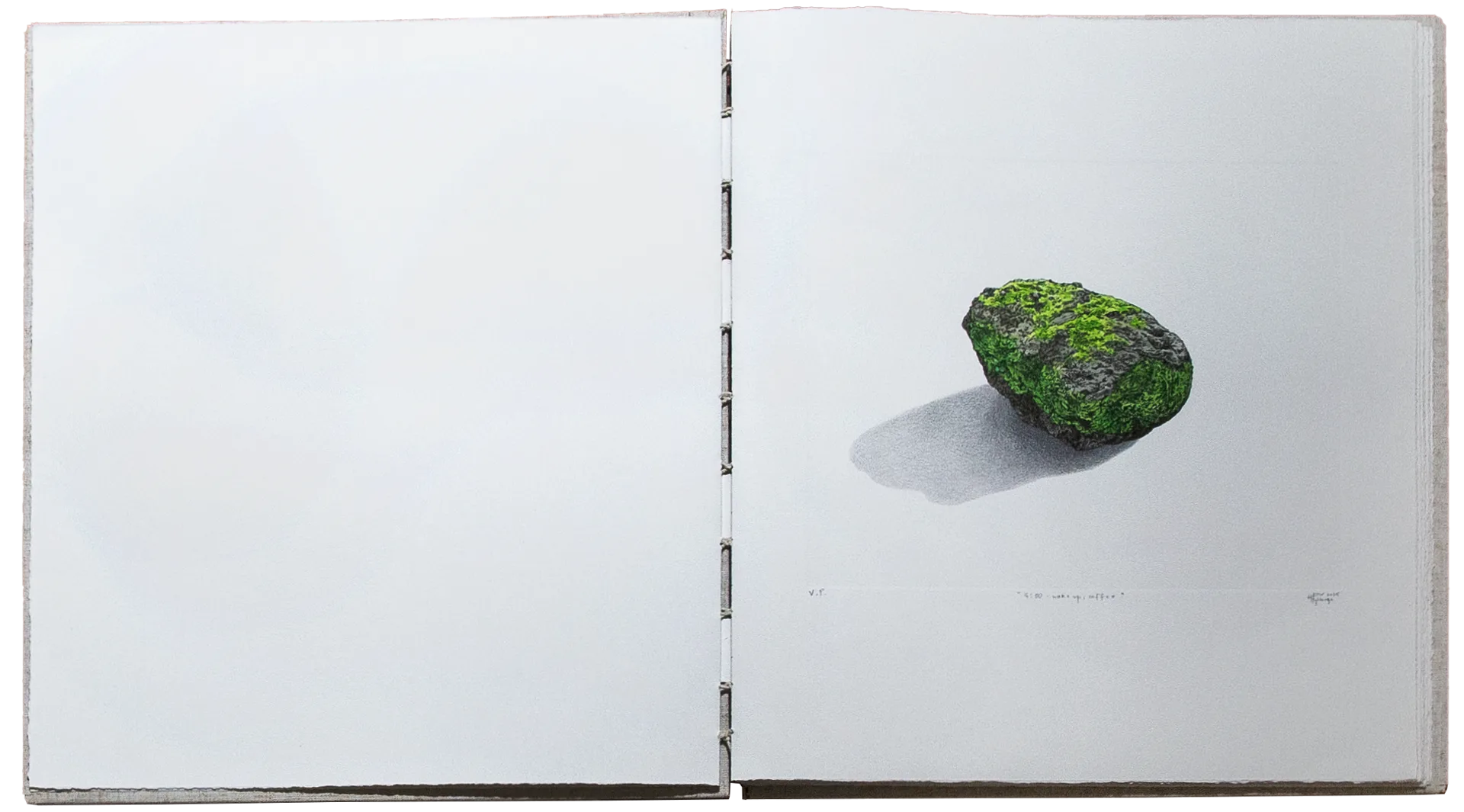
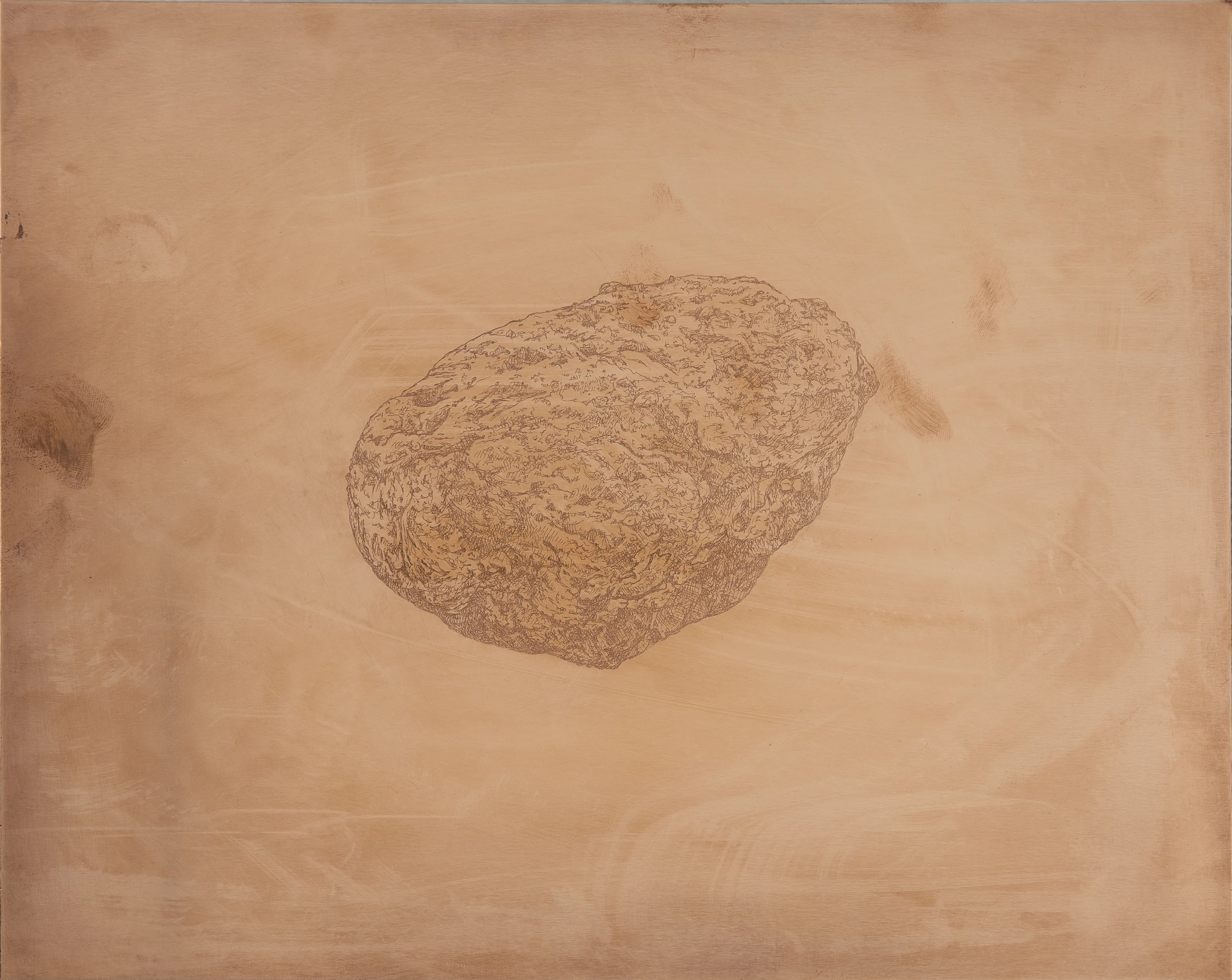
Henrielle Baltazar Pagkaliwangan found a mossy stone and then, on looking closer realised it was an old brick weathered and worn. Using printing, graphite and watercolour she has made multiple images of this aged object, each as it would look at a certain time of the day, the shadows always different. The brick had become, as it were, a sundial. Presented in book format you can turn the pages – as if you too could unfold time, image by image.
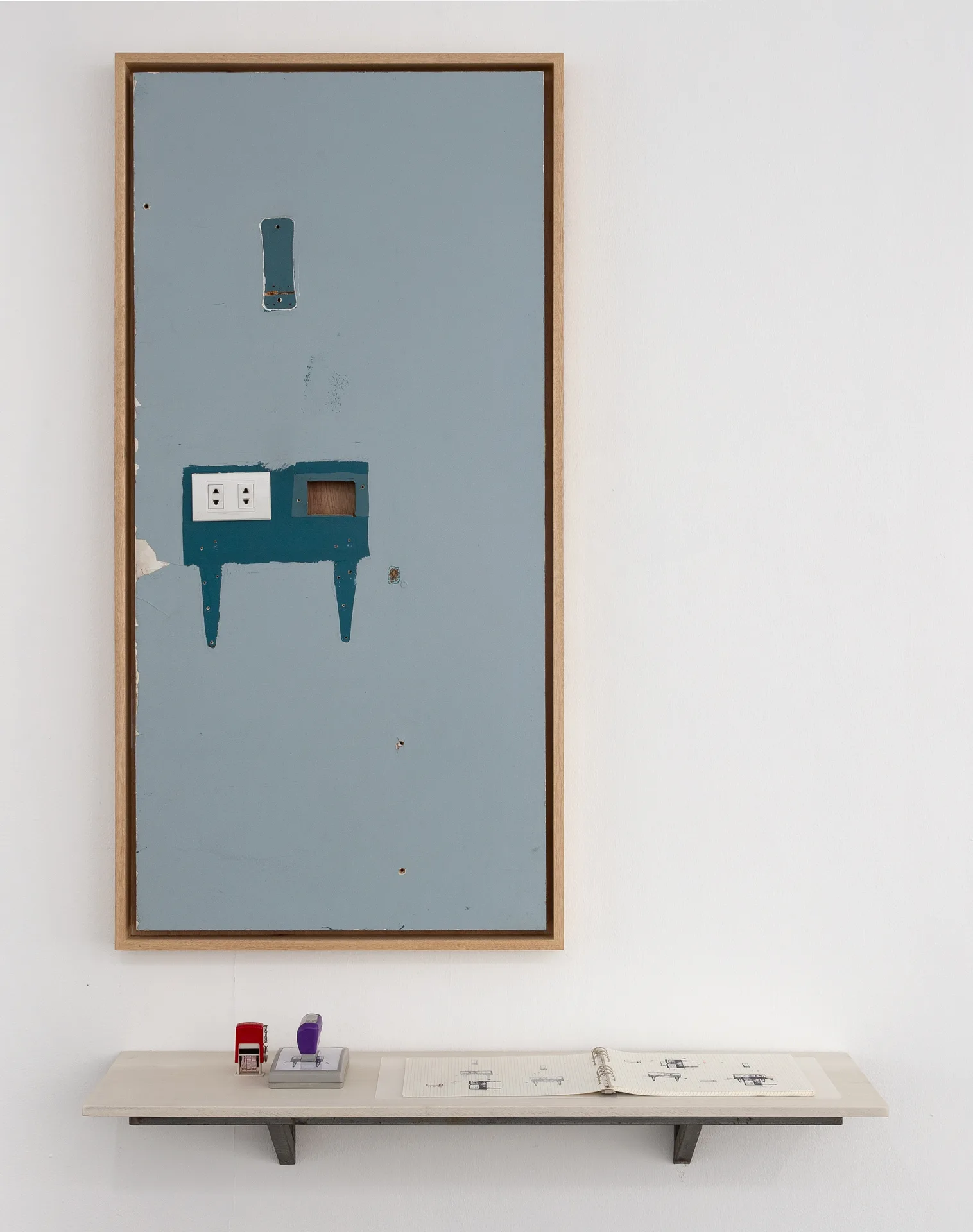
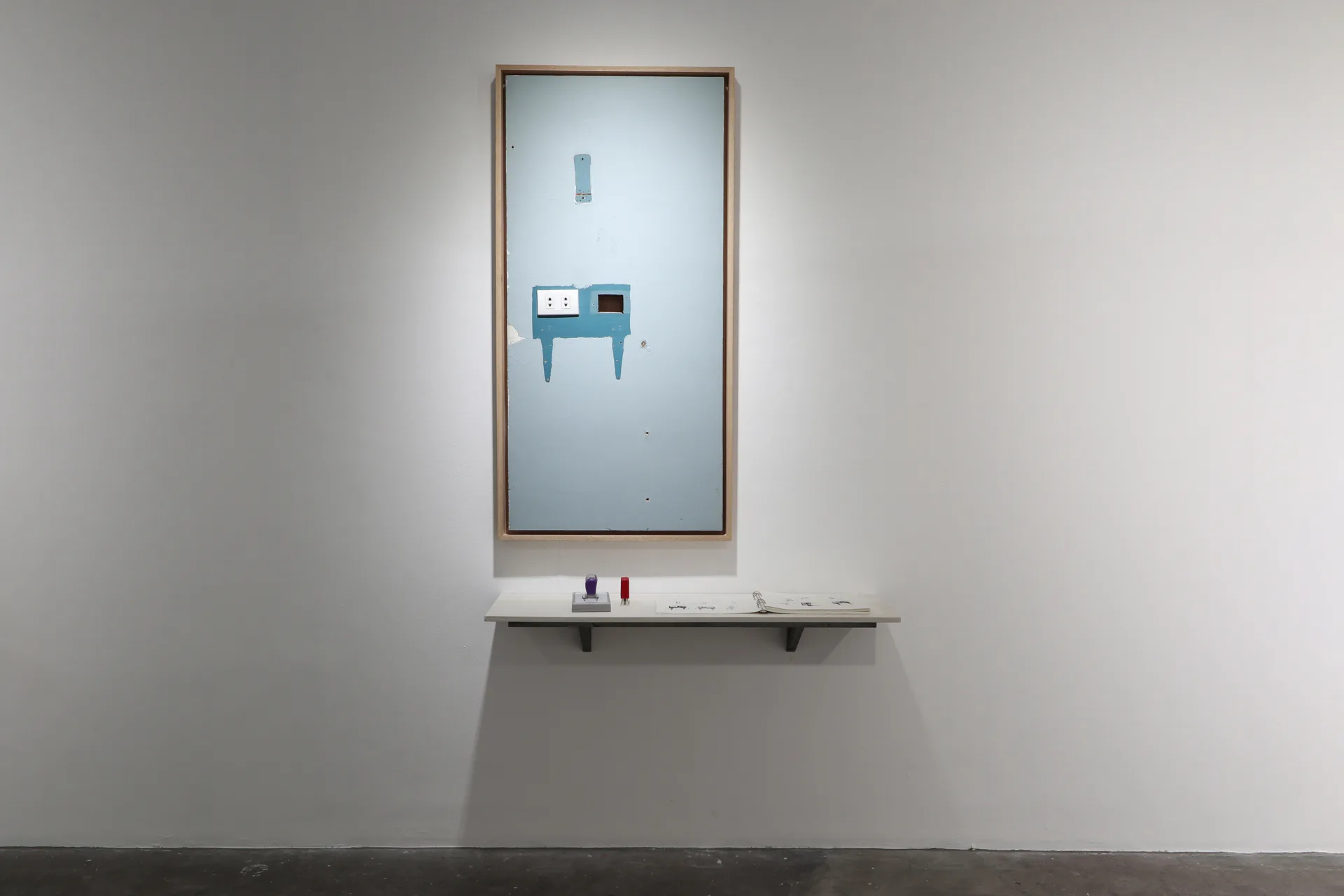
Pam Yan Santos’ “painting” is in fact, as she says, “a section of wall from our old house that I have carefully dismantled because it carries markings and imprints that once held significance in our household. Over fifteen years, this surface recorded changes that unfolded in our living space. On the shelf below it, is an image of the wall’s markings turned into a stamp. Please, visitor, use it to make your own impressions on the sheets of paper provided. In this way you too become part of the work, actively contributing to its ongoing process of change and transformation.”
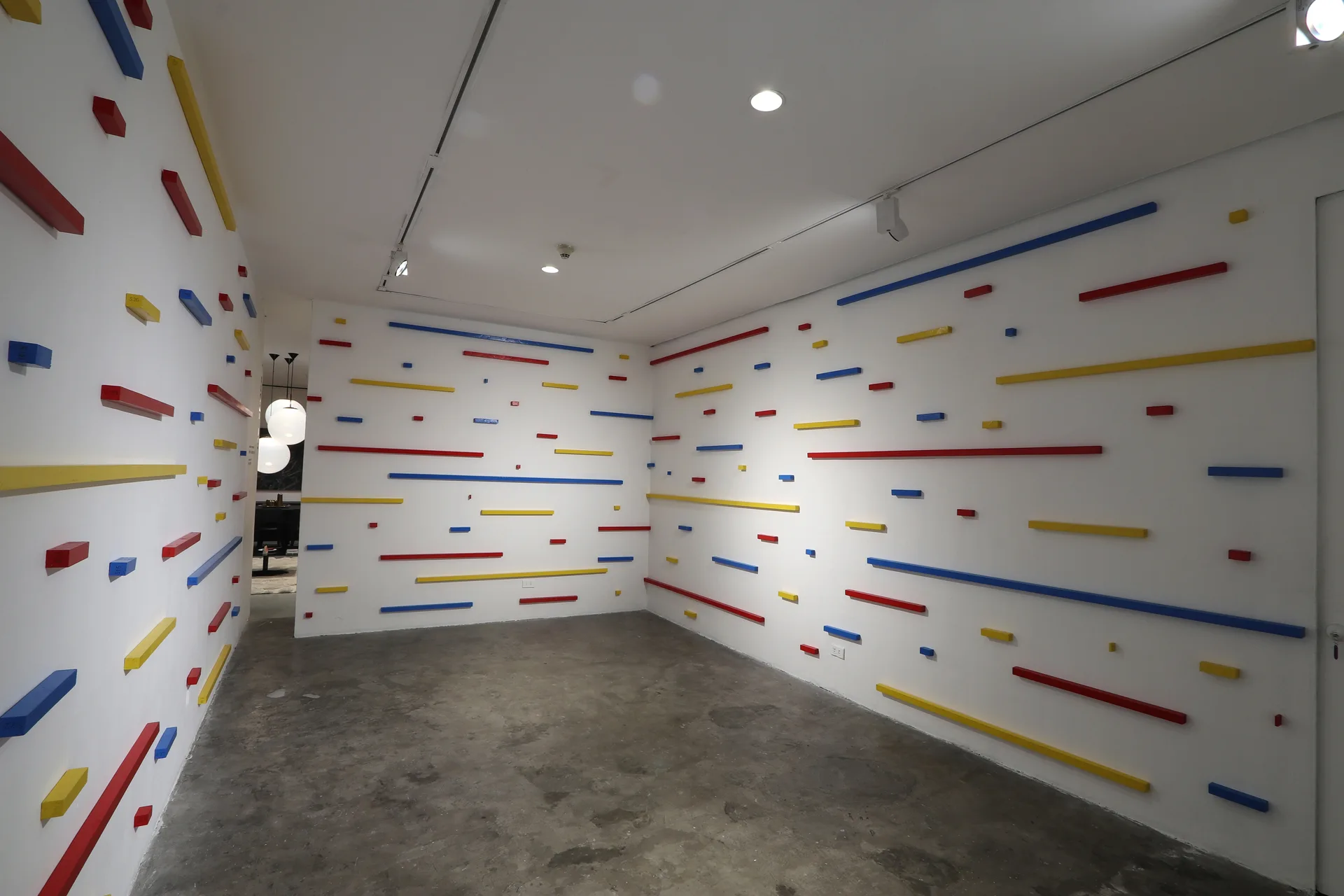
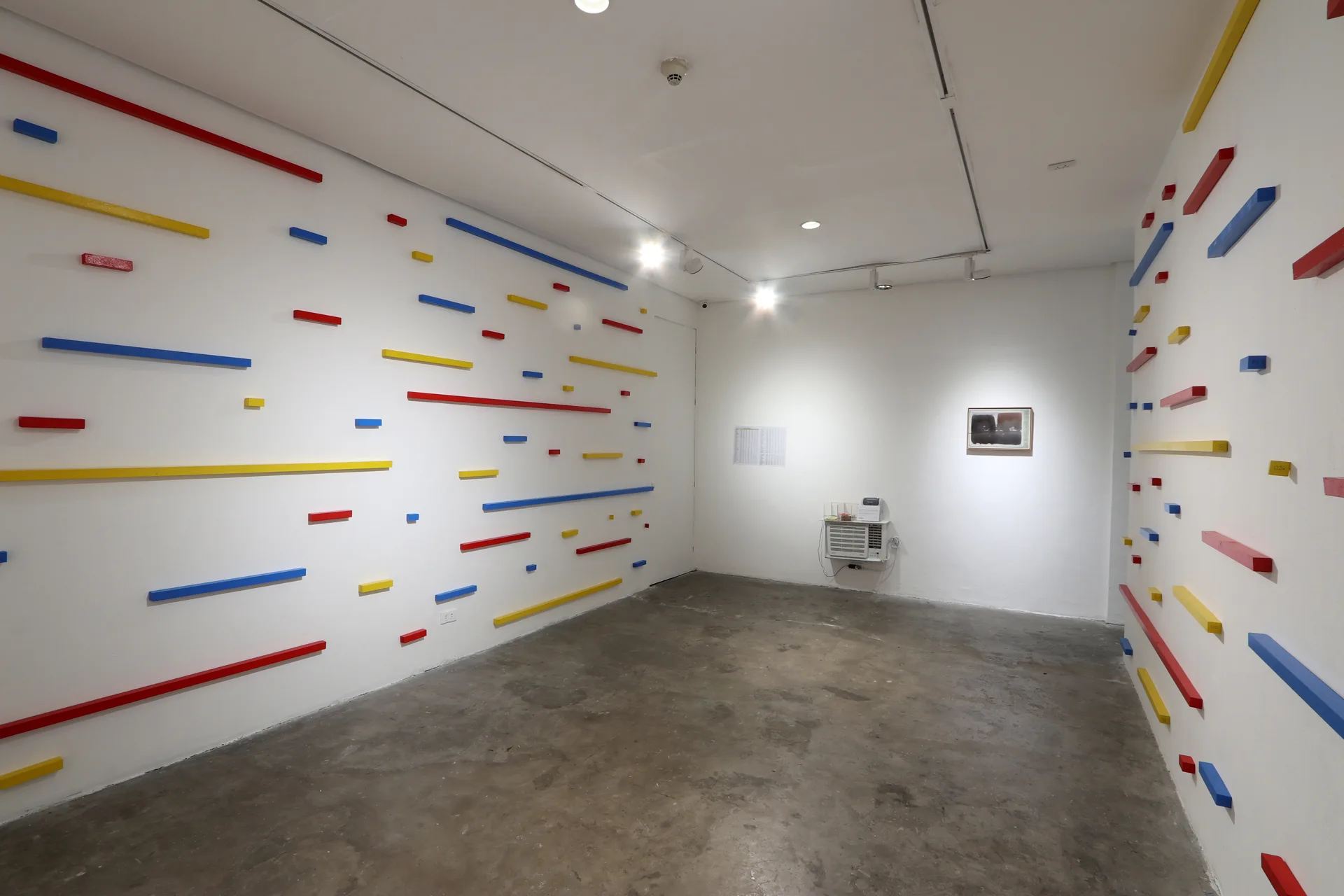
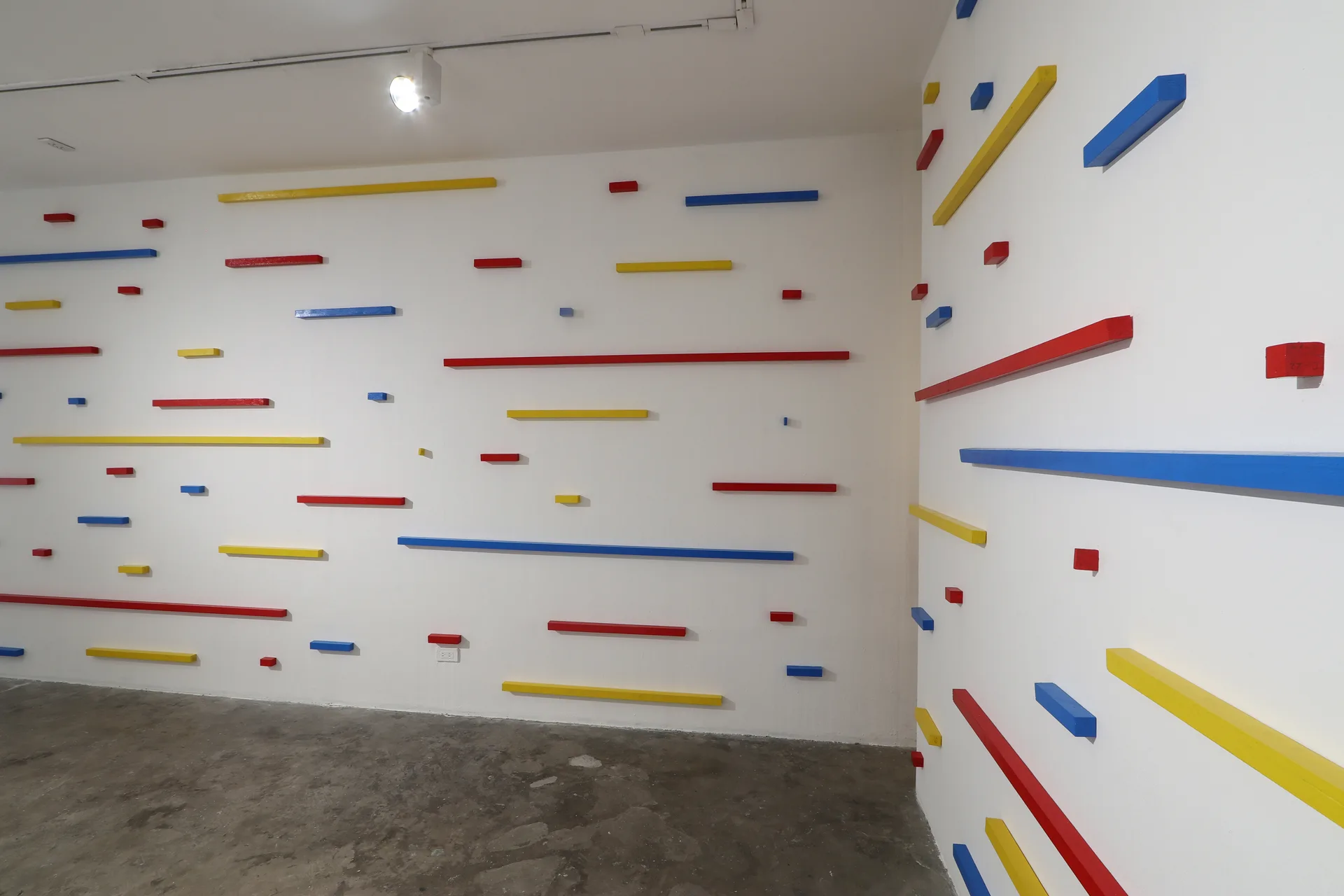
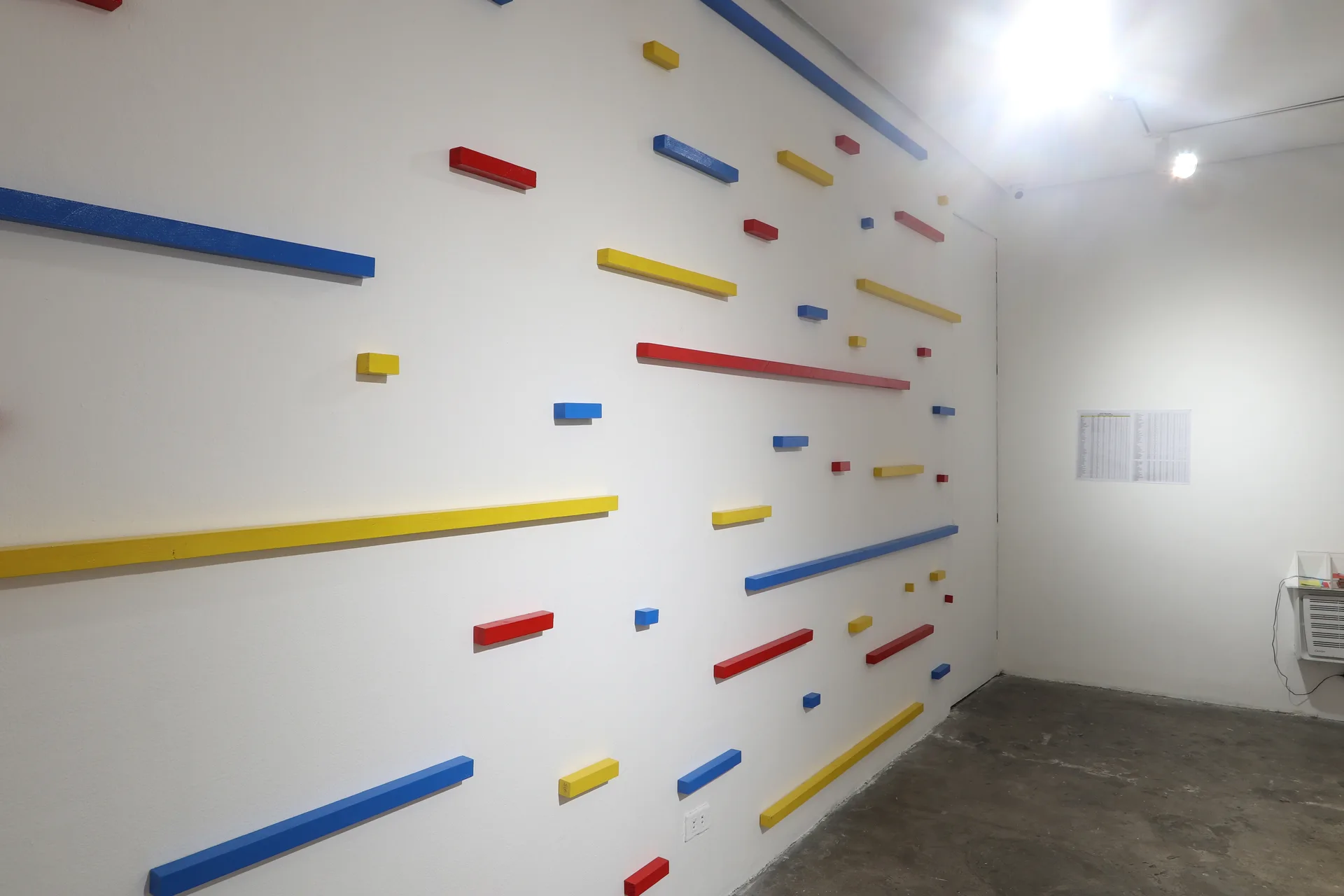
For the last two months Gerardo Tan has had a clocking-in machine at the entry to MO_Space. Everyone who enters has clocked in and out like workmen at a factory. Each chose a card either red, yellow or blue. For each visitor Gerardo has made a stick of their chosen colour, its length determined by the length of time they spent in the gallery. They are spread out on three walls, the clocking-in machine on the fourth. Time has been transformed into space.
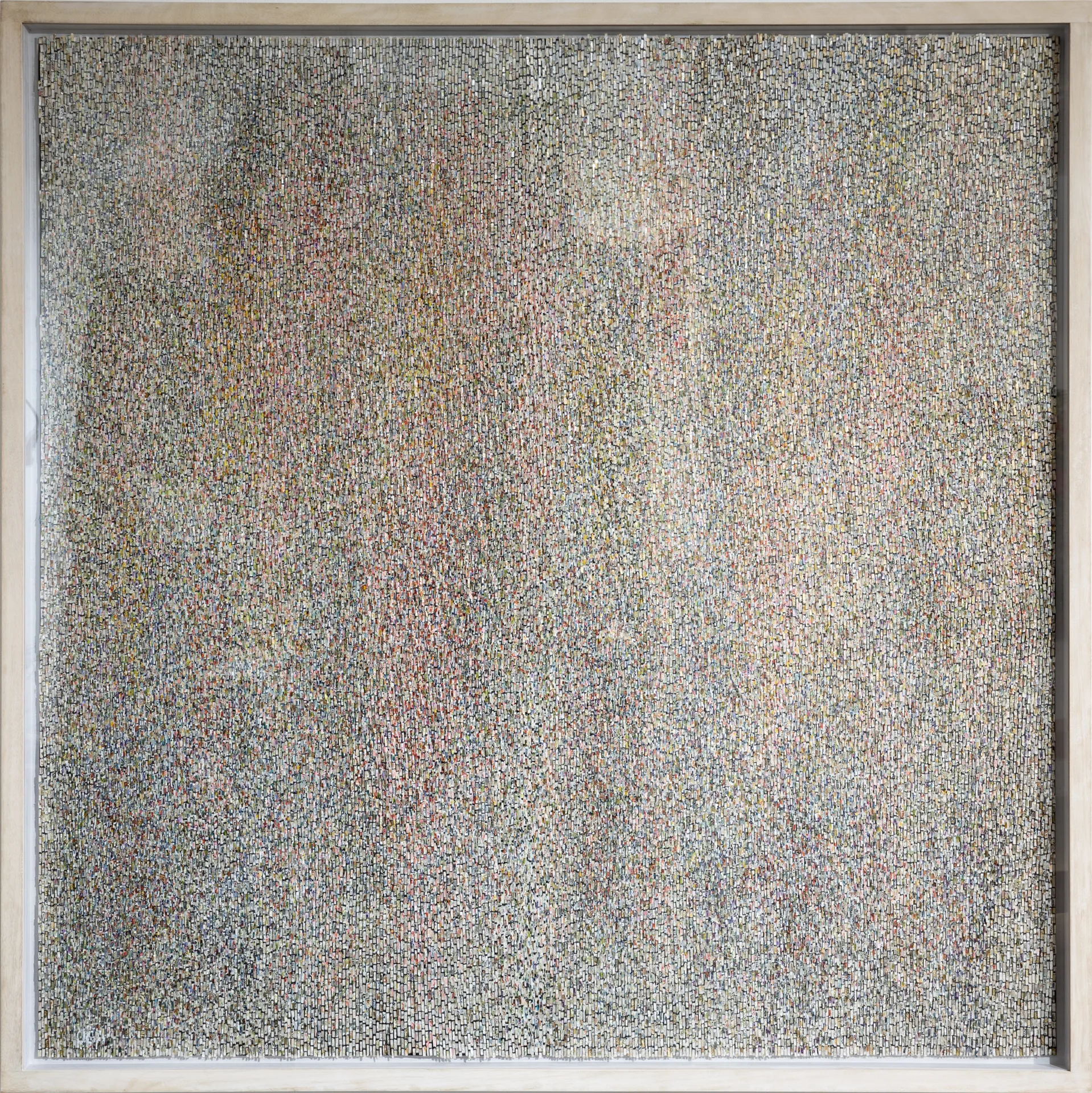
Made with thousands of tiny cut out yuzen washi paper Oca Villamiel’s work is both a grand memento of his past trips to Japan and an evocation of infinite space and time. Yuzen washi paper is made by hand printing with many colours and gold or silver threads. To me it seems like multi-coloured rain, falling without end.
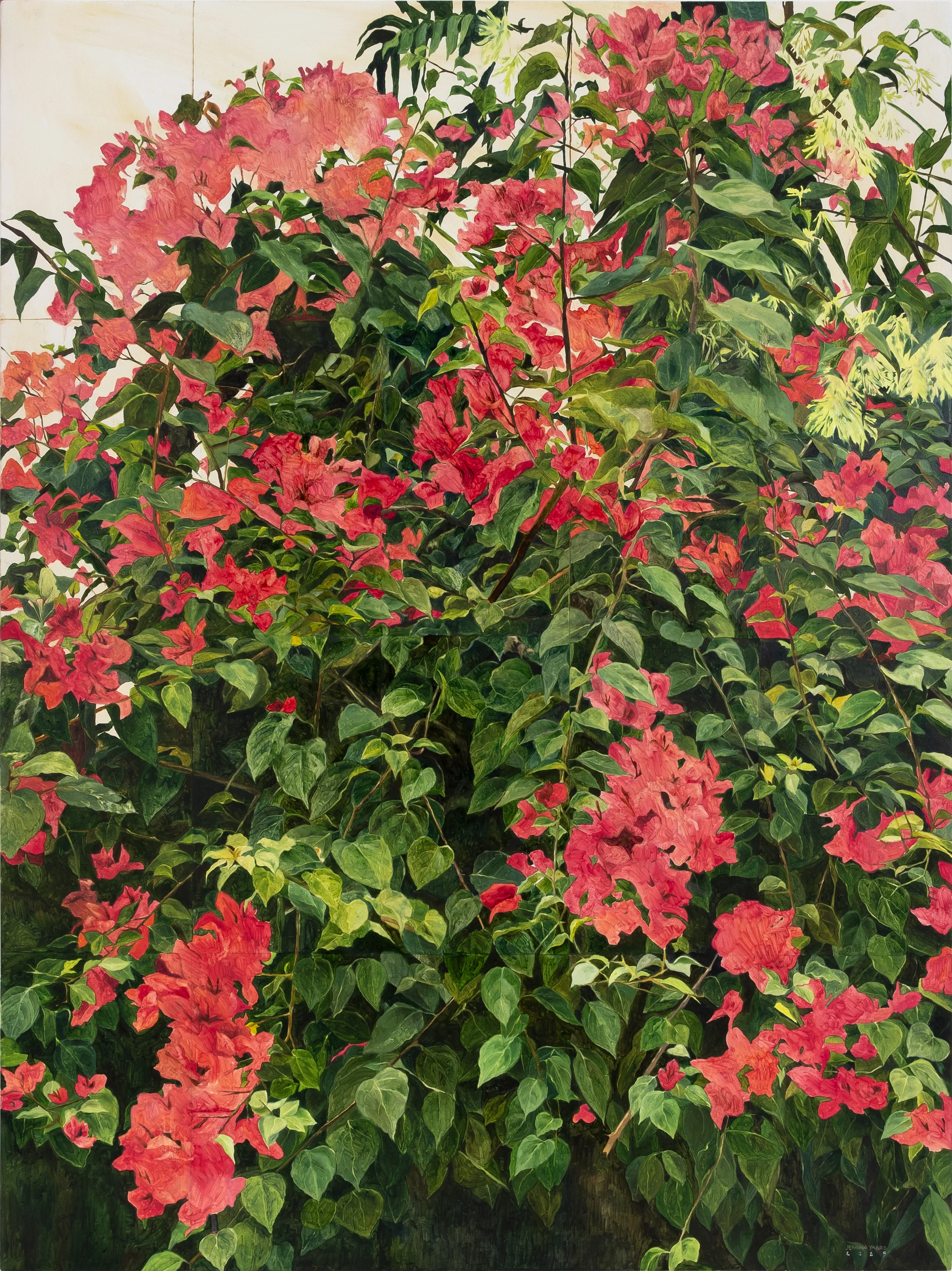
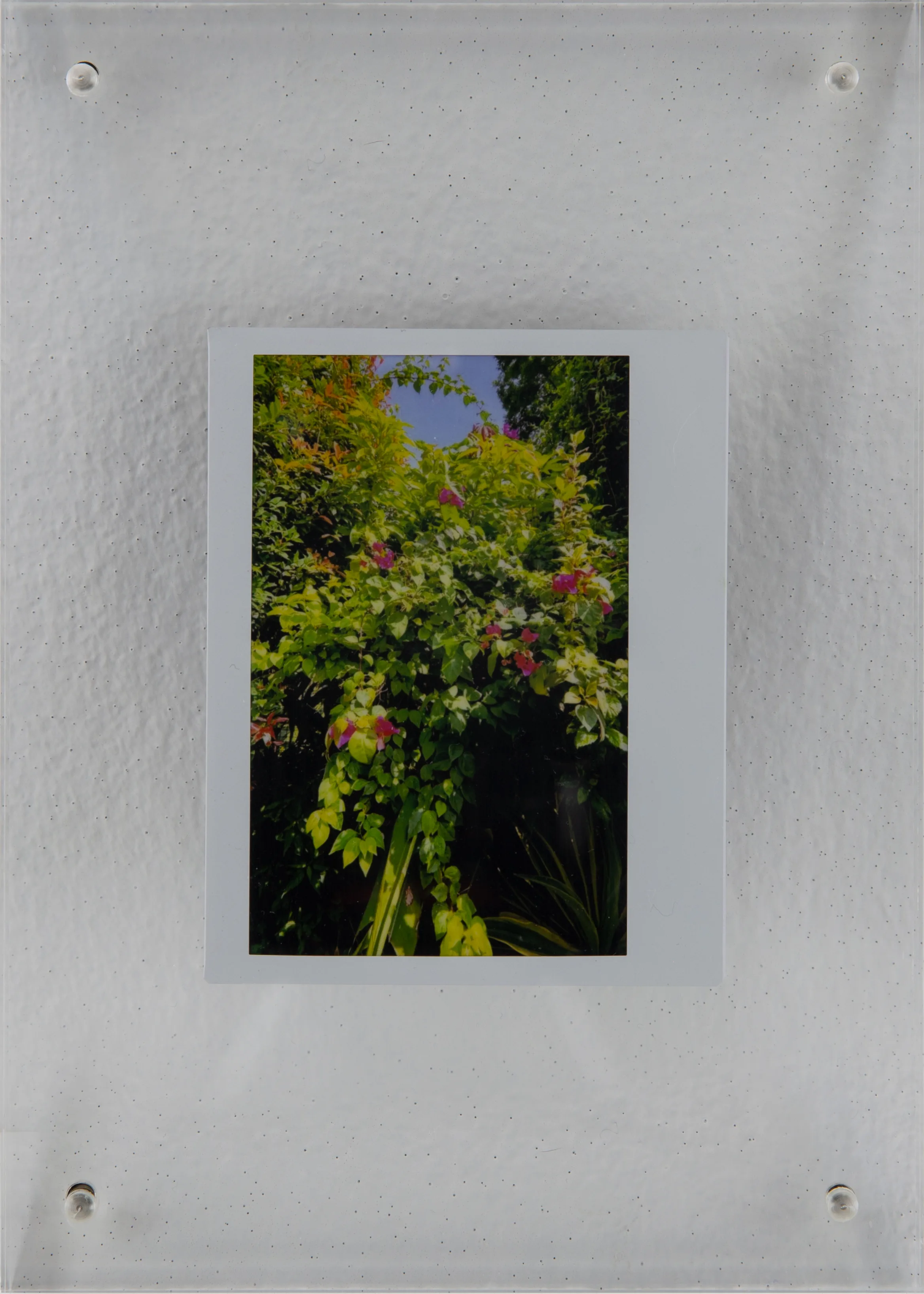
Jemima Yabes tells me her paintings is of, “the flowers blooming around our neighbourhood last May. It's a bougainvillea plant I walk by every day and watch change through the seasons. I’ve been thinking about how these quiet, ordinary shifts make us realize the passing of time.” Beside the painting she has placed a photograph of the same plant at another time. It is a beautiful painting but it brings to my mind a line in Keats’ Ode to Melancholy: “She dwells with beauty - beauty that must die”.
Enjoy the exhibition!
Best wishes
Tony Godfrey
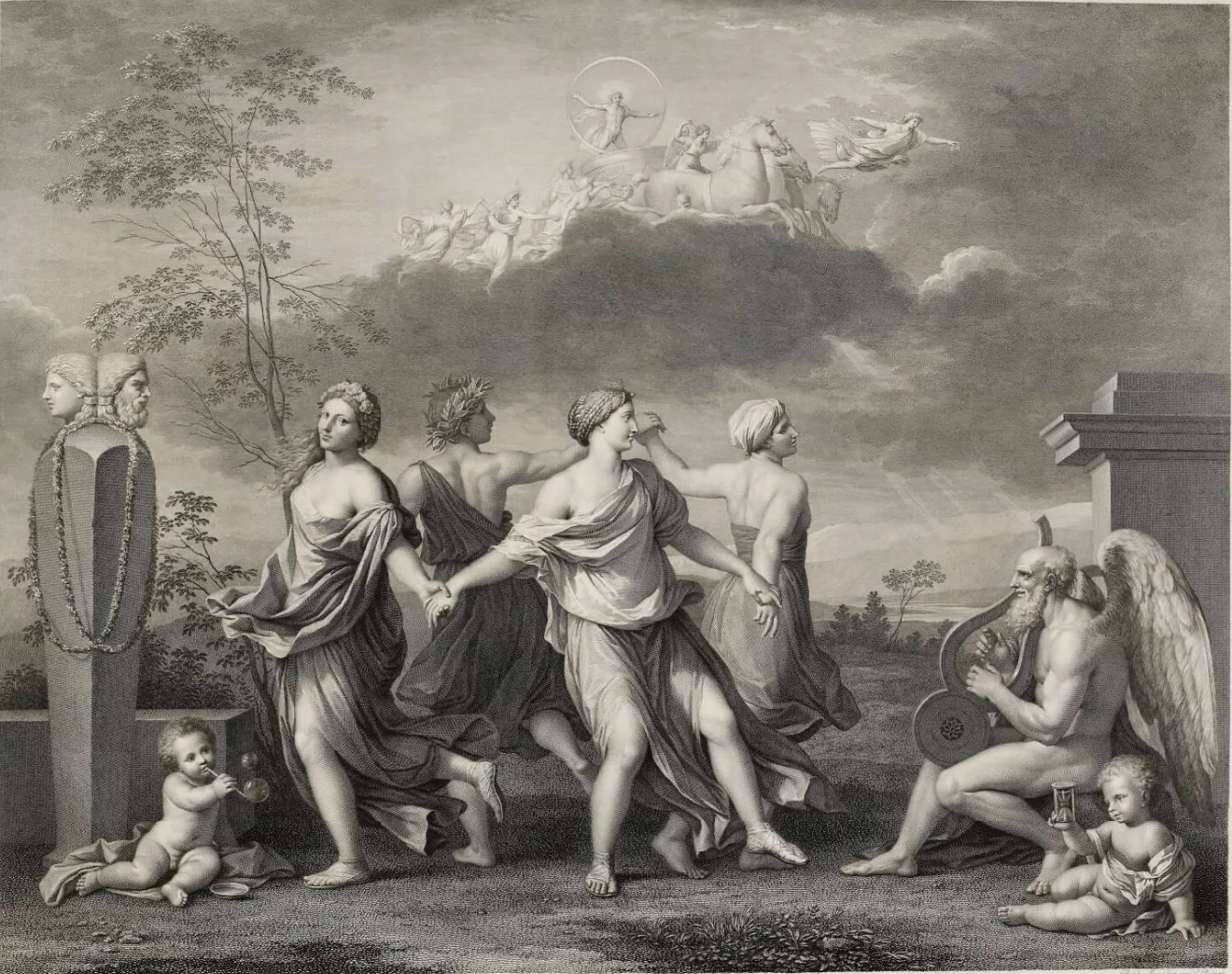
PS. The image is from an eighteenth-century print after Nicholas Poussin’s painting, now in the Wallace Collection, London, Dance to the Music of Time.


.webp)

%2C%20A%20Breeze%20(of%20love)%2C%202025_356%20x%20485%20mm%20(Save-for-Web).webp)
.webp)







About the Artist
About the Artists
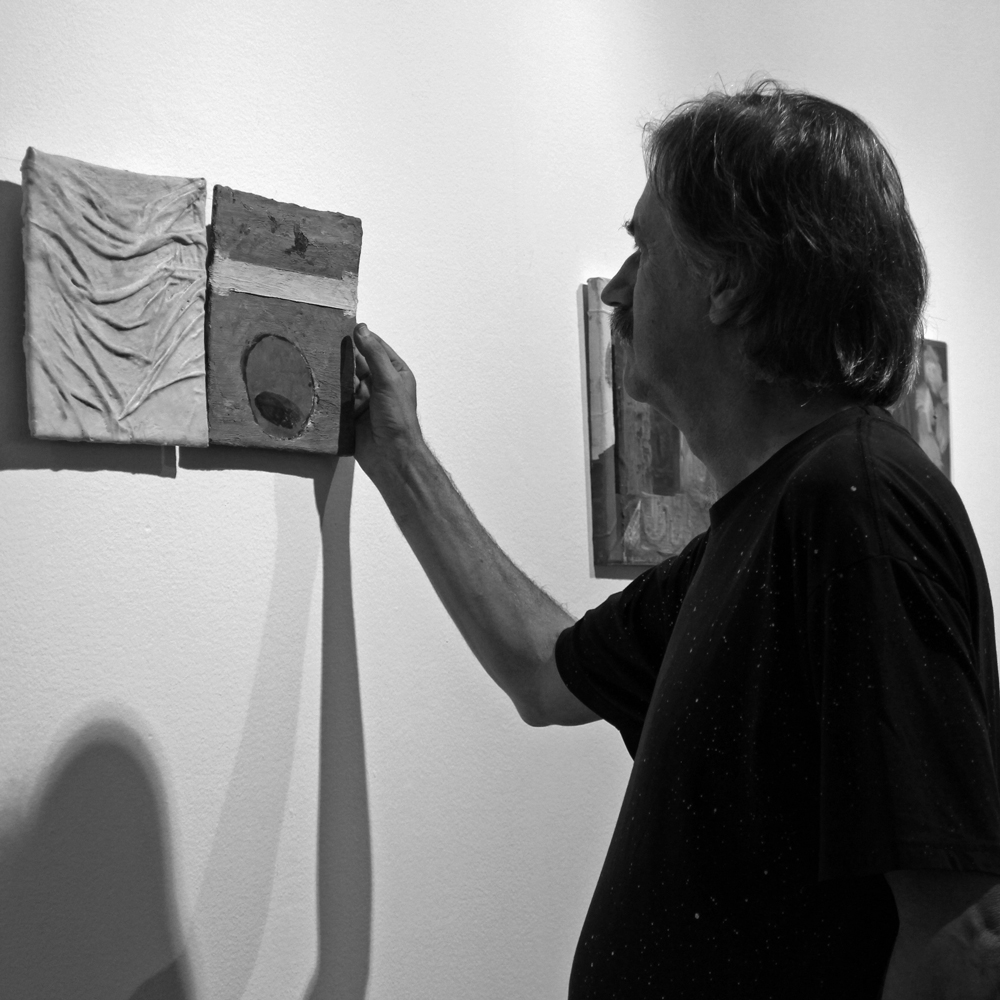
Tony Godfrey (b. 1951) writes, curates and teaches. His books include Conceptual Art (1998 and soon to be translated into Chinese) and Painting Today (2009). He teaches at Ateneo University, Manila and the University of Plymouth where he is a professor. For many years, he led the MA in Contemporary Art at Sotheby’s Institute. He moved from Britain to Asia in 2009 and has worked with artists from China, Indonesia, Malaysia, South Korea, Singapore and The Philippines. Future projects include an exhibition of fifteen Filipino artists in Jogjakarta, Indonesia, books on artists in Indonesia, on the English artist Nigel Cooke and a global history of Contemporary Art. He currently lives in the Philippines.
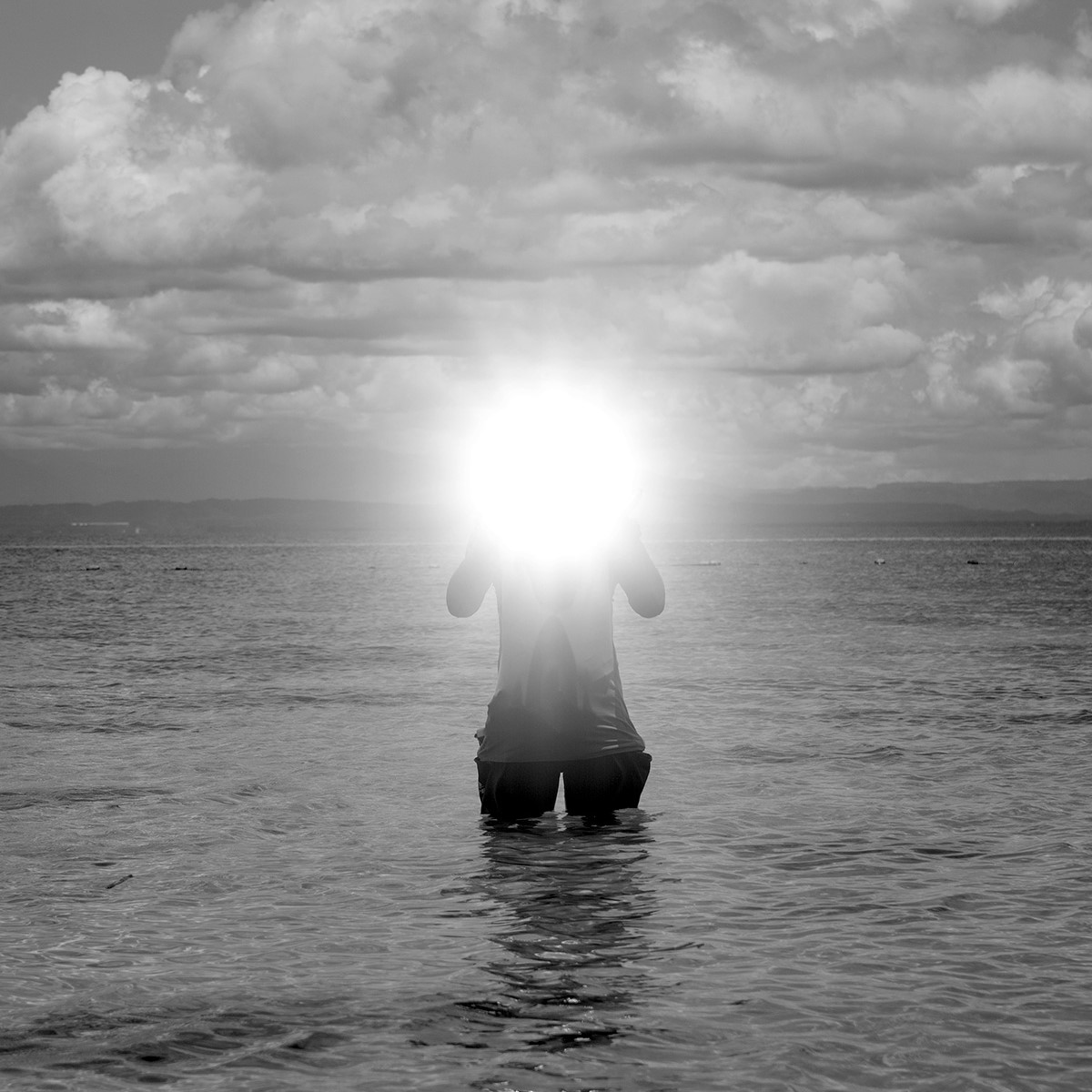
Poklong Anading (b. 1975, Manila, Philippines; lives and works in Manila) works with a wide range of mediums and is acclaimed for his pieces that investigate photography and travel. Fascinated with the process of creation and permutation, Anading explores different mediums to engage with a range of sociopolitical and environmental questions. Having begun his career as a painter, he is not driven by an overt agenda, but prefers to let his mind wander, thinking with and through his materials as they undergo their transformations. He frequently uses found objects and discarded materials that lead him to investigate notions of worth and value, and to explore what it means for art to exist inside and beyond capitalist production.
Anading has completed residencies with Big Sky Mind, Manila, Philippines (2003 to 2004), Common Room, Bandung, Indonesia (2008), Bangkok University Gallery, Thailand (2013), Selasar Sunaryo Art Space, Bandung, Indonesia (2013), Philippine Art Residency Program - Alliance Francaise de Manille in Cite Internationale des Arts, Paris, Centre Intermondes, La Rochelle in France (2014) and das weisse haus, Vienna Austria (2018). He had solo exhibitions in Galerie Zimmermann Kratochwill, Graz, Austria (2010 and 2012), Taro Nasu in Japan and Athr Gallery in Jeddah (2016), 1335MABINI in Manila, Philippines (2013, 2015 and 2017). He has been included in notable group exhibitions such as: Gwangju Biennial, South Korea (2002 and 2012), No Country: Contemporary Art for South and Southeast Asia, the first exhibition of the Guggenheim UBS Map Global Art Initiative in New York, Hong Kong and Singapore (2013 to 2014), 5th Asian Art Biennial: Artist Making Movement, National Taiwan Museum of Fine Arts, Taiwan (2015), The Shadow Never Lies, Minsheng Art Museum, Shanghai, Afterwork, Para Site, Hong Kong, China and in the Architecture Biennale for the 15th International Architecture Exhibition, Philippine Pavilion: Muhon: Traces of an Adolescent City at Palazzo Mora, Venice, Italy (2016), Constellations, Photographs in Dialogue, SFMOMA, California, USA (2021), Living Pictures: Photography in Southeast Asia at National Gallery Singapore (2022) and The Open World, Thailand Biennale (2023).

Henrielle Baltazar Pagkaliwangan (b. 1994, Cavite, Philippines) explores stories behind mundane yet indispensable objects to examine Philippine history and material culture. Drawing inspiration from natural history illustration, she documents personal and historical narratives through prints and drawings.
Pagkaliwangan graduated magna cum laude from the University of the Philippines Diliman, College of Fine Arts (Major in Studio Arts) in 2015, where she also received one of the Department of Studio Arts’ Outstanding Thesis Awards for her undergraduate thesis, Taxonomy of Things. In 2017, she won the grand prize in the Don Papa Rum Art Competition, which included a one-month residency in Florence, Italy. A recipient of the Cultural Center of the Philippines’ 13 Artists Awards in 2024, her work has been featured in solo and group exhibitions in the Philippines and abroad. She is currently pursuing a Master of Fine Arts degree at the University of the Philippines, where she also serves as a lecturer.

Maria Cruz (b. 1957, Manila) was recipient of the Portia Geach Portrait Prize (1997), the Ps1 International Studio Program, New York (2000–2001), the Australia Council Artist Development and Project Grant (1999, 2000–2001), the City of Hobart Contemporary Art Prize (2004), and the Karl Hofer Gesselschaft Residency, Berlin, Germany (2005), as well as residencies at the University of Woolongong (2008), and the Canberra Institute of the Arts (1989). She has lectured in different universities in Australia, including the Canberra School of Art, Australian National University, the Sydney School of Arts, University of Sydney, and the School of Contemporary Arts, University of Western Sydney.
Cruz has participated in solo and group exhibitions internationally, in galleries and institutions such as Galeria Duemila, Artinformal, MO_Space, Ateneo Art Gallery, the Metropolitan Museum of Manila, Cultural Center of the Philippines, the UTS Gallery University of Technology (Australia), the Kaliman Gallery (Australia) Gertrude Contemporary Art Spaces (Australia), Galerie Droescher-Meyer (Germany), the Freies Museum (Germany), and the Mori Gallery in Sydney, among others.

Dina Gadia (b. 1986, Pangasinan, Philippines) currently lives and works in Manila. She graduated from Far Eastern University Manila with a Bachelor of Fine Arts, majoring in Advertising in 2006.
Gadia primarily works in the medium of collage. Her works are sophisticated re-imaginations of found materials including images and texts from comic books, movie posters, and advertisements that are composed into coherent and compelling narratives. Visually arresting with a style that exploits the familiar, in playing with signs and language culled from popular printed matter and other quotidian expression, the works of Dina Gadia are imaginative subversions of cultural codes, featuring collaged realities and altered bodies that bespeak of gender issues and sexuality, taste, and identity, of the official and the outsider, fine art and lowbrow culture, authorship and subjectivity, all done with a touch of whimsy and a sense of wonder for everything strange and absurd. Gadia’s paintings remarkably capture the tone of the cryptic angsts and uncertainties of her subject matter, the lost and inchoate expressions of an oblivious community, applying a touch that is removed from sentimentality or self-righteous judgment. Doing so, the artist employs tropes of illustration and design to remove the proverbial weight of the author’s hand, a postmodern resolve that Gadia has mastered.
She began exhibiting her works in group shows in 2005. Since then, she has had several solo exhibitions in the Philippines. Silverlens Gallery presented Adaptable to New Redundancies in 2013 in its Gillman Barracks space in Singapore. Philippines-based Blanc Gallery organized How Does That Grab You Darling back in 2010, and Let’s Talk about Feelings in 2014.

Nilo Ilarde (b. 1960) is a conceptual artist and curator whose works navigate the intersections between image and word, drawing and writing, and surface and painting. Using both found and constructed objects, he assembles amalgams of image and text that comment on both the formal and conceptual conditions of art and language. He strips and mines his subjects to reveal their history and materiality and in the process creates forms of both declaration and negation.
Ilarde studied Painting at the University of the Philippines College of Fine Arts. Since the 80s, he has been exhibiting his works and curating exhibitions at various galleries and alternative spaces in Manila, including the Cultural Center of the Philippines, The Pinaglabanan Galleries, Finale Art File, West Gallery, Mag;net, MO_Space, Art Informal, and Underground. His works have also been featured in several international exhibitions and art fairs including solo presentations at Art Basel Hong Kong and Art Stage Singapore, both in 2015 and at Art Fair Philippines in 2018. He is also the co-founder of King Kong Art Projects Unlimited and was one of the lead curators of ‘Chabet: 50 Years’ in various venues in Singapore, Hong Kong, and Manila from 2011–2012.
Lou Lim (b. 1989) invests in the connection between the corporeal and the spiritual, between materiality and notions of permanence, between objects and visual imagery, and in what these relations articulate. Her works examine and appropriate the processes of different art forms to further investigate sculpture, creating new contexts for the familiar by exploring ideas and potentialities of surface and touch.
Lim earned her BFA from the University of the Philippines College of Fine Arts and has been actively exhibiting work since 2011. Recent exhibitions include solo presentations “For the Land that Laments” at Silverlens Galleries and “Rest” at CCP in 2022. She was resident at Palais de Tokyo in Paris under the Pavillon Neuflize OBC 2015-2016 program. This participation resulted in a collaborative performance at the Opera Garnier and in group exhibitions at ICA Singapore and the Seoul Museum of Art in South Korea, as well as in a publication with INA [Institut National Audiovisuel]. She was a recipient of the Cultural Center of the Philippines Thirteen Artists Awards 2021.

Gerardo Tan, also known as Gerry Tan, is a visual artist, curator, and art educator. He finished Bachelor of Fine Arts, Major in Painting, at the University of the Philippines (UP) Diliman College of Fine Arts (CFA) in 1982 and Masters of Fine Arts, Major in Painting, at the State University of New York at Buffalo in 1992 as a Fulbright Fellow. He was a professorial lecturer at UP CFA from 1993 to 2000 and the former dean of the University of the East College of Fine Arts from 2002 to 2005. Tan was awarded the Cultural Center of the Philippines Thirteen Artists Award in 1988.
As a conceptual artist, Tan explores the nature of art and how forms and materiality can be articulated in ideas and concepts, be it through painting, sculpture, found objects, artists books, or installations. Often referencing and revisiting his earlier work, Tan deals with aesthetic questions related to the reproducibility of images and the spatial and temporal authenticity of a work.
Tan has exhibited at the Cultural Center of the Philippines, Jorge B. Vargas Museum, Ateneo Art Gallery, Metropolitan Museum of Manila, and Lopez Museum, among many more institutions in the Philippines. He has participated in several international exhibitions such as the 2nd Asian Art Show in Fukuoka Museum, 1982, the 1st Melbourne Biennale,1999, the 4th Gwangju Biennale, 2002, and the inaugural exhibition of The National Gallery of Singapore, 2016. He continues to work with contemporary artists making up the Bastards of Misrepresentation that is curated by Manuel Ocampo, which has aggressively and independently been exhibiting since 2010 in Berlin, Germany, Queens New York, and Sete, France.
In 2022, his work was featured at the Philippine Pavilion of the 59th Venice Biennale entitled Milk of Dreams, curated by Yael Buencamino and Arvin Flores.

Oscar Villamiel (b. 1953) studied Fine Arts at the University of the East (UE). He is a multi-media artist who produces large scale installation works through the collation and collecting of found materials from urban and rural environments. Villamiel has worked as a set designer and entrepreneur the past two decades and went back to his first vocation as a studio artist in 2006, starting with group exhibitions.
Villamiel held his first one-man exhibition, a large-scale installation titled Wounded Spirit, in 2009 at the Art Center of SM Megamall in Mandaluyong, featuring large-scale multimedia paintings. His second solo show, Mourning Glory, was held at the Crucible Gallery in 2010, while his third solo show, titled Stories of our Time, was organized at Light and Space Contemporary in 2012.
Villamiel’s large-scale installation, titled “Payatas,” was exhibited as part of the Singapore Biennale exhibition, If the World Changed (2013) at the Singapore Art Museum. He continued to produce installation works for his solo exhibitions in 2014 at the University of the Philippines Vargas Museum and Light & Space Contemporary, in Quezon City. Villamiel currently lives and works in Marikina City.

Jemima Yabes is a Filipino visual artist whose work centers on the beauty of everyday life, particularly flowers, animals, and stray creatures. Her paintings reflect a quiet reverence for life's fragility and resilience, often exploring moments and beings that are easily overlooked. With a deep focus on flowers and the unassuming lives of animals, Yabes delves into themes of hope, growth, and the passage of time. Her work captures the grace found in the simplest moments, from a flower in full bloom to the presence of a stray resting in peace.
Yabes graduated cum laude from the University of the Philippines Diliman in 2017 and has since exhibited her work in various solo and group shows, including her most recent exhibition, "Sanctuary For The Strays" (2024) at West Gallery. Through her ongoing exploration, Yabes honors all forms of life, particularly those living in quiet spaces, capturing their silent beauty and persistence.
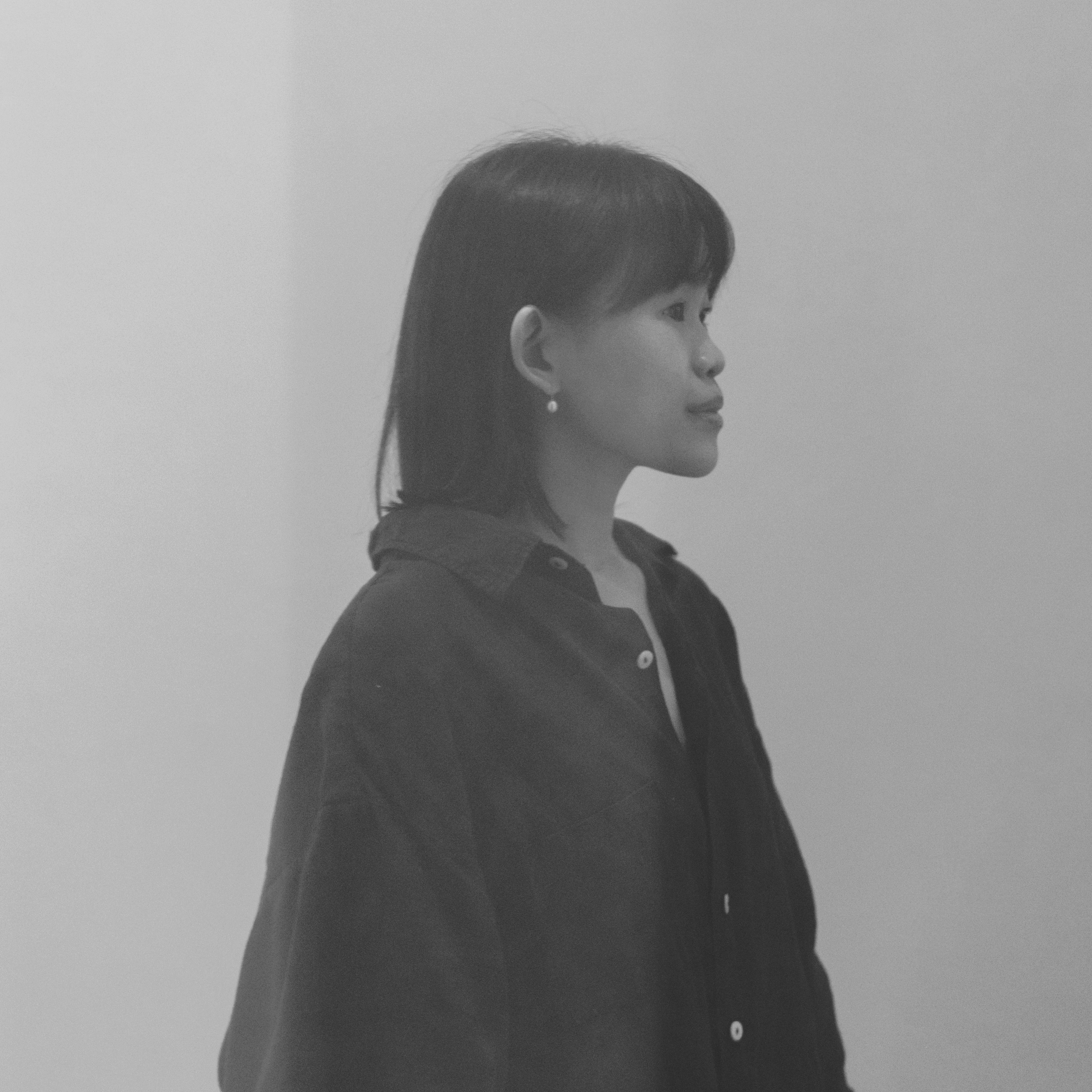
Liu Liling (b.1993, Singapore) works primarily with the photographic image to explore ideas of duration and experiential aspects of the medium, situating them with the installation site.
In her practice, she engages with various printing processes as a tool to arrive at a new picture plane, often suggesting points of departure, a coming into, and stasis. Essential to the works are visual qualities inherent to the making process, materialising as a build-up of minutiae that
foregrounds the work.
Liu graduated from LASALLE College of the Arts, Singapore with a Bachelor's in Fine Arts. Recent exhibitions include ‘Open Plane’, commissioned and presented by Esplanade – Theatres on the Bay, Singapore (2025); a solo presentation at Comma Space, Singapore (2025); ‘After Light’ at Mizuma Gallery, Singapore (2024); and ‘Containment—Field’ at The Back Room, Kuala Lumpur (2025). In 2024, she participated in a residency with Onomichi City University, Hiroshima, Japan.
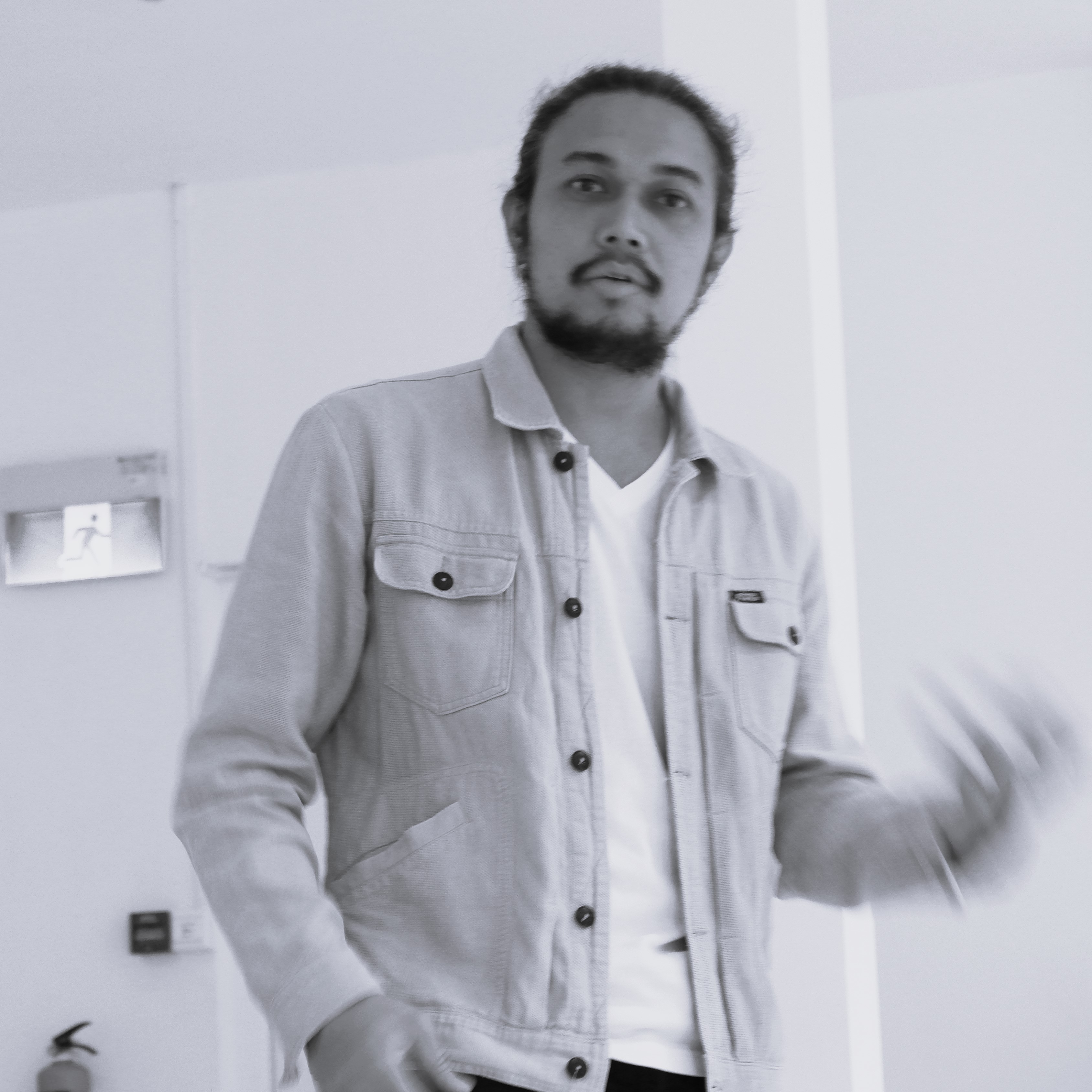
Buen Calubayan (b. 1980, Philippines) is a Manila-based artist whose current work is at the intersections of art, labor, and pedagogy. His interrogations on the institutions of painting, landscape, and linear perspective have led him towards strategies and activations that examine the body’s rhythm, movement, and sensing capacities, realigning bodies and worlds to challenge traditional models of power and oppression. Ultimately, his practice looks into systems at work in everyday life and in relation to the institutions that frame and govern our lives.
His artistic research is realized through diverse methods, from conducting collaborative sensing workshops to diagramming systems of perception, from developing a museology of employment and housework to appropriating historical paintings, and from screening tutorial videos to publishing experimental handbooks, among others.
He has exhibited in Blanc Gallery, UP Vargas Museum, and Ateneo Art Gallery in Quezon City, Philippines; Arario Gallery in Seoul, South Korea; Mind Set Art Center in Taipei, Taiwan; and HKW in Berlin, Germany, among others. He participated in residencies in Japan, Australia, and Singapore. He received a Fernando Zóbel Prize for Visual Art at the Ateneo Art Awards in 2013 and a Thirteen Artists Award from the Cultural Center of the Philippines in 2009.
Related Exhibitions

About the Artists
About the Artist
Tony Godfrey (b. 1951) writes, curates and teaches. His books include Conceptual Art (1998 and soon to be translated into Chinese) and Painting Today (2009). He teaches at Ateneo University, Manila and the University of Plymouth where he is a professor. For many years, he led the MA in Contemporary Art at Sotheby’s Institute. He moved from Britain to Asia in 2009 and has worked with artists from China, Indonesia, Malaysia, South Korea, Singapore and The Philippines. Future projects include an exhibition of fifteen Filipino artists in Jogjakarta, Indonesia, books on artists in Indonesia, on the English artist Nigel Cooke and a global history of Contemporary Art. He currently lives in the Philippines.
Poklong Anading (b. 1975, Manila, Philippines; lives and works in Manila) works with a wide range of mediums and is acclaimed for his pieces that investigate photography and travel. Fascinated with the process of creation and permutation, Anading explores different mediums to engage with a range of sociopolitical and environmental questions. Having begun his career as a painter, he is not driven by an overt agenda, but prefers to let his mind wander, thinking with and through his materials as they undergo their transformations. He frequently uses found objects and discarded materials that lead him to investigate notions of worth and value, and to explore what it means for art to exist inside and beyond capitalist production.
Anading has completed residencies with Big Sky Mind, Manila, Philippines (2003 to 2004), Common Room, Bandung, Indonesia (2008), Bangkok University Gallery, Thailand (2013), Selasar Sunaryo Art Space, Bandung, Indonesia (2013), Philippine Art Residency Program - Alliance Francaise de Manille in Cite Internationale des Arts, Paris, Centre Intermondes, La Rochelle in France (2014) and das weisse haus, Vienna Austria (2018). He had solo exhibitions in Galerie Zimmermann Kratochwill, Graz, Austria (2010 and 2012), Taro Nasu in Japan and Athr Gallery in Jeddah (2016), 1335MABINI in Manila, Philippines (2013, 2015 and 2017). He has been included in notable group exhibitions such as: Gwangju Biennial, South Korea (2002 and 2012), No Country: Contemporary Art for South and Southeast Asia, the first exhibition of the Guggenheim UBS Map Global Art Initiative in New York, Hong Kong and Singapore (2013 to 2014), 5th Asian Art Biennial: Artist Making Movement, National Taiwan Museum of Fine Arts, Taiwan (2015), The Shadow Never Lies, Minsheng Art Museum, Shanghai, Afterwork, Para Site, Hong Kong, China and in the Architecture Biennale for the 15th International Architecture Exhibition, Philippine Pavilion: Muhon: Traces of an Adolescent City at Palazzo Mora, Venice, Italy (2016), Constellations, Photographs in Dialogue, SFMOMA, California, USA (2021), Living Pictures: Photography in Southeast Asia at National Gallery Singapore (2022) and The Open World, Thailand Biennale (2023).
Henrielle Baltazar Pagkaliwangan (b. 1994, Cavite, Philippines) explores stories behind mundane yet indispensable objects to examine Philippine history and material culture. Drawing inspiration from natural history illustration, she documents personal and historical narratives through prints and drawings.
Pagkaliwangan graduated magna cum laude from the University of the Philippines Diliman, College of Fine Arts (Major in Studio Arts) in 2015, where she also received one of the Department of Studio Arts’ Outstanding Thesis Awards for her undergraduate thesis, Taxonomy of Things. In 2017, she won the grand prize in the Don Papa Rum Art Competition, which included a one-month residency in Florence, Italy. A recipient of the Cultural Center of the Philippines’ 13 Artists Awards in 2024, her work has been featured in solo and group exhibitions in the Philippines and abroad. She is currently pursuing a Master of Fine Arts degree at the University of the Philippines, where she also serves as a lecturer.
Maria Cruz (b. 1957, Manila) was recipient of the Portia Geach Portrait Prize (1997), the Ps1 International Studio Program, New York (2000–2001), the Australia Council Artist Development and Project Grant (1999, 2000–2001), the City of Hobart Contemporary Art Prize (2004), and the Karl Hofer Gesselschaft Residency, Berlin, Germany (2005), as well as residencies at the University of Woolongong (2008), and the Canberra Institute of the Arts (1989). She has lectured in different universities in Australia, including the Canberra School of Art, Australian National University, the Sydney School of Arts, University of Sydney, and the School of Contemporary Arts, University of Western Sydney.
Cruz has participated in solo and group exhibitions internationally, in galleries and institutions such as Galeria Duemila, Artinformal, MO_Space, Ateneo Art Gallery, the Metropolitan Museum of Manila, Cultural Center of the Philippines, the UTS Gallery University of Technology (Australia), the Kaliman Gallery (Australia) Gertrude Contemporary Art Spaces (Australia), Galerie Droescher-Meyer (Germany), the Freies Museum (Germany), and the Mori Gallery in Sydney, among others.
Dina Gadia (b. 1986, Pangasinan, Philippines) currently lives and works in Manila. She graduated from Far Eastern University Manila with a Bachelor of Fine Arts, majoring in Advertising in 2006.
Gadia primarily works in the medium of collage. Her works are sophisticated re-imaginations of found materials including images and texts from comic books, movie posters, and advertisements that are composed into coherent and compelling narratives. Visually arresting with a style that exploits the familiar, in playing with signs and language culled from popular printed matter and other quotidian expression, the works of Dina Gadia are imaginative subversions of cultural codes, featuring collaged realities and altered bodies that bespeak of gender issues and sexuality, taste, and identity, of the official and the outsider, fine art and lowbrow culture, authorship and subjectivity, all done with a touch of whimsy and a sense of wonder for everything strange and absurd. Gadia’s paintings remarkably capture the tone of the cryptic angsts and uncertainties of her subject matter, the lost and inchoate expressions of an oblivious community, applying a touch that is removed from sentimentality or self-righteous judgment. Doing so, the artist employs tropes of illustration and design to remove the proverbial weight of the author’s hand, a postmodern resolve that Gadia has mastered.
She began exhibiting her works in group shows in 2005. Since then, she has had several solo exhibitions in the Philippines. Silverlens Gallery presented Adaptable to New Redundancies in 2013 in its Gillman Barracks space in Singapore. Philippines-based Blanc Gallery organized How Does That Grab You Darling back in 2010, and Let’s Talk about Feelings in 2014.
Nilo Ilarde (b. 1960) is a conceptual artist and curator whose works navigate the intersections between image and word, drawing and writing, and surface and painting. Using both found and constructed objects, he assembles amalgams of image and text that comment on both the formal and conceptual conditions of art and language. He strips and mines his subjects to reveal their history and materiality and in the process creates forms of both declaration and negation.
Ilarde studied Painting at the University of the Philippines College of Fine Arts. Since the 80s, he has been exhibiting his works and curating exhibitions at various galleries and alternative spaces in Manila, including the Cultural Center of the Philippines, The Pinaglabanan Galleries, Finale Art File, West Gallery, Mag;net, MO_Space, Art Informal, and Underground. His works have also been featured in several international exhibitions and art fairs including solo presentations at Art Basel Hong Kong and Art Stage Singapore, both in 2015 and at Art Fair Philippines in 2018. He is also the co-founder of King Kong Art Projects Unlimited and was one of the lead curators of ‘Chabet: 50 Years’ in various venues in Singapore, Hong Kong, and Manila from 2011–2012.
Lou Lim (b. 1989) invests in the connection between the corporeal and the spiritual, between materiality and notions of permanence, between objects and visual imagery, and in what these relations articulate. Her works examine and appropriate the processes of different art forms to further investigate sculpture, creating new contexts for the familiar by exploring ideas and potentialities of surface and touch.
Lim earned her BFA from the University of the Philippines College of Fine Arts and has been actively exhibiting work since 2011. Recent exhibitions include solo presentations “For the Land that Laments” at Silverlens Galleries and “Rest” at CCP in 2022. She was resident at Palais de Tokyo in Paris under the Pavillon Neuflize OBC 2015-2016 program. This participation resulted in a collaborative performance at the Opera Garnier and in group exhibitions at ICA Singapore and the Seoul Museum of Art in South Korea, as well as in a publication with INA [Institut National Audiovisuel]. She was a recipient of the Cultural Center of the Philippines Thirteen Artists Awards 2021.
Gerardo Tan, also known as Gerry Tan, is a visual artist, curator, and art educator. He finished Bachelor of Fine Arts, Major in Painting, at the University of the Philippines (UP) Diliman College of Fine Arts (CFA) in 1982 and Masters of Fine Arts, Major in Painting, at the State University of New York at Buffalo in 1992 as a Fulbright Fellow. He was a professorial lecturer at UP CFA from 1993 to 2000 and the former dean of the University of the East College of Fine Arts from 2002 to 2005. Tan was awarded the Cultural Center of the Philippines Thirteen Artists Award in 1988.
As a conceptual artist, Tan explores the nature of art and how forms and materiality can be articulated in ideas and concepts, be it through painting, sculpture, found objects, artists books, or installations. Often referencing and revisiting his earlier work, Tan deals with aesthetic questions related to the reproducibility of images and the spatial and temporal authenticity of a work.
Tan has exhibited at the Cultural Center of the Philippines, Jorge B. Vargas Museum, Ateneo Art Gallery, Metropolitan Museum of Manila, and Lopez Museum, among many more institutions in the Philippines. He has participated in several international exhibitions such as the 2nd Asian Art Show in Fukuoka Museum, 1982, the 1st Melbourne Biennale,1999, the 4th Gwangju Biennale, 2002, and the inaugural exhibition of The National Gallery of Singapore, 2016. He continues to work with contemporary artists making up the Bastards of Misrepresentation that is curated by Manuel Ocampo, which has aggressively and independently been exhibiting since 2010 in Berlin, Germany, Queens New York, and Sete, France.
In 2022, his work was featured at the Philippine Pavilion of the 59th Venice Biennale entitled Milk of Dreams, curated by Yael Buencamino and Arvin Flores.
Oscar Villamiel (b. 1953) studied Fine Arts at the University of the East (UE). He is a multi-media artist who produces large scale installation works through the collation and collecting of found materials from urban and rural environments. Villamiel has worked as a set designer and entrepreneur the past two decades and went back to his first vocation as a studio artist in 2006, starting with group exhibitions.
Villamiel held his first one-man exhibition, a large-scale installation titled Wounded Spirit, in 2009 at the Art Center of SM Megamall in Mandaluyong, featuring large-scale multimedia paintings. His second solo show, Mourning Glory, was held at the Crucible Gallery in 2010, while his third solo show, titled Stories of our Time, was organized at Light and Space Contemporary in 2012.
Villamiel’s large-scale installation, titled “Payatas,” was exhibited as part of the Singapore Biennale exhibition, If the World Changed (2013) at the Singapore Art Museum. He continued to produce installation works for his solo exhibitions in 2014 at the University of the Philippines Vargas Museum and Light & Space Contemporary, in Quezon City. Villamiel currently lives and works in Marikina City.
Jemima Yabes is a Filipino visual artist whose work centers on the beauty of everyday life, particularly flowers, animals, and stray creatures. Her paintings reflect a quiet reverence for life's fragility and resilience, often exploring moments and beings that are easily overlooked. With a deep focus on flowers and the unassuming lives of animals, Yabes delves into themes of hope, growth, and the passage of time. Her work captures the grace found in the simplest moments, from a flower in full bloom to the presence of a stray resting in peace.
Yabes graduated cum laude from the University of the Philippines Diliman in 2017 and has since exhibited her work in various solo and group shows, including her most recent exhibition, "Sanctuary For The Strays" (2024) at West Gallery. Through her ongoing exploration, Yabes honors all forms of life, particularly those living in quiet spaces, capturing their silent beauty and persistence.
Liu Liling (b.1993, Singapore) works primarily with the photographic image to explore ideas of duration and experiential aspects of the medium, situating them with the installation site.
In her practice, she engages with various printing processes as a tool to arrive at a new picture plane, often suggesting points of departure, a coming into, and stasis. Essential to the works are visual qualities inherent to the making process, materialising as a build-up of minutiae that
foregrounds the work.
Liu graduated from LASALLE College of the Arts, Singapore with a Bachelor's in Fine Arts. Recent exhibitions include ‘Open Plane’, commissioned and presented by Esplanade – Theatres on the Bay, Singapore (2025); a solo presentation at Comma Space, Singapore (2025); ‘After Light’ at Mizuma Gallery, Singapore (2024); and ‘Containment—Field’ at The Back Room, Kuala Lumpur (2025). In 2024, she participated in a residency with Onomichi City University, Hiroshima, Japan.
Buen Calubayan (b. 1980, Philippines) is a Manila-based artist whose current work is at the intersections of art, labor, and pedagogy. His interrogations on the institutions of painting, landscape, and linear perspective have led him towards strategies and activations that examine the body’s rhythm, movement, and sensing capacities, realigning bodies and worlds to challenge traditional models of power and oppression. Ultimately, his practice looks into systems at work in everyday life and in relation to the institutions that frame and govern our lives.
His artistic research is realized through diverse methods, from conducting collaborative sensing workshops to diagramming systems of perception, from developing a museology of employment and housework to appropriating historical paintings, and from screening tutorial videos to publishing experimental handbooks, among others.
He has exhibited in Blanc Gallery, UP Vargas Museum, and Ateneo Art Gallery in Quezon City, Philippines; Arario Gallery in Seoul, South Korea; Mind Set Art Center in Taipei, Taiwan; and HKW in Berlin, Germany, among others. He participated in residencies in Japan, Australia, and Singapore. He received a Fernando Zóbel Prize for Visual Art at the Ateneo Art Awards in 2013 and a Thirteen Artists Award from the Cultural Center of the Philippines in 2009.

Share