MUDCLAYEARTH: THE EARTH ART OF ALAN CABALFIN
Ties between humans and the earth remain immemorial. One memory recalls that humans were molded from clay. Another has the myth of races shaped by firing a kiln, from where sprung humans with skins of white, black, and brown colors. In shards of clay, figures were etched of humans and their ancient world.
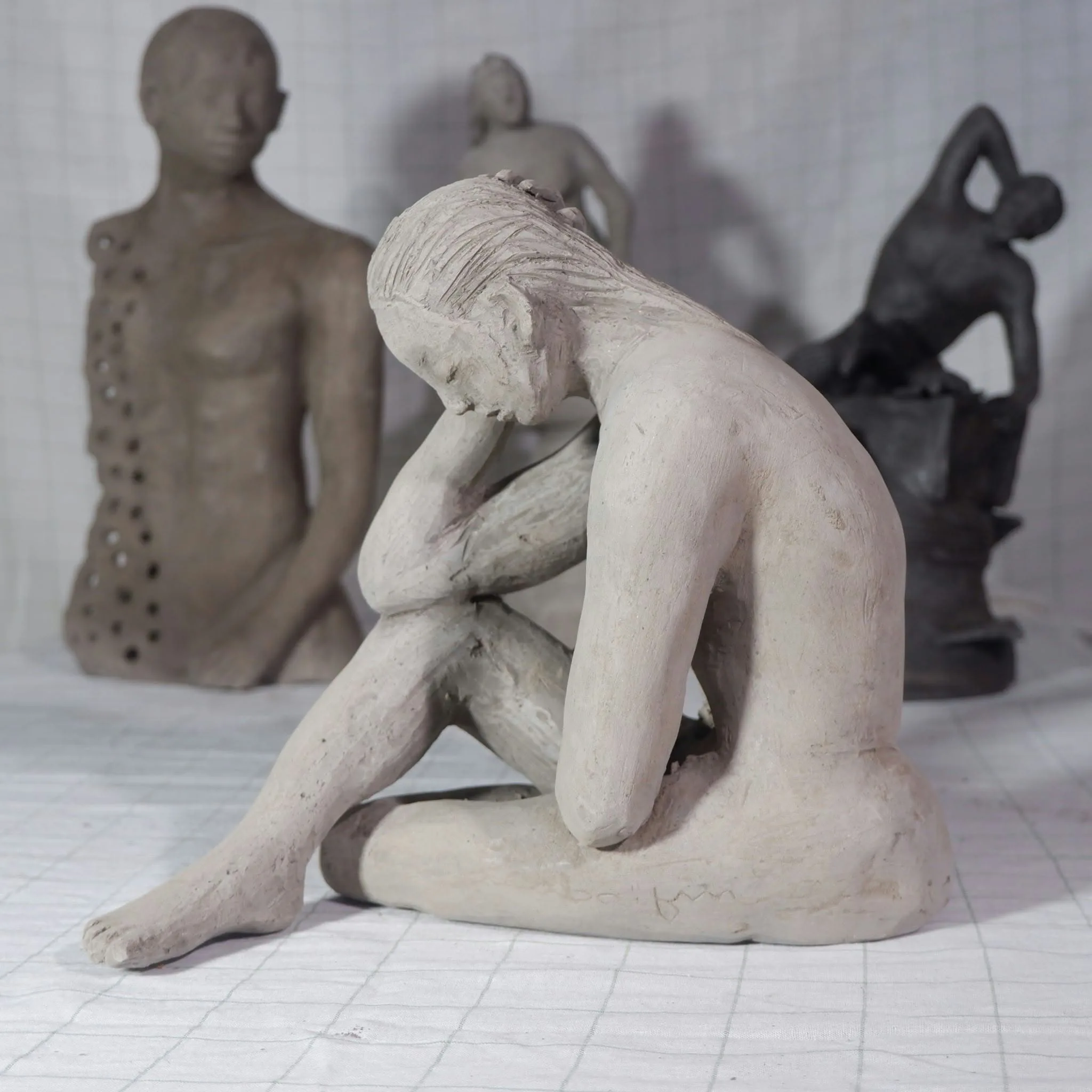
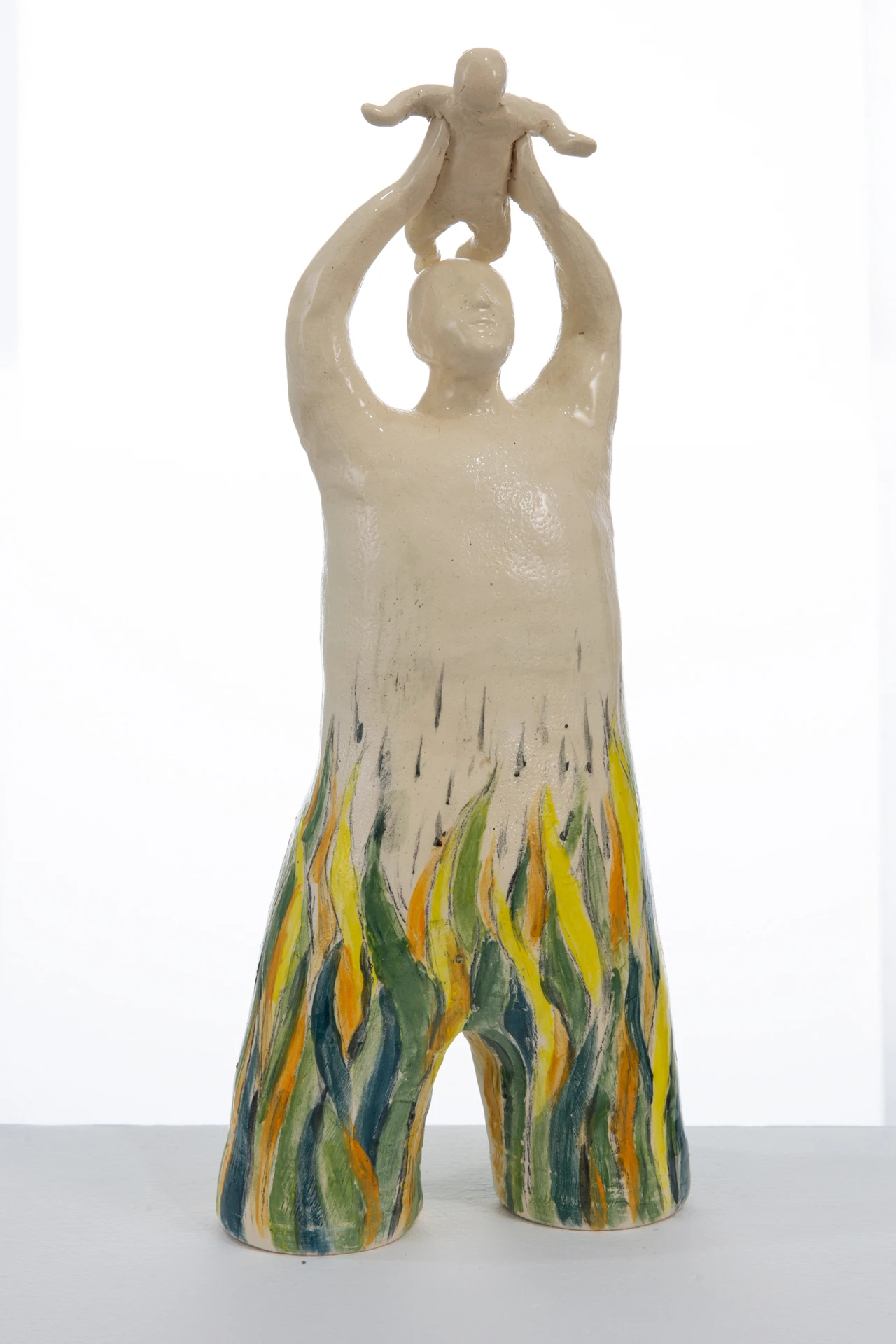
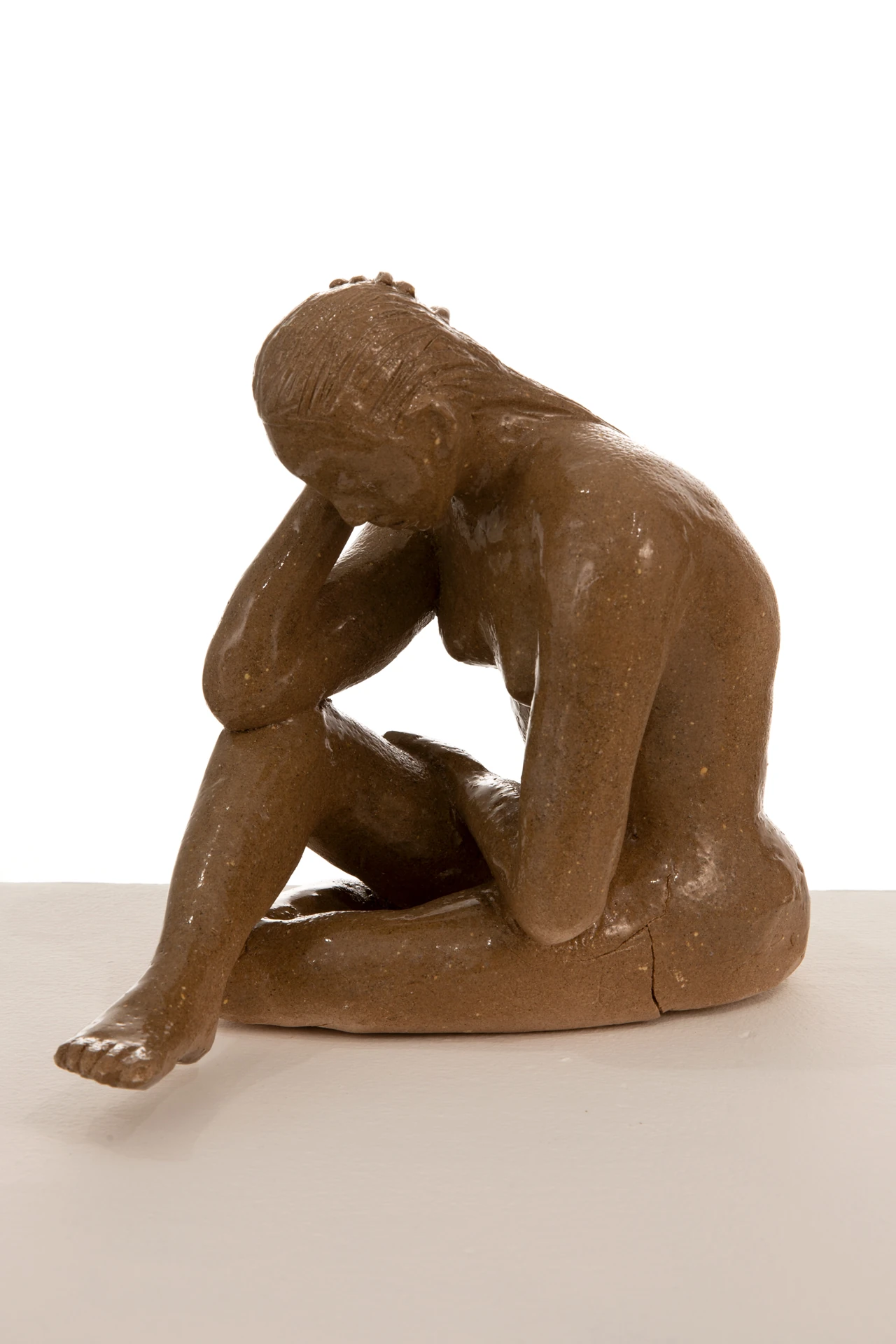
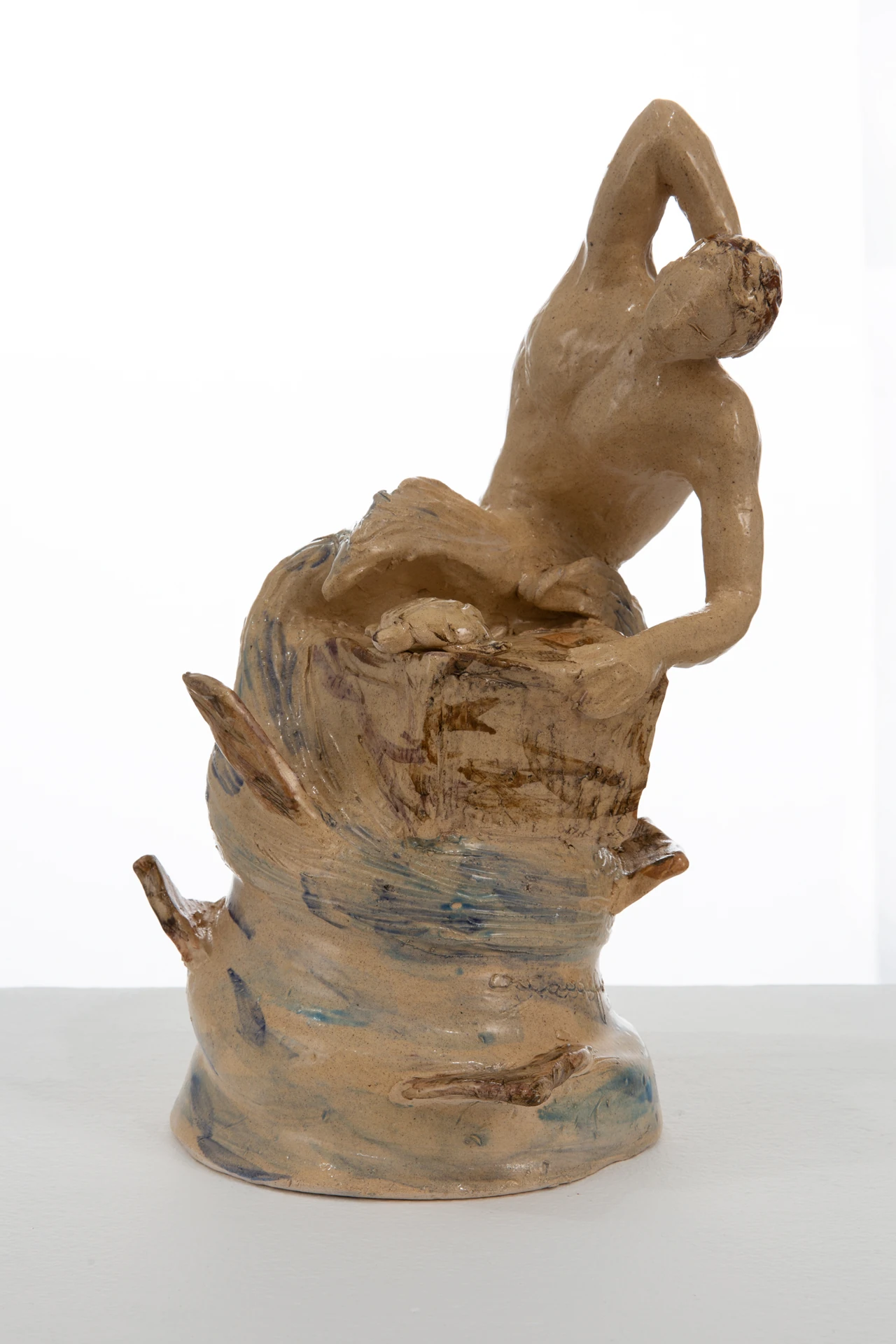
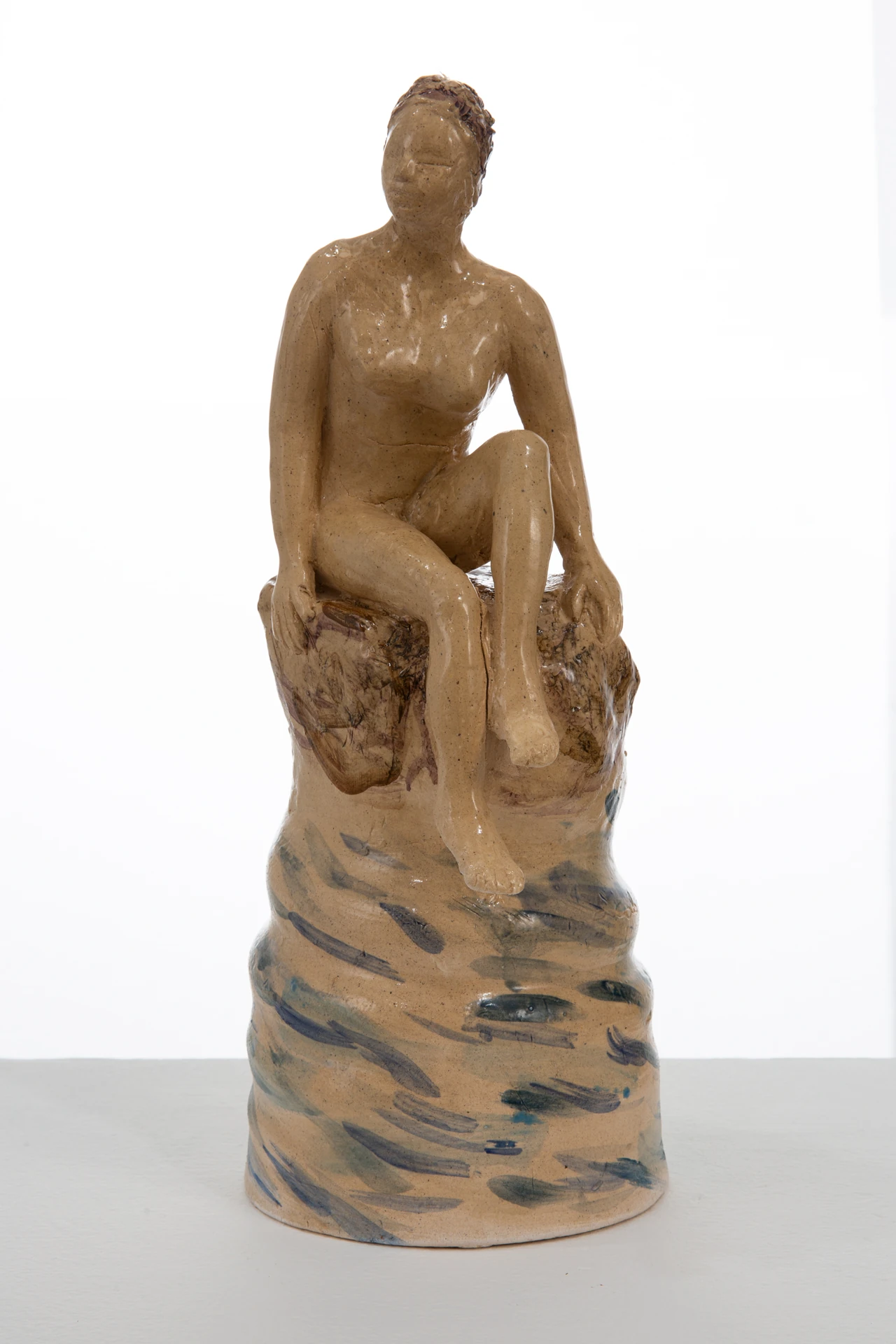
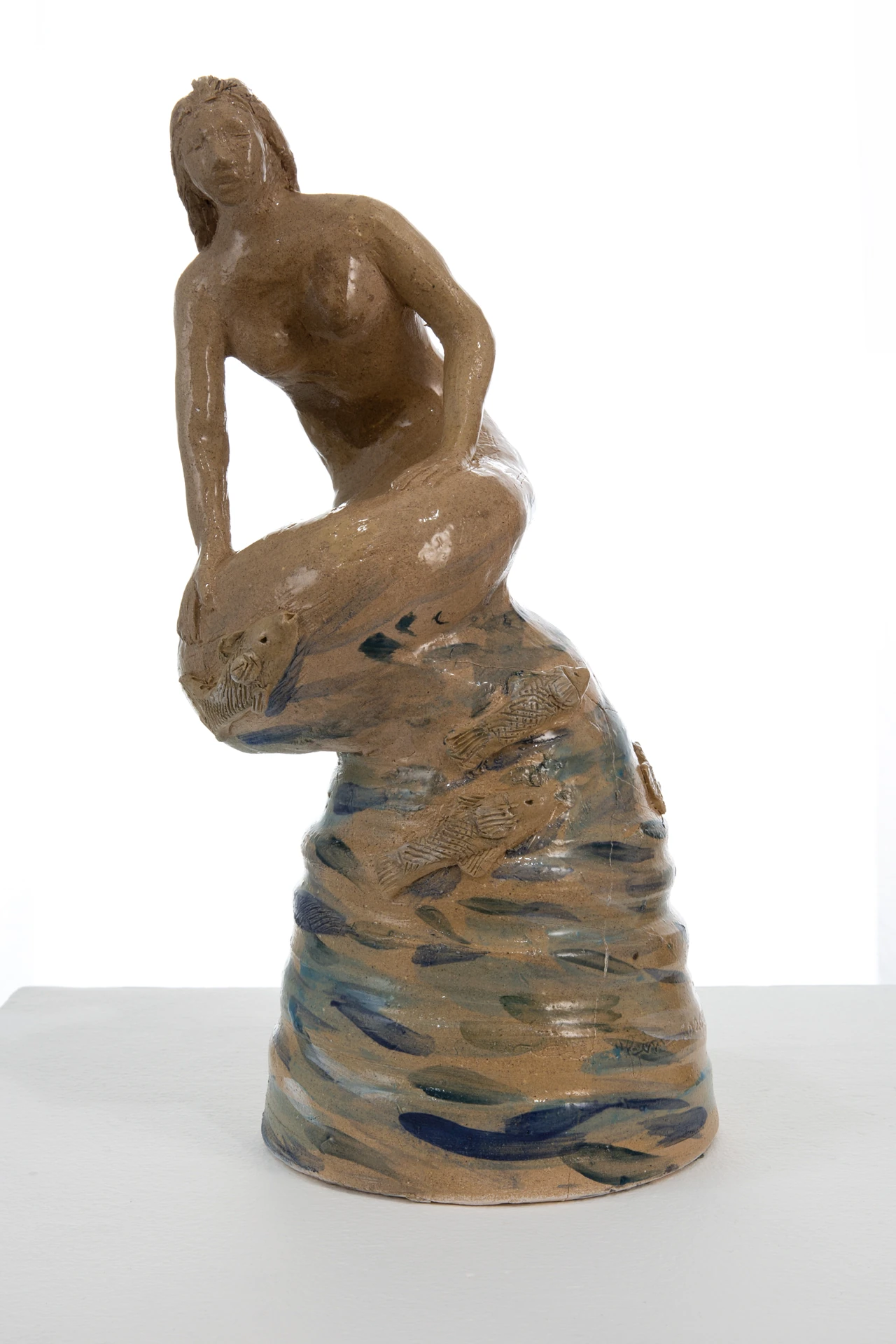
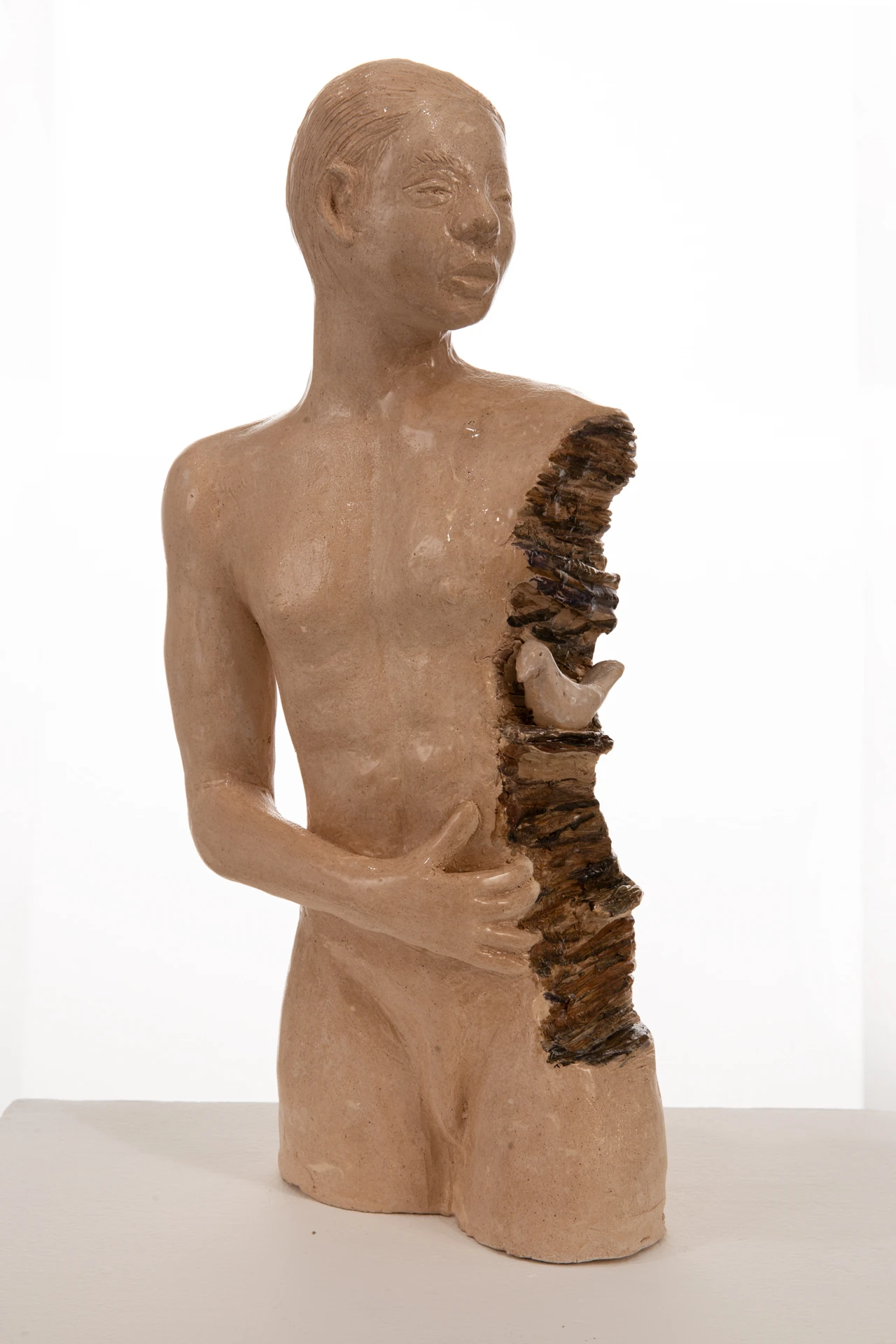
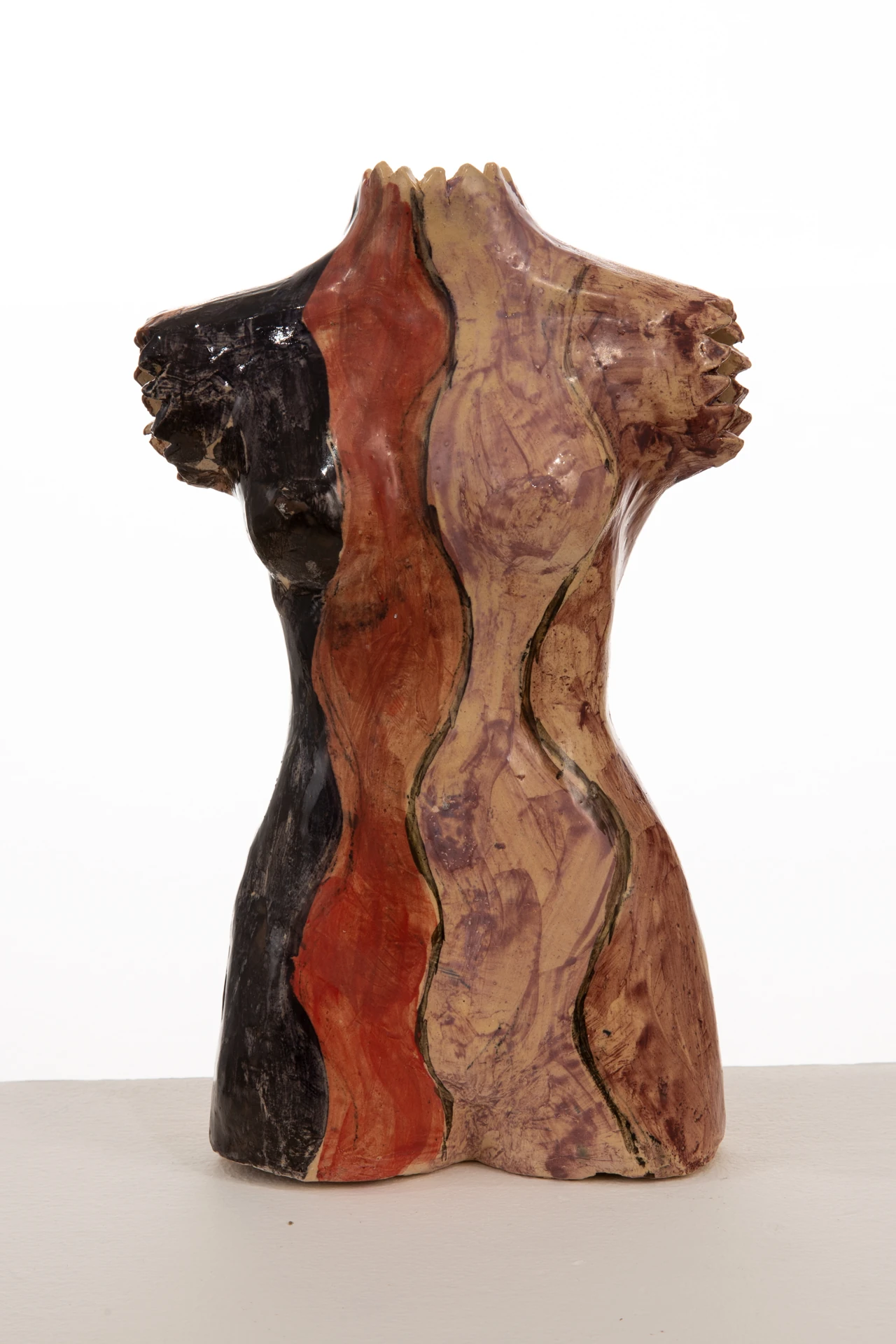
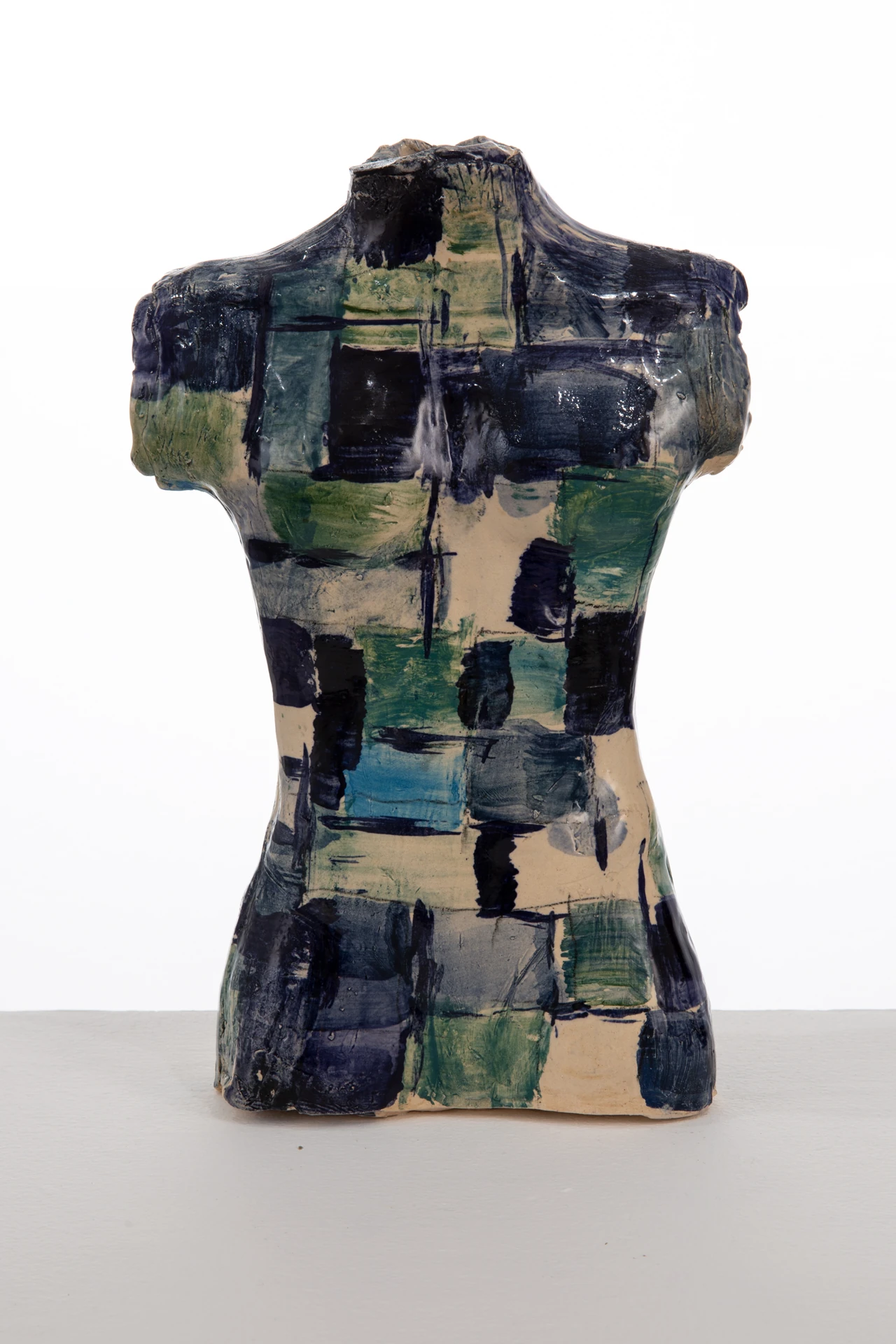
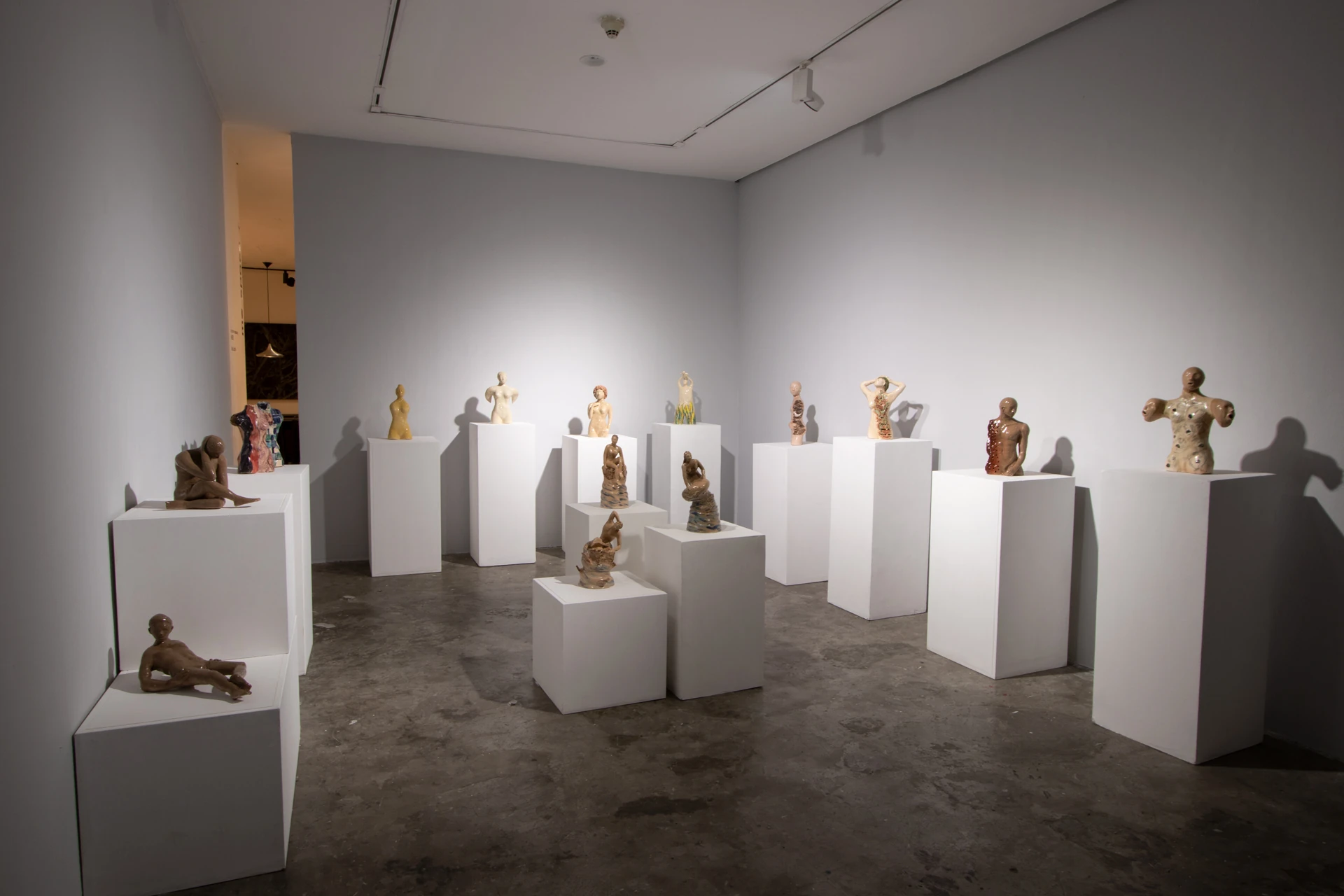
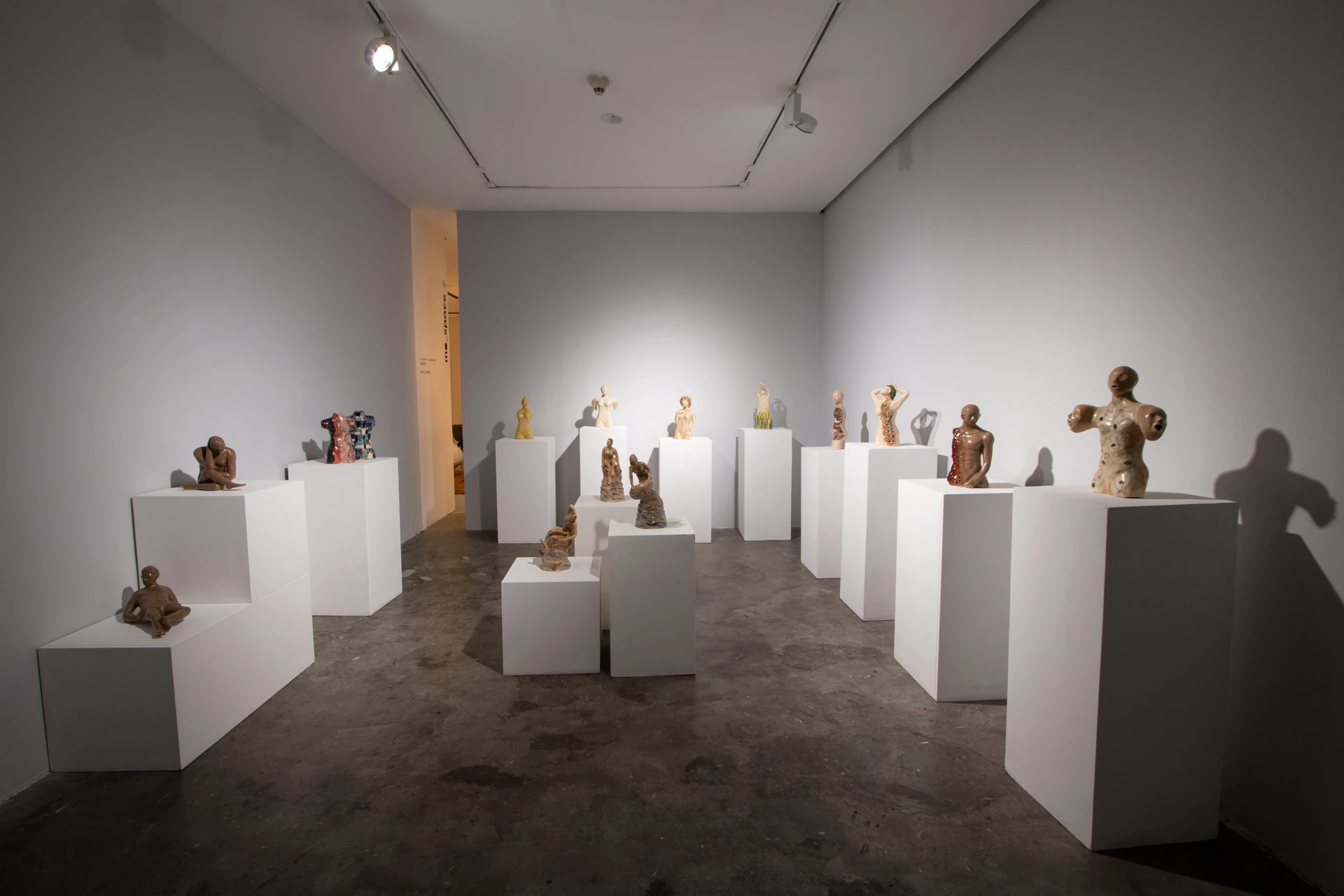
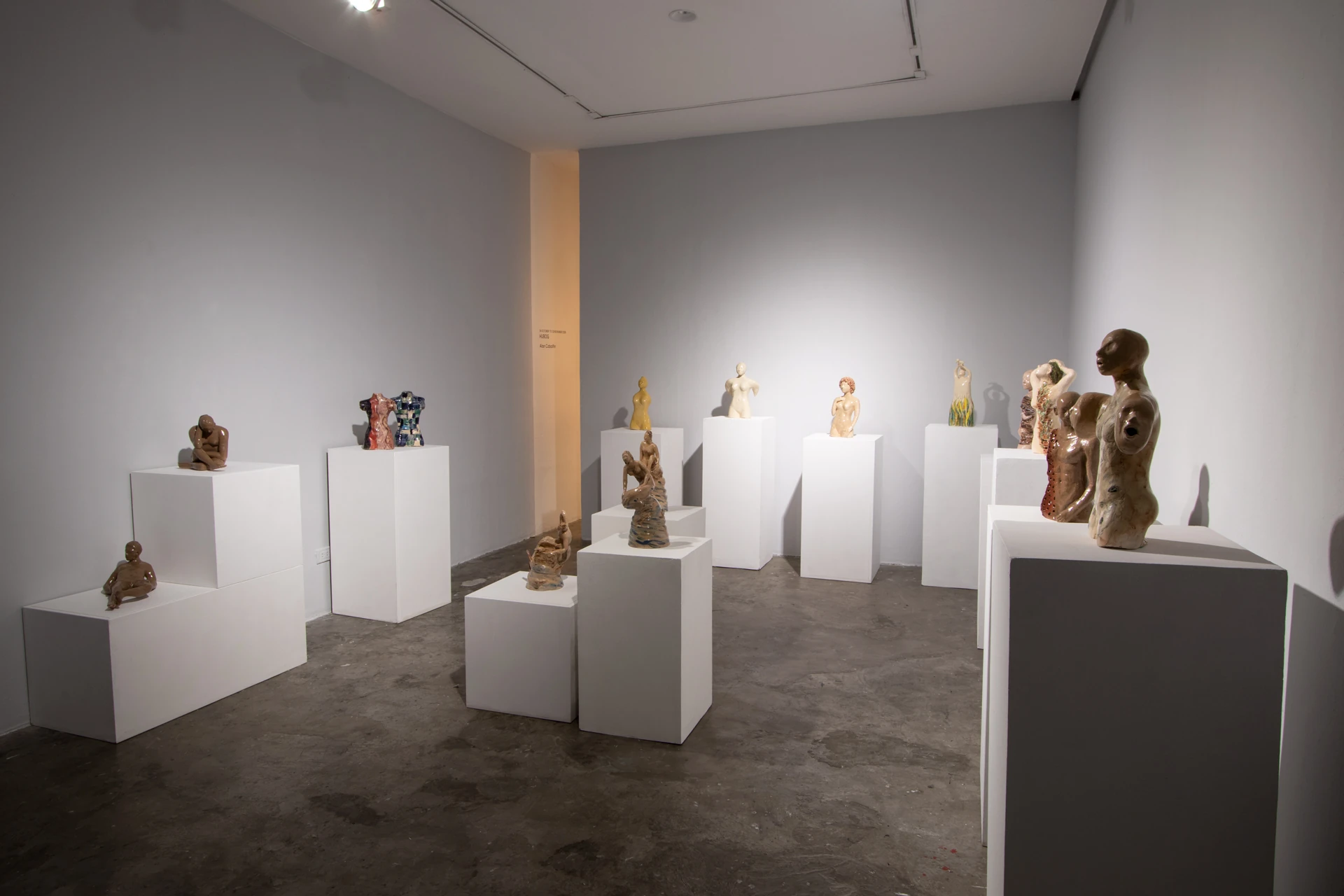
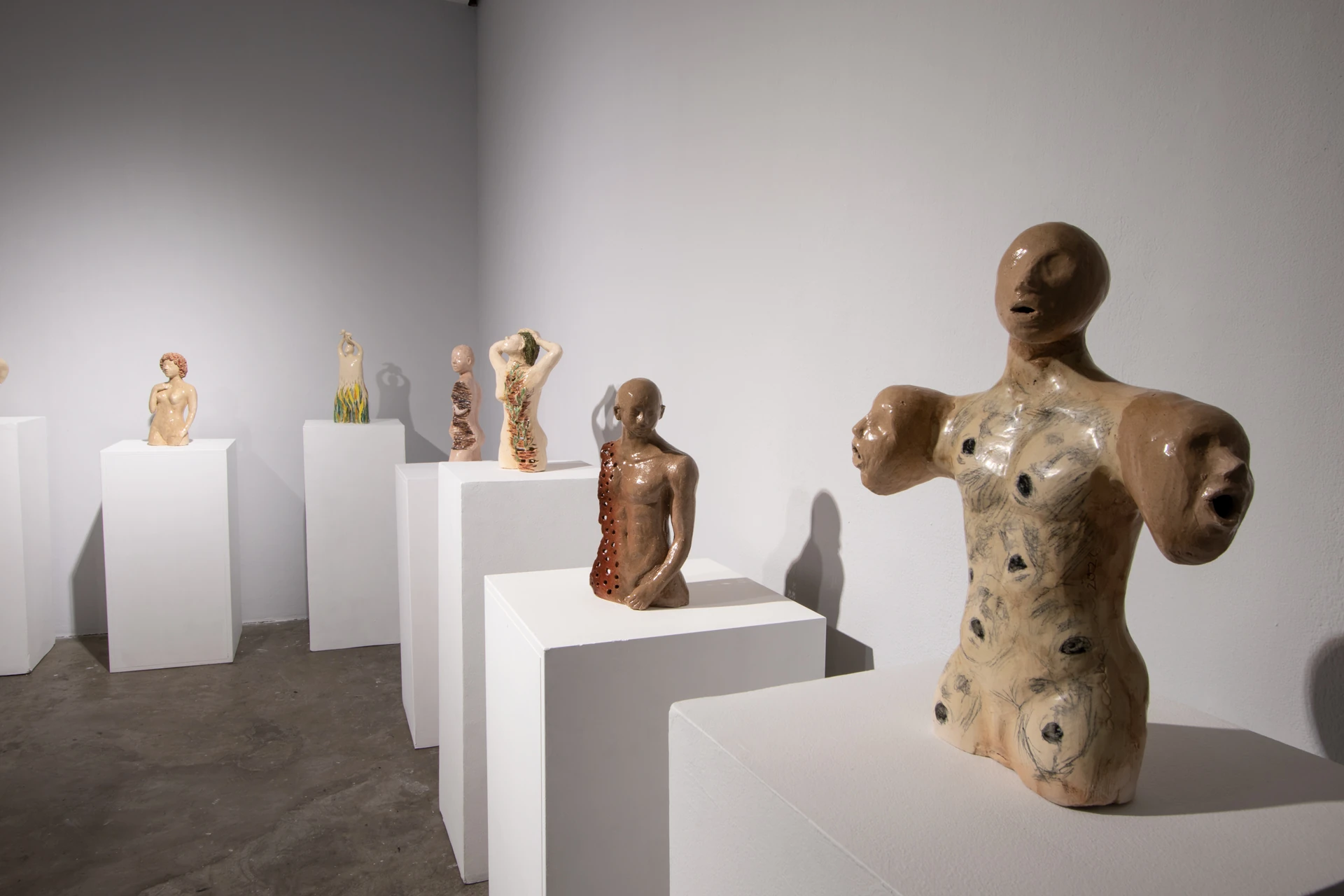
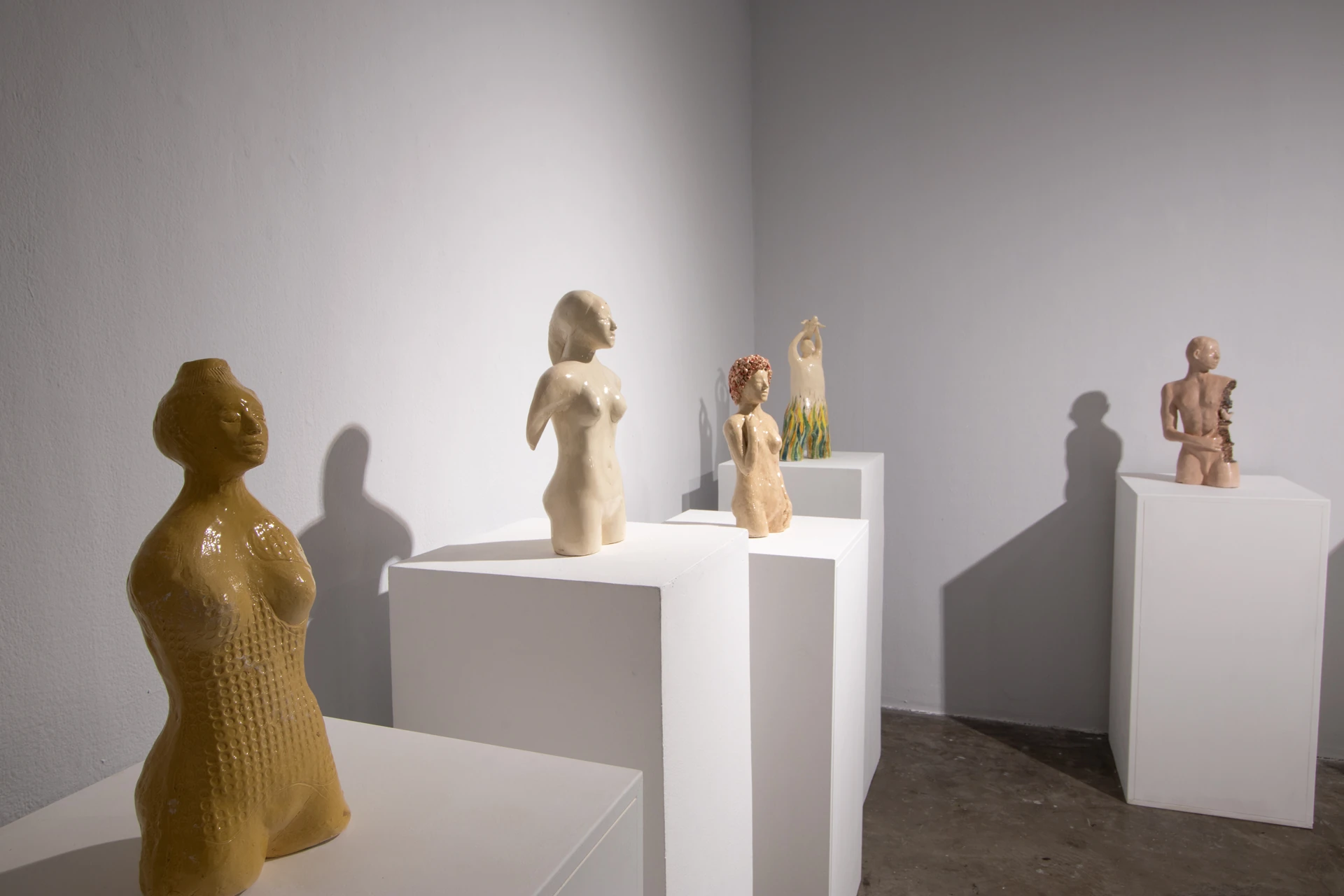
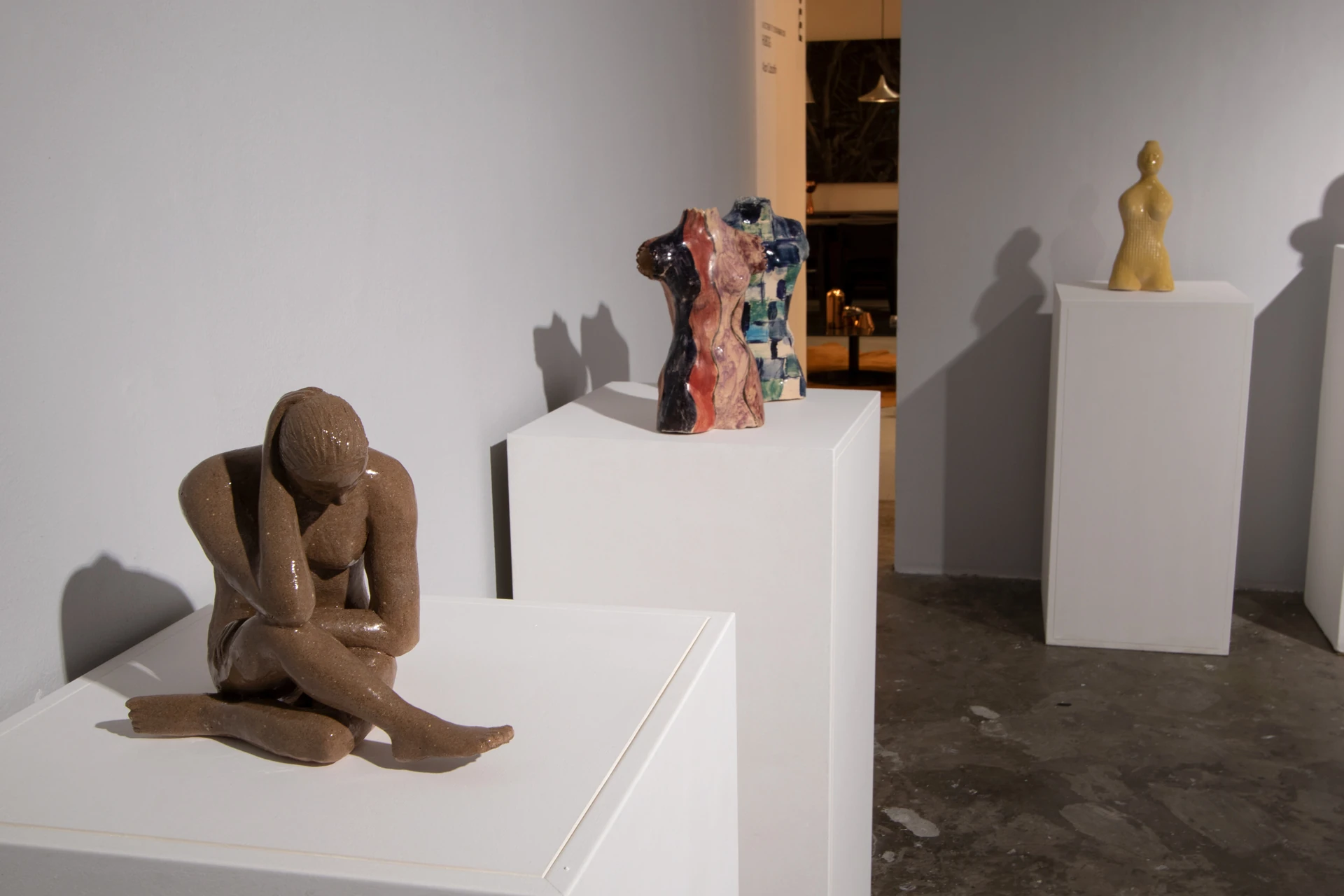
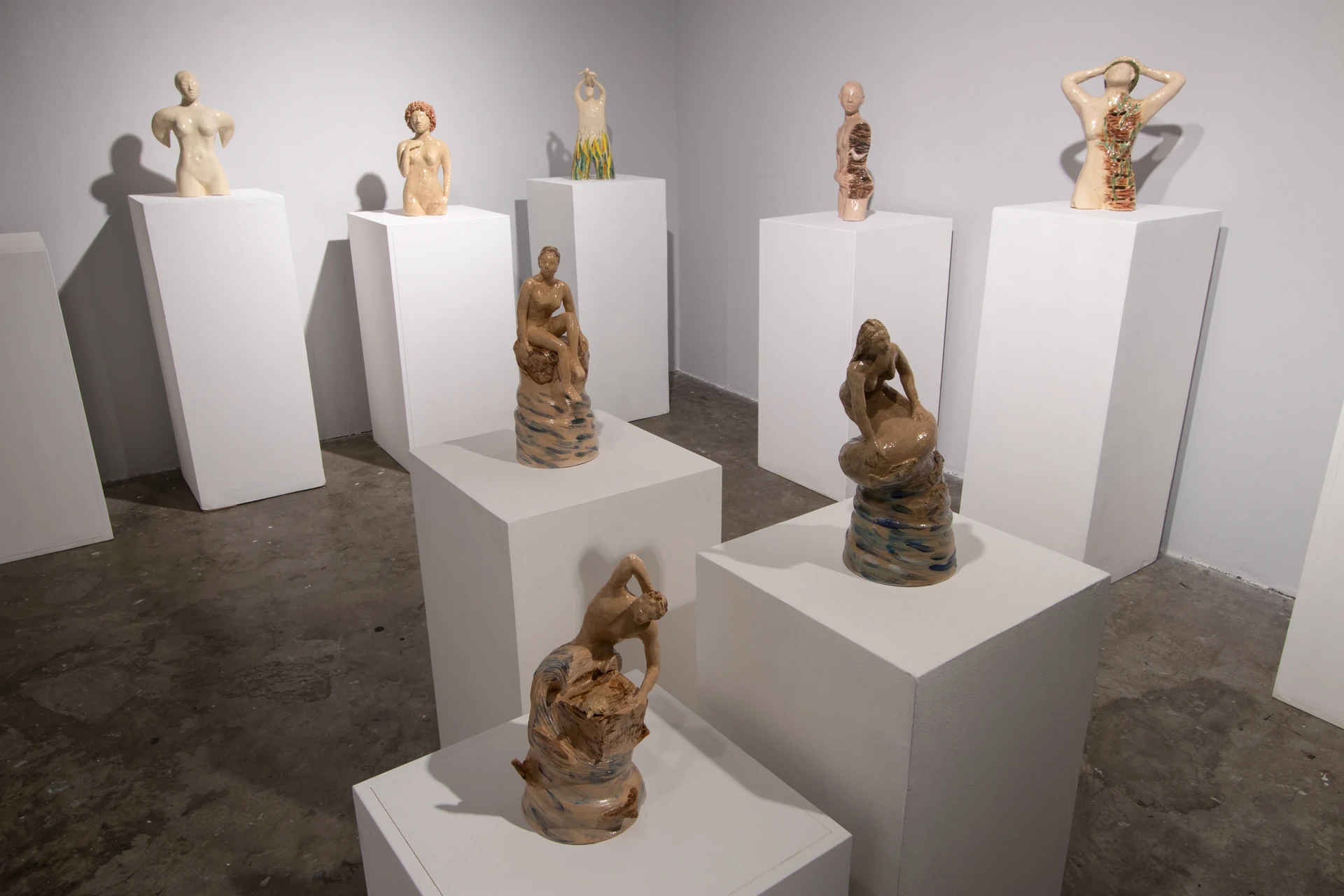
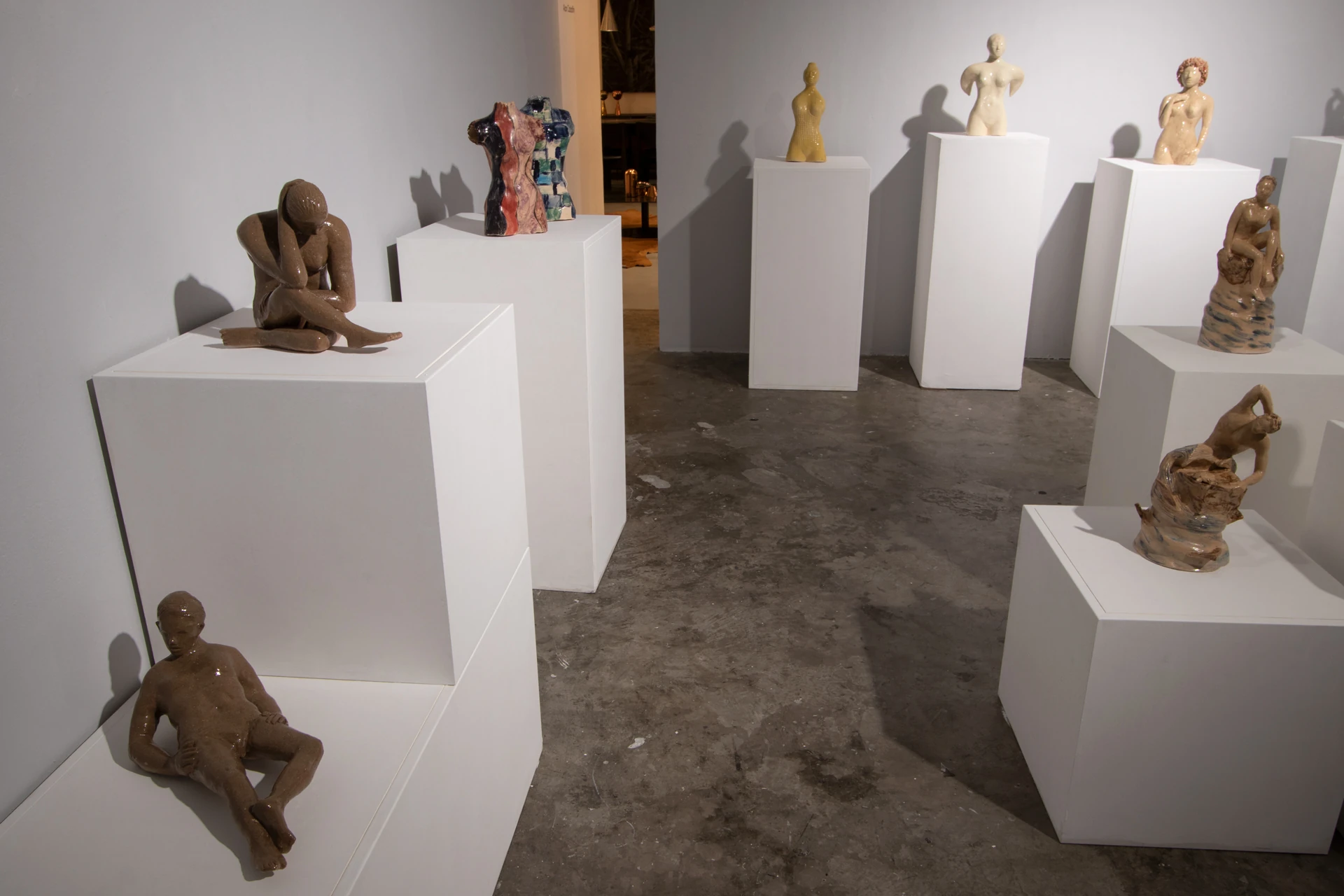
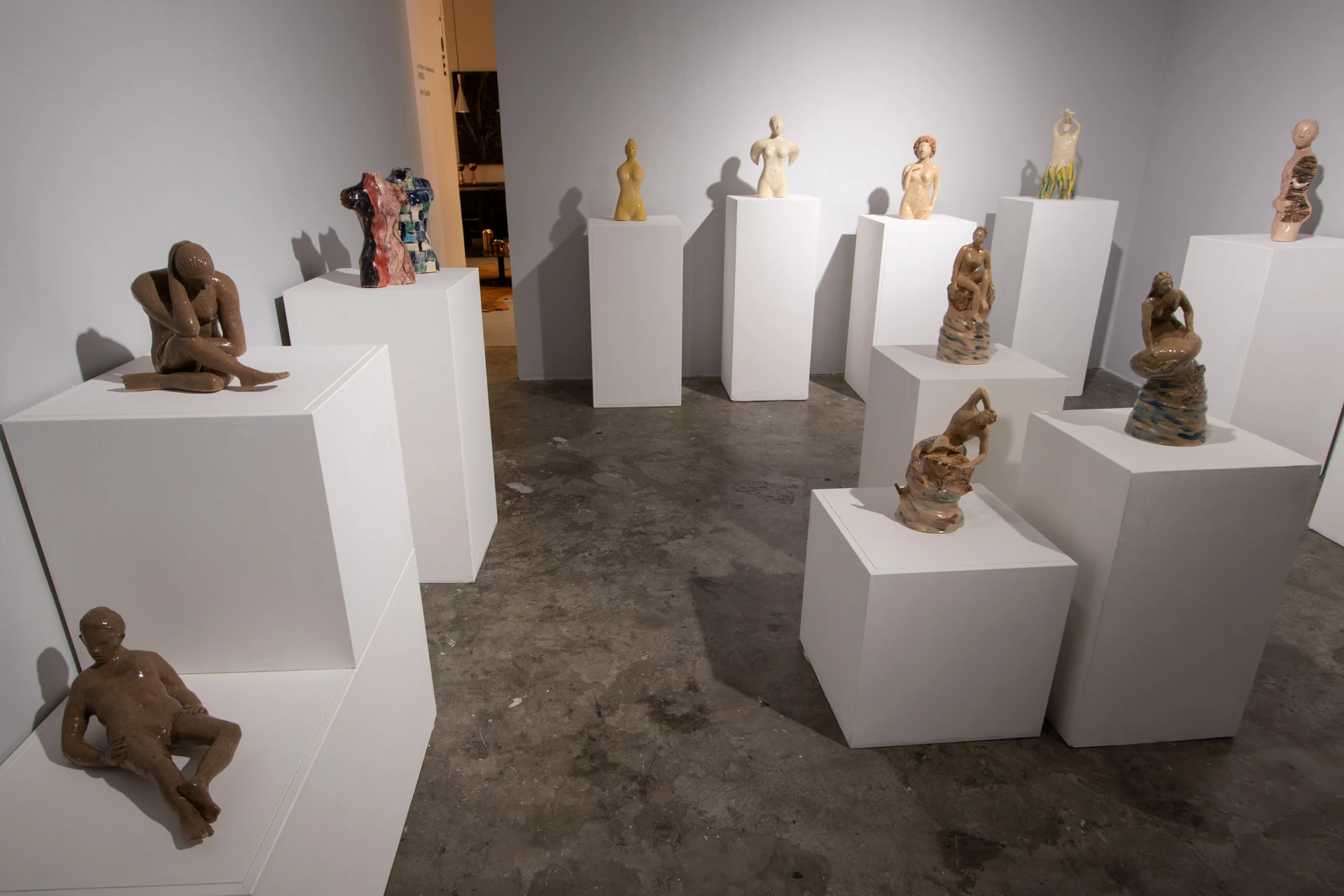
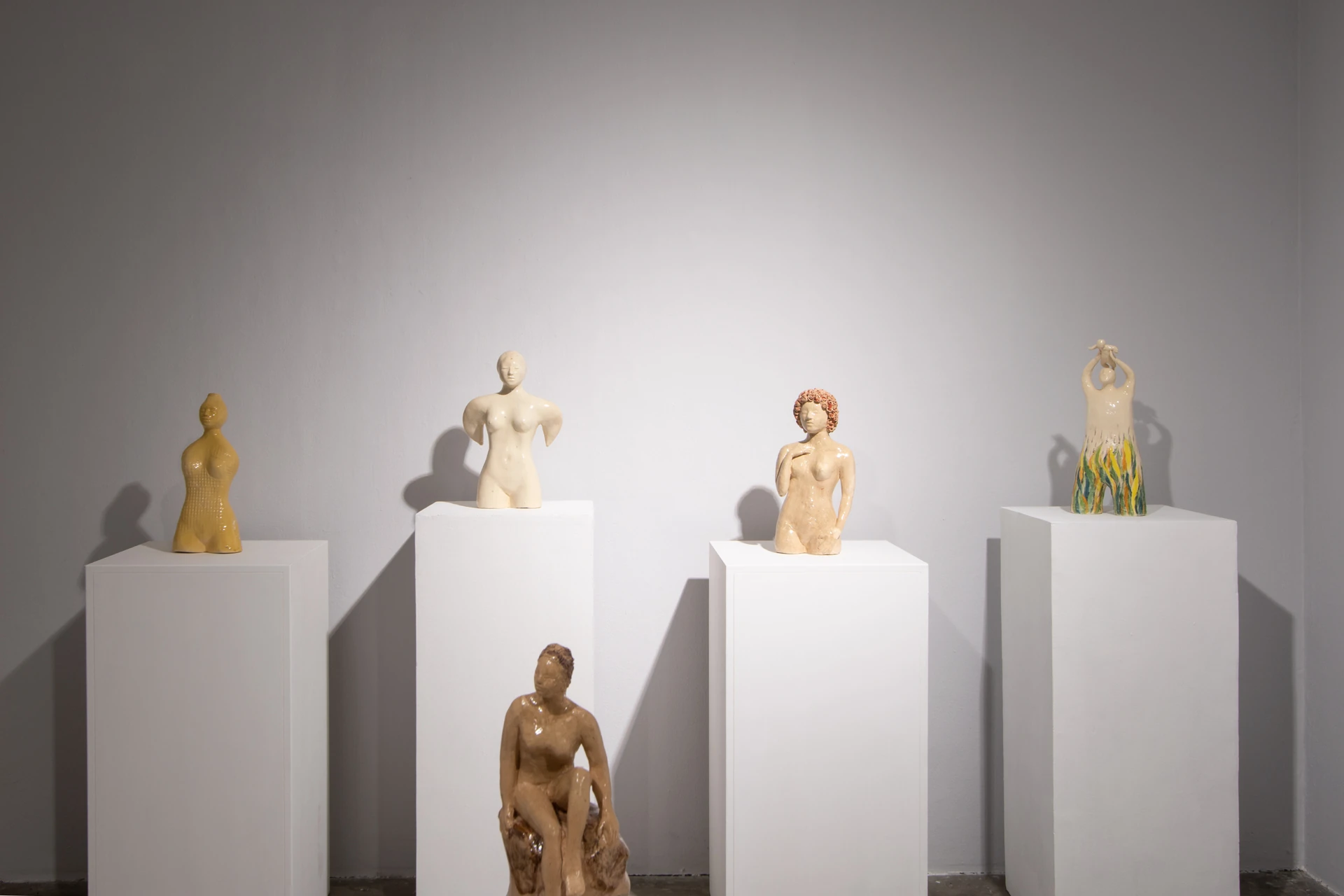
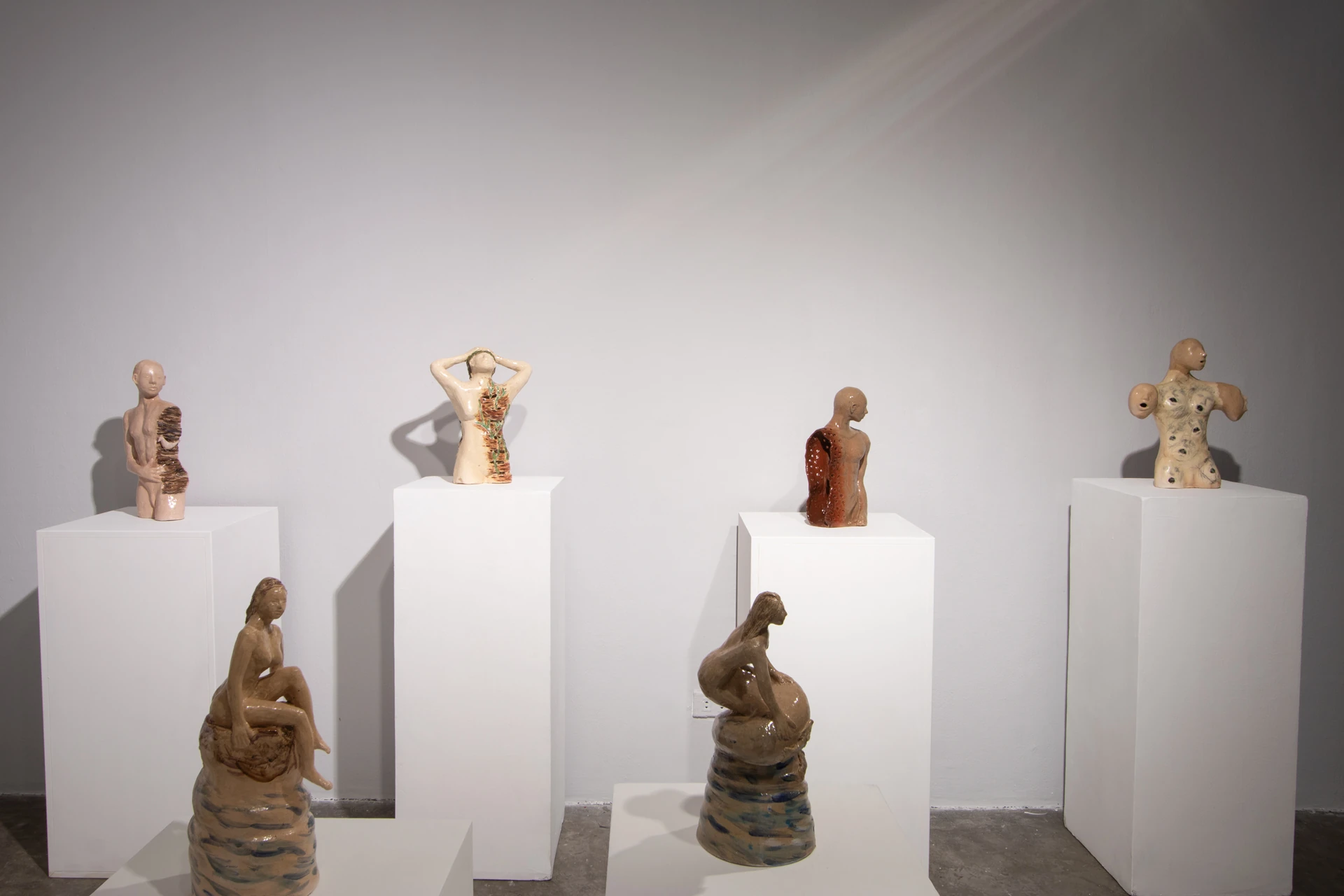
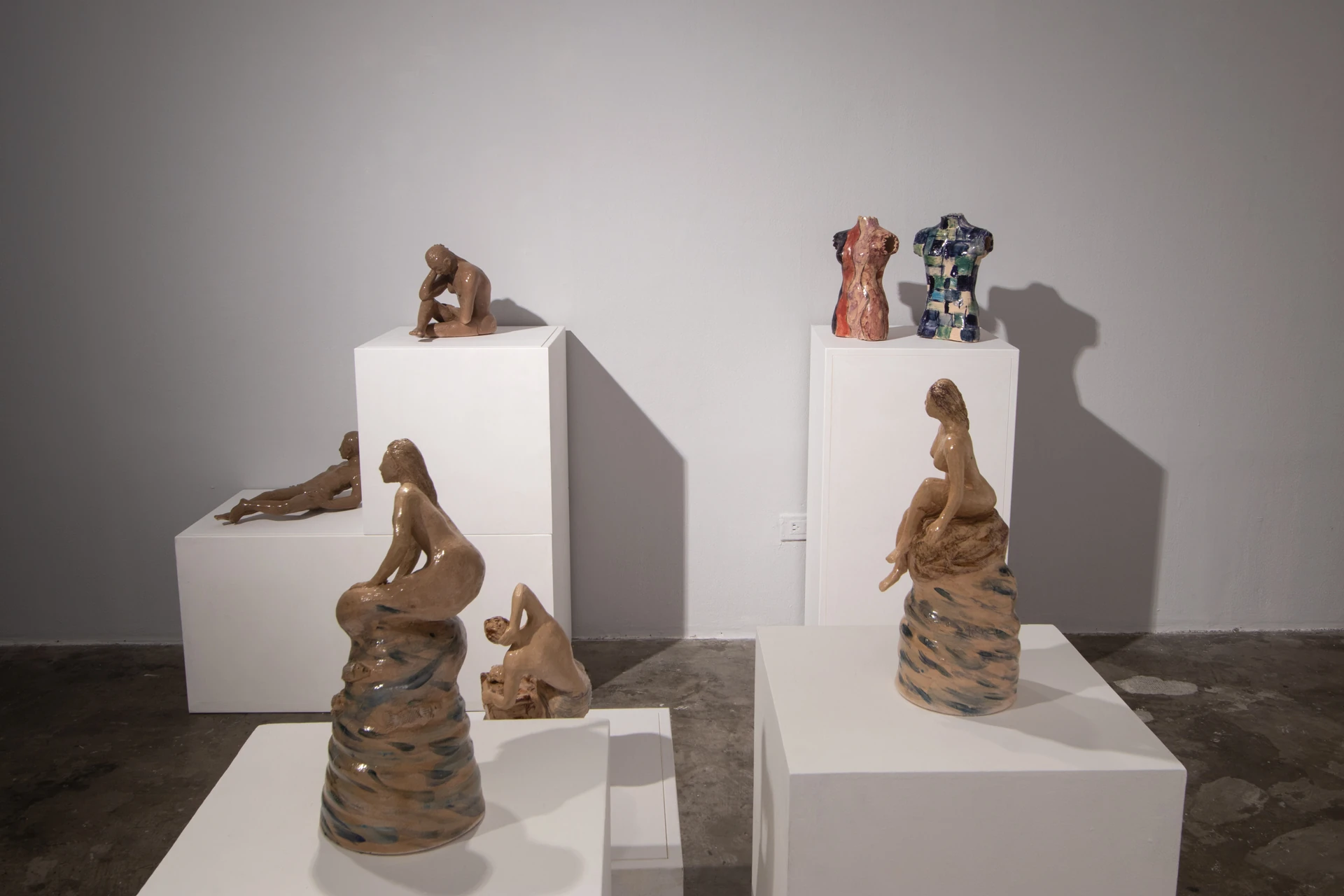
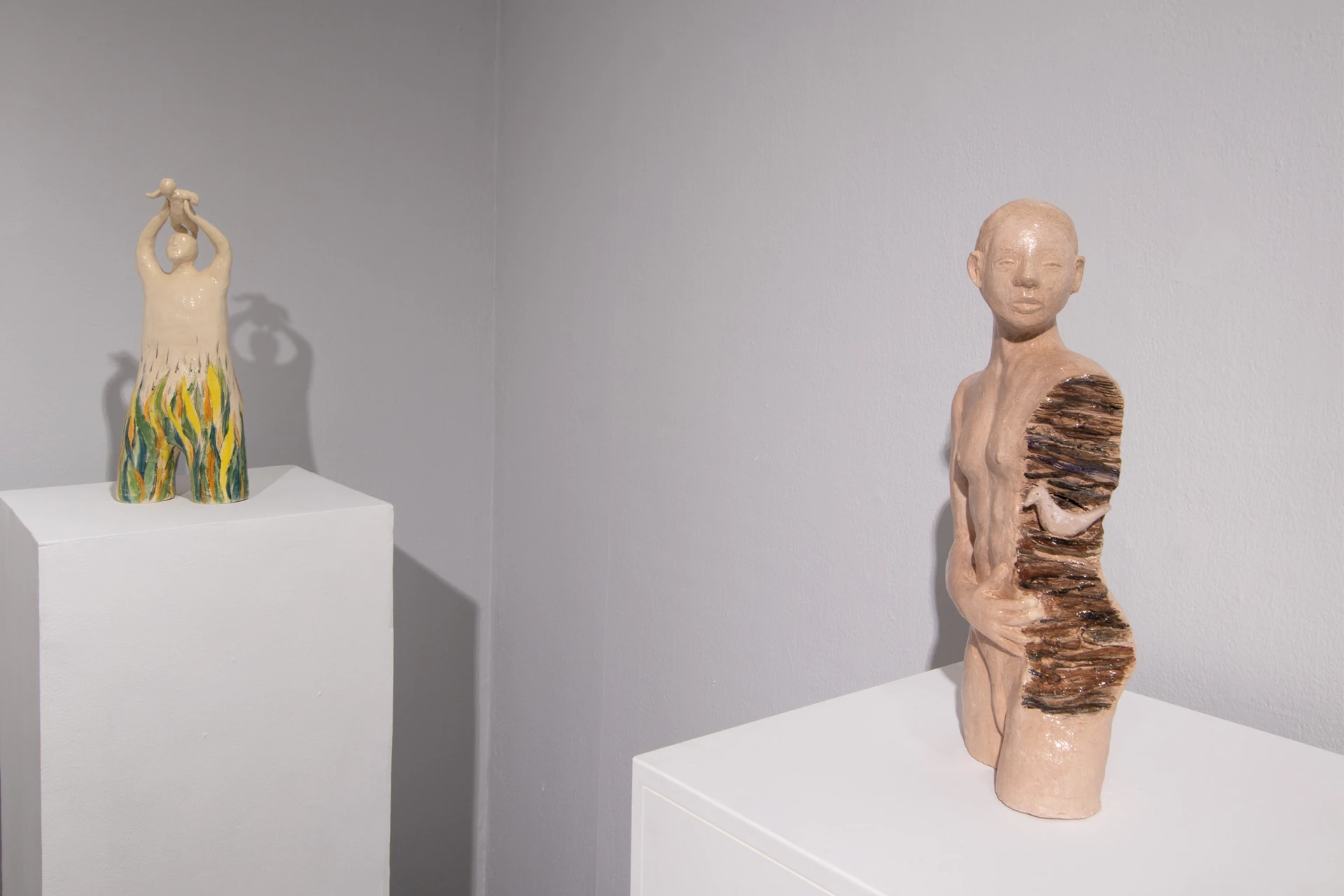
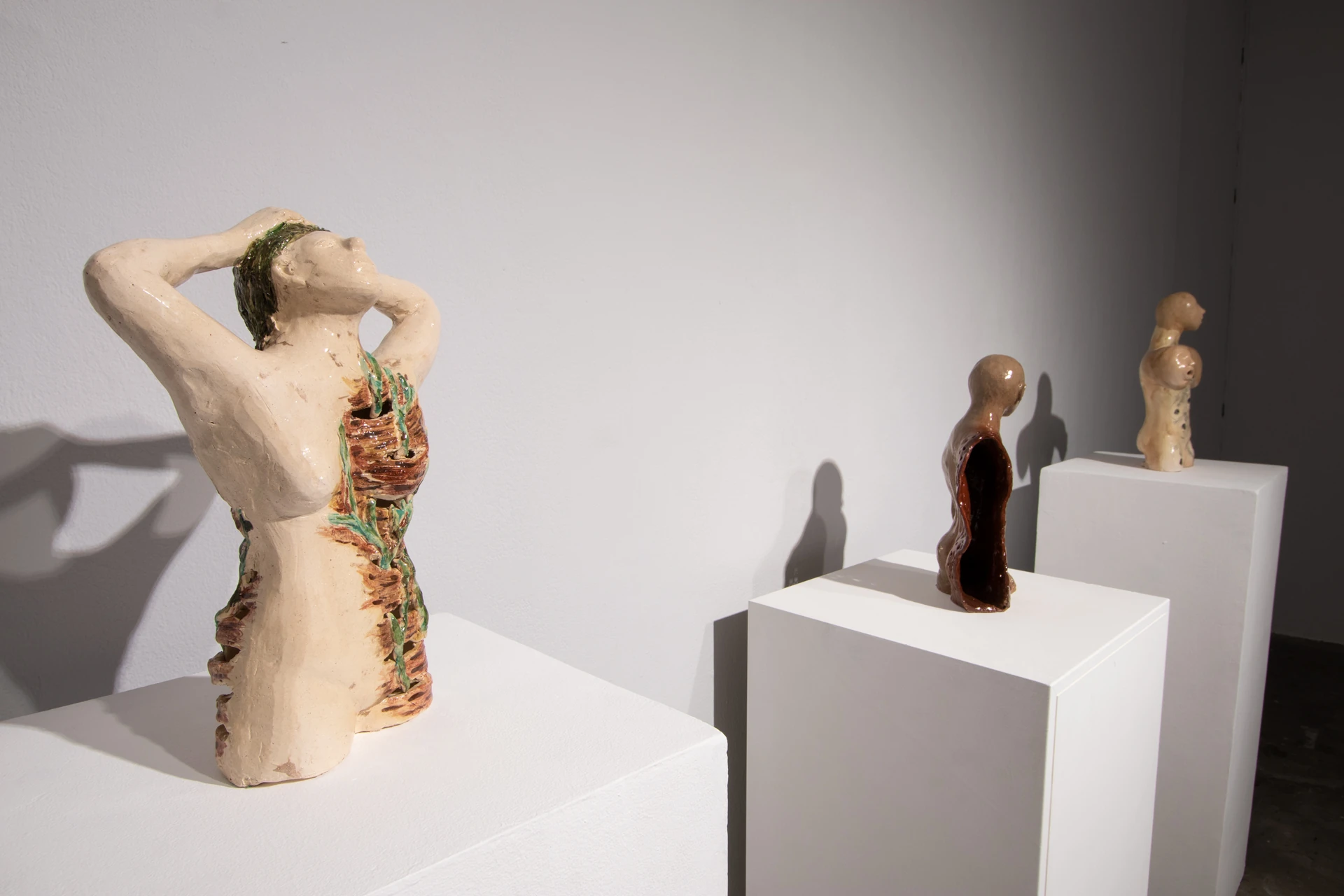
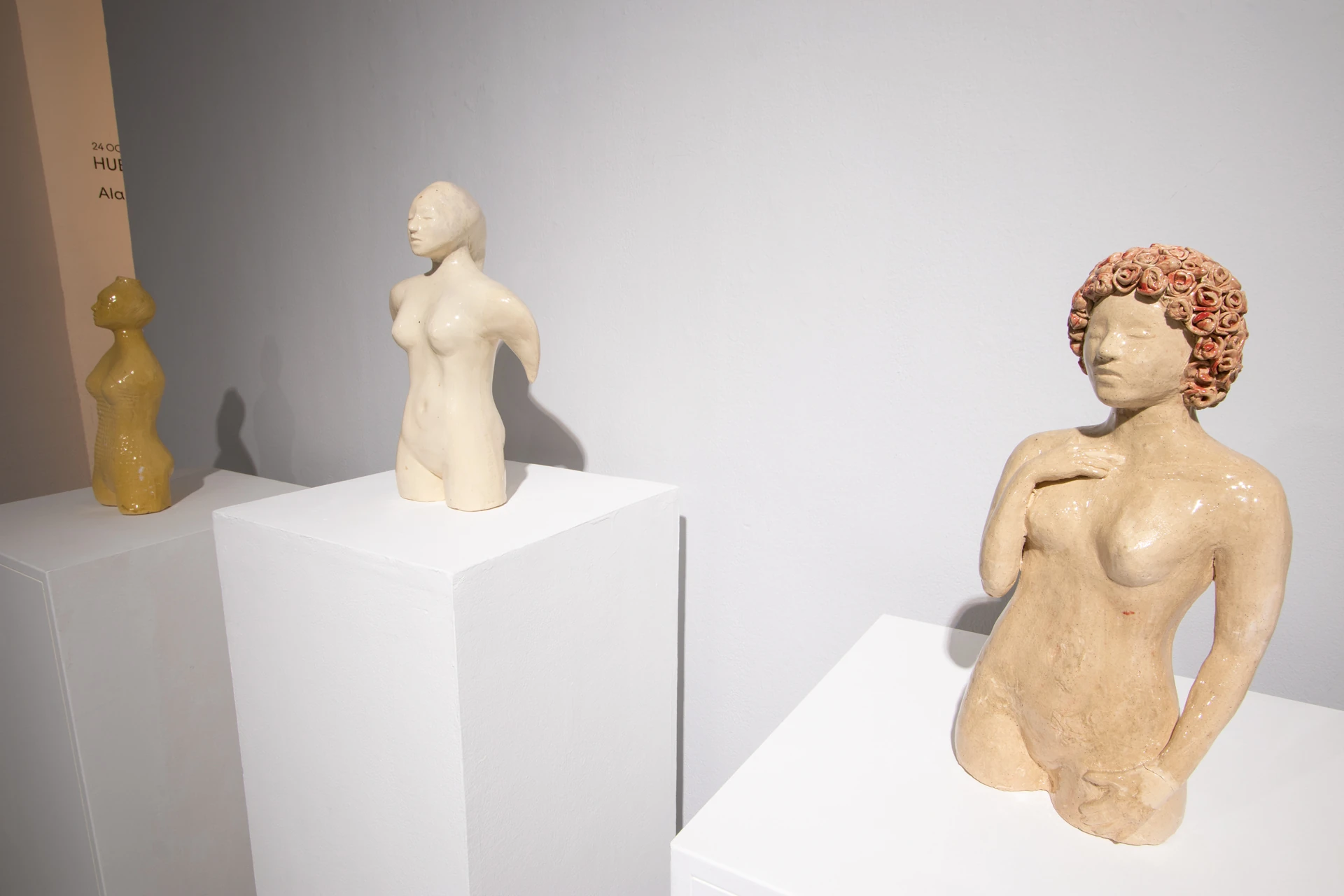
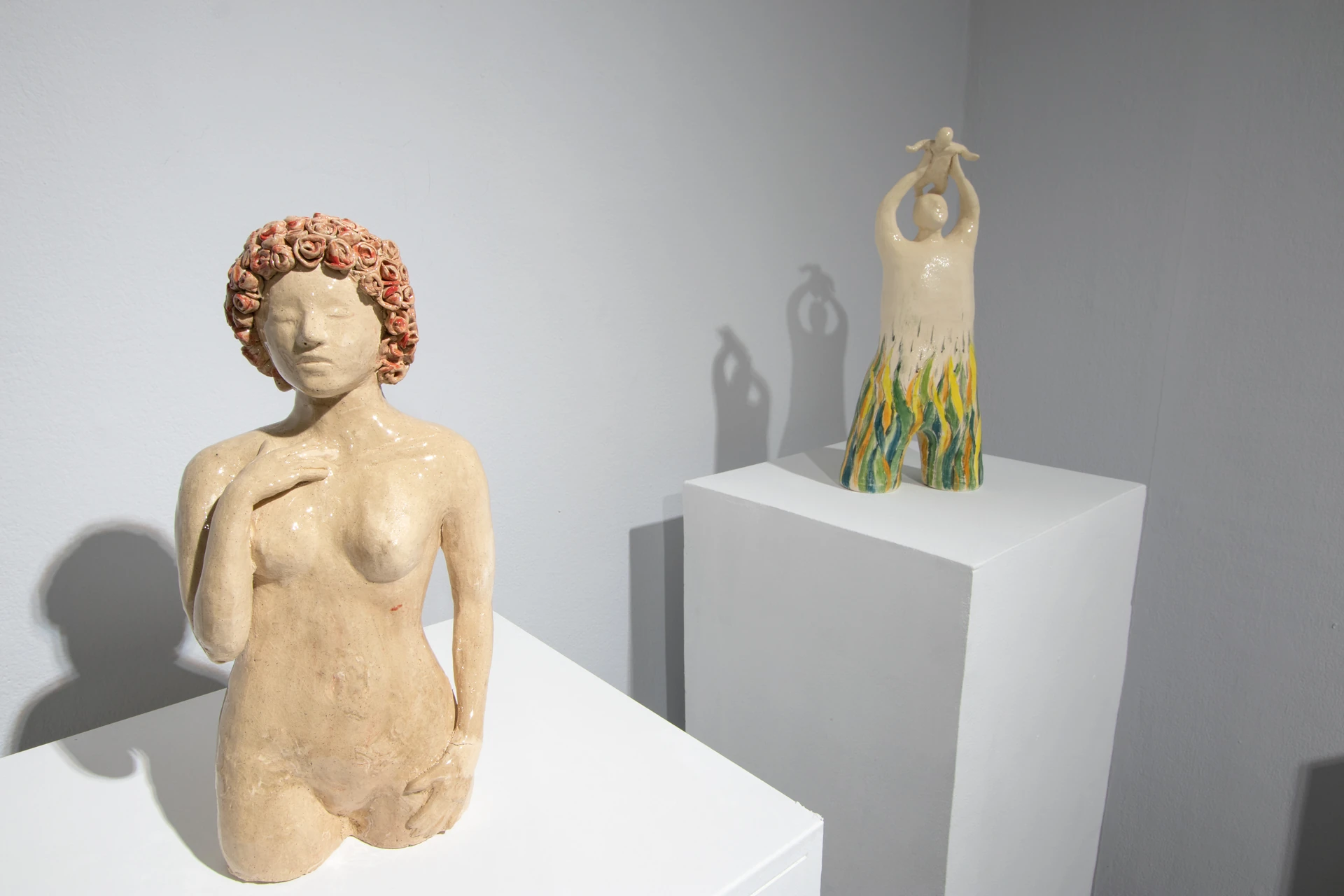
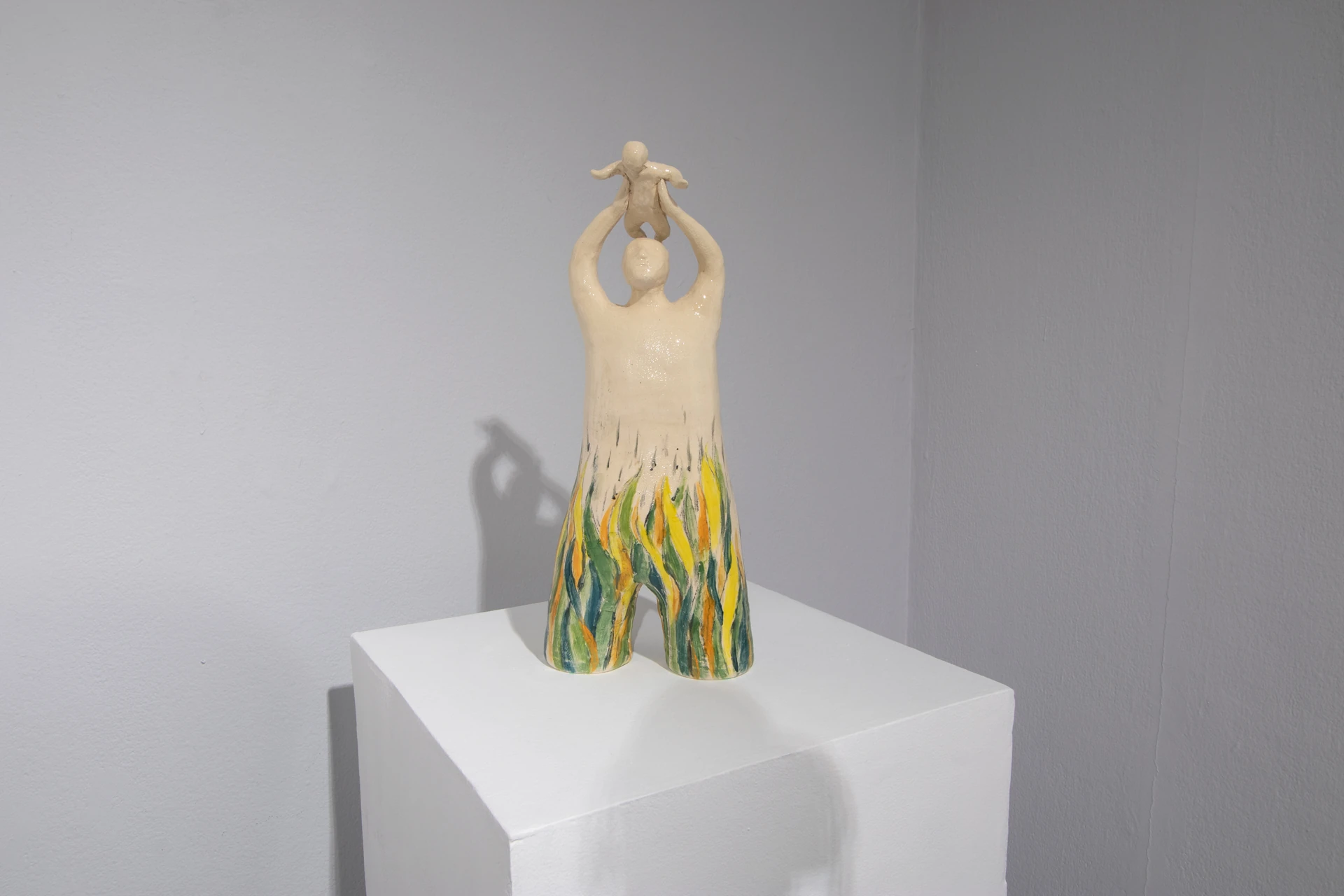
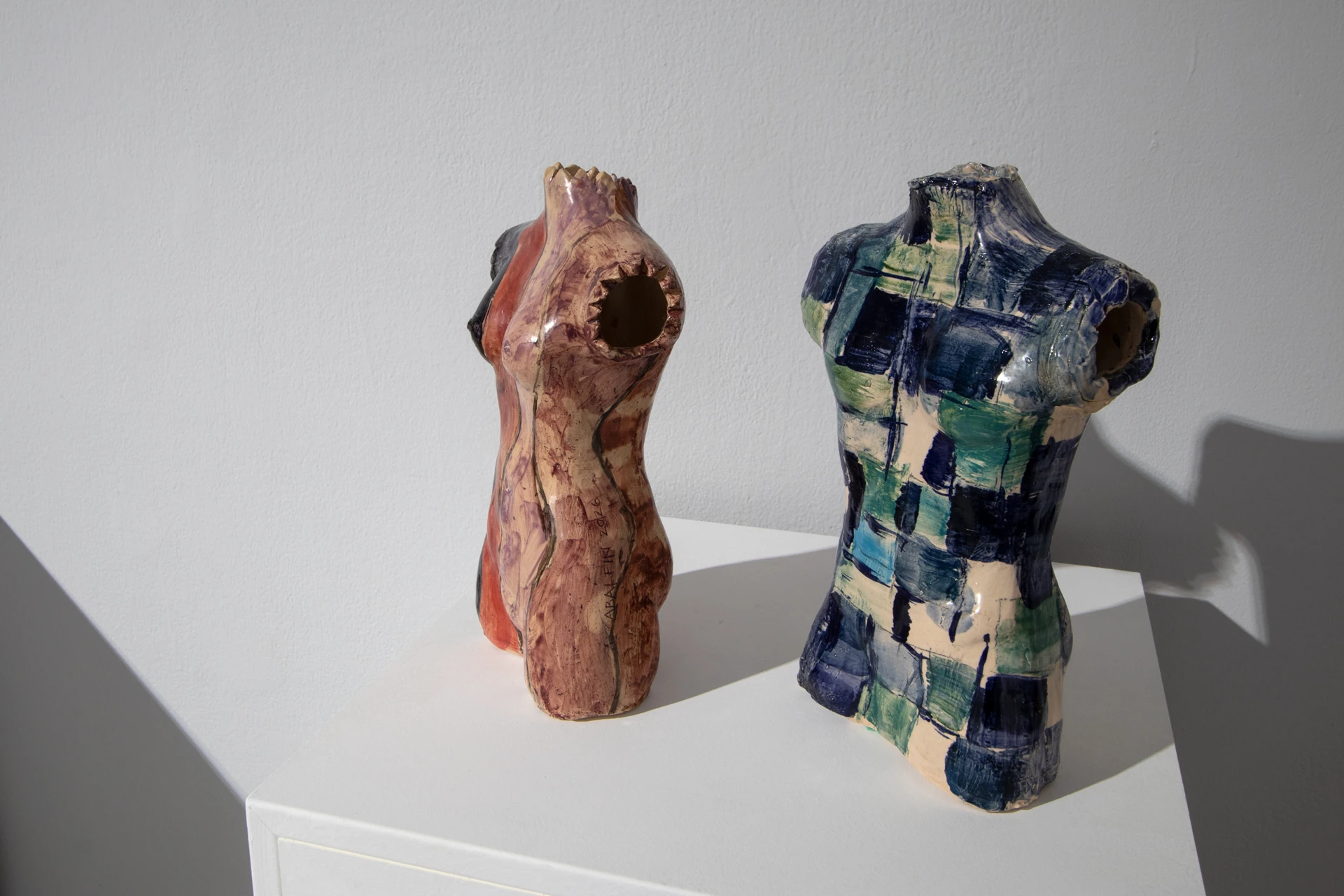
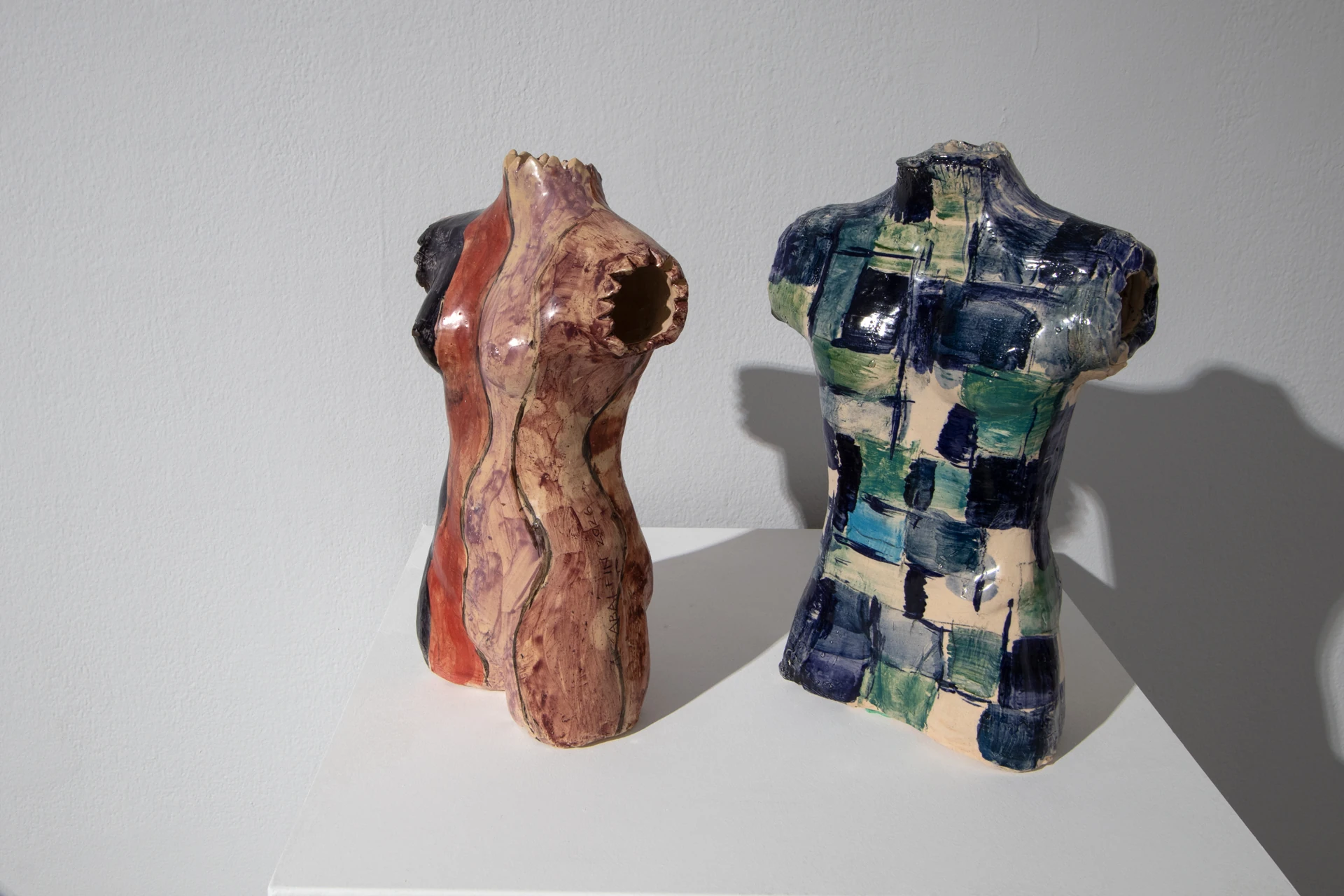
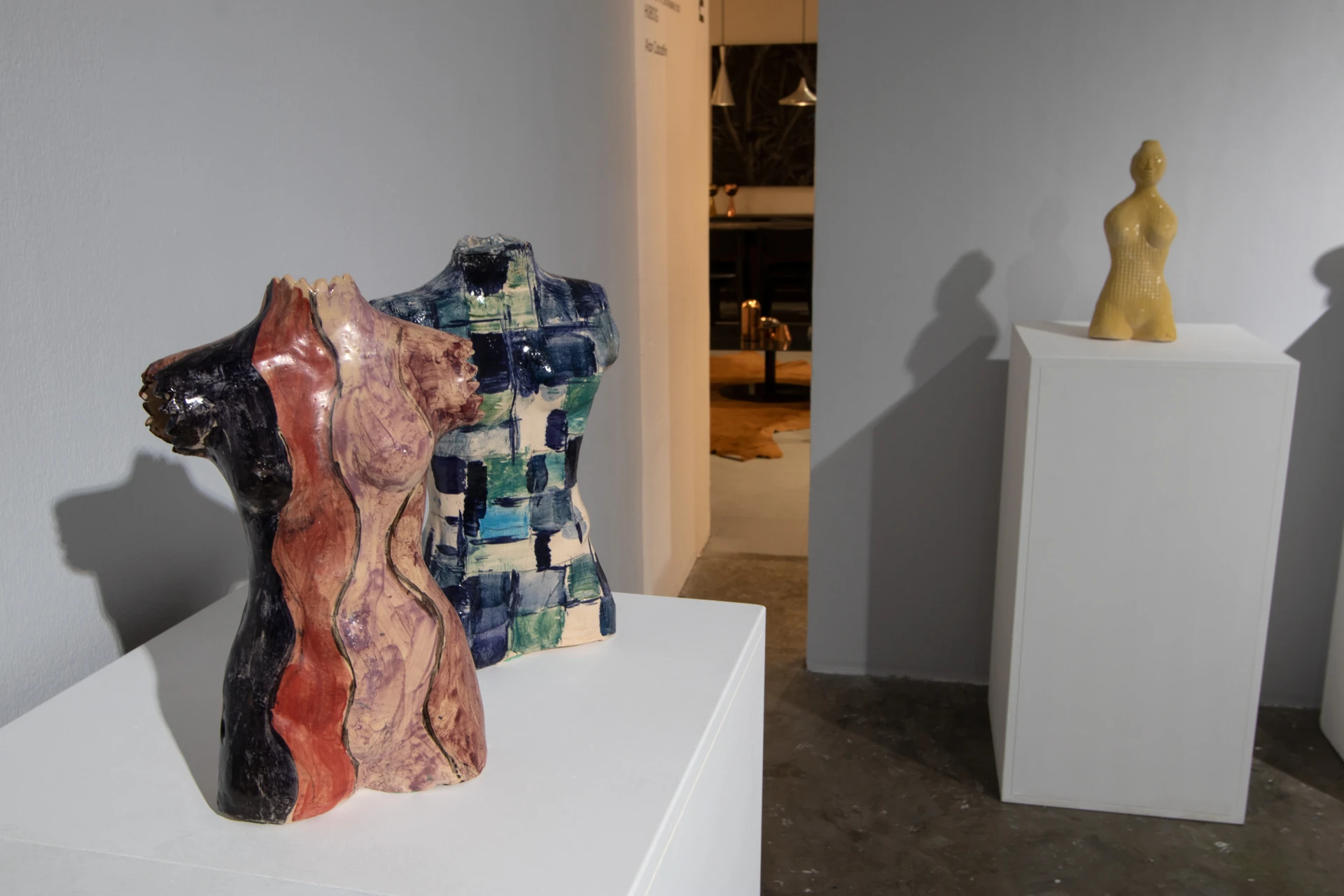
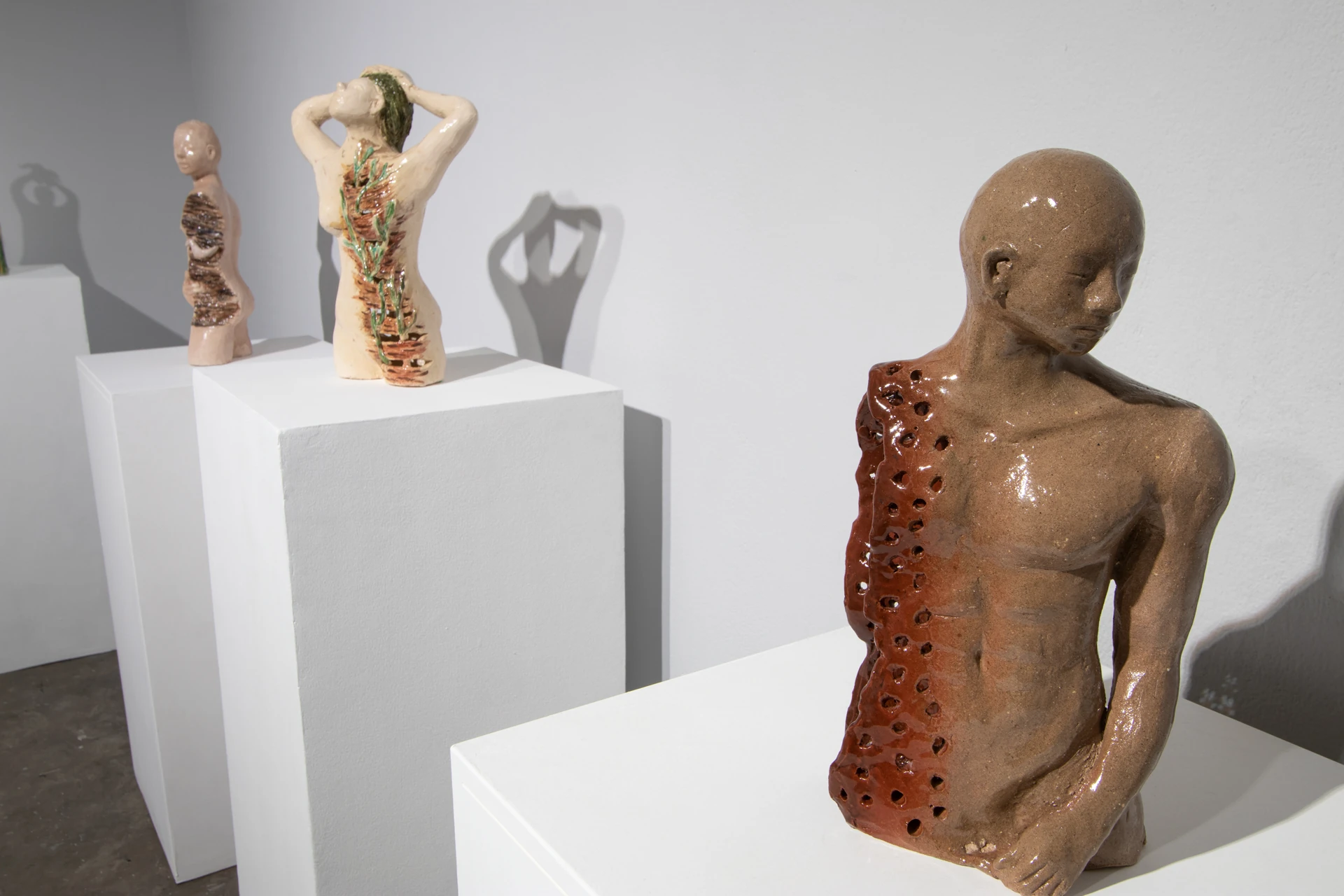
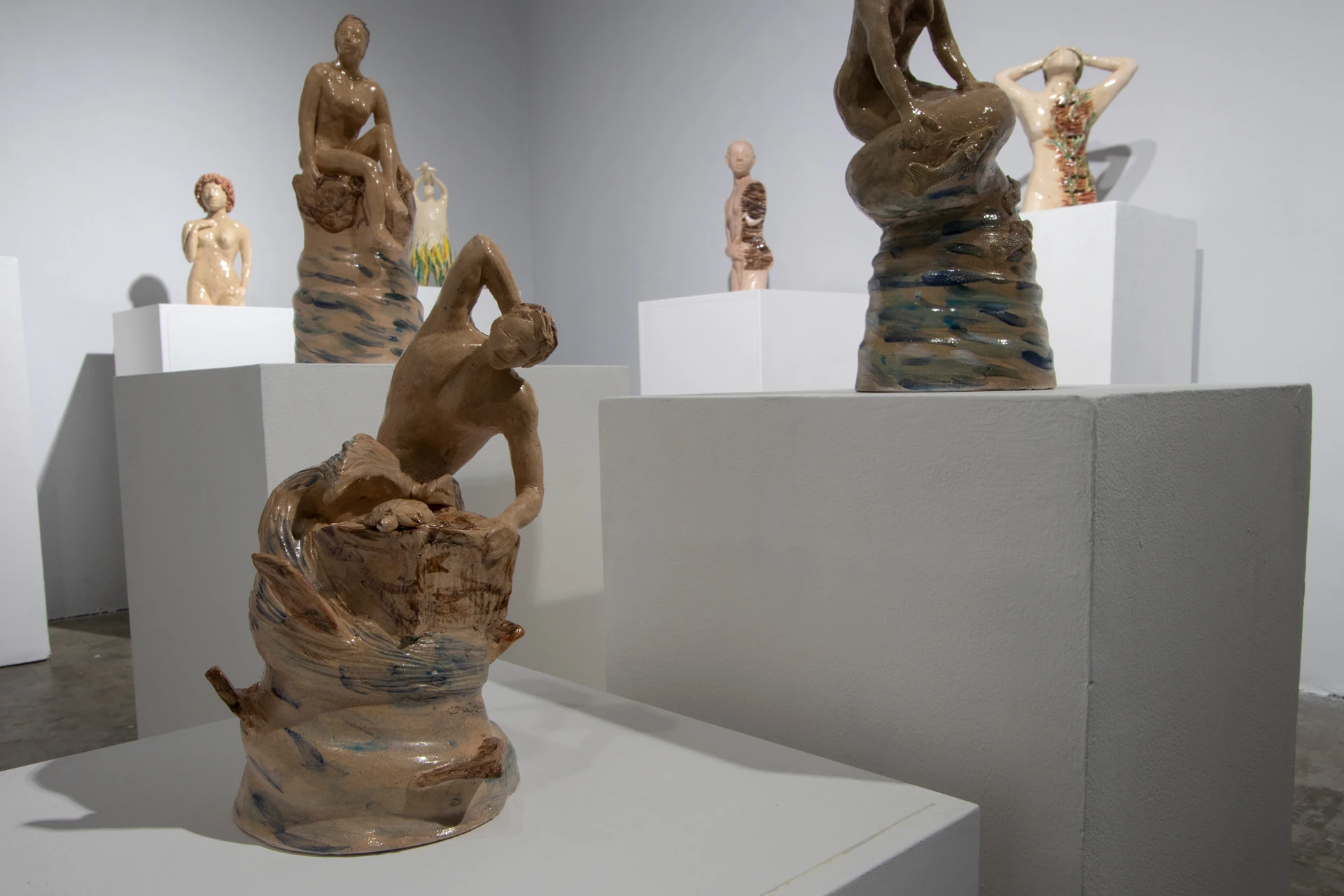
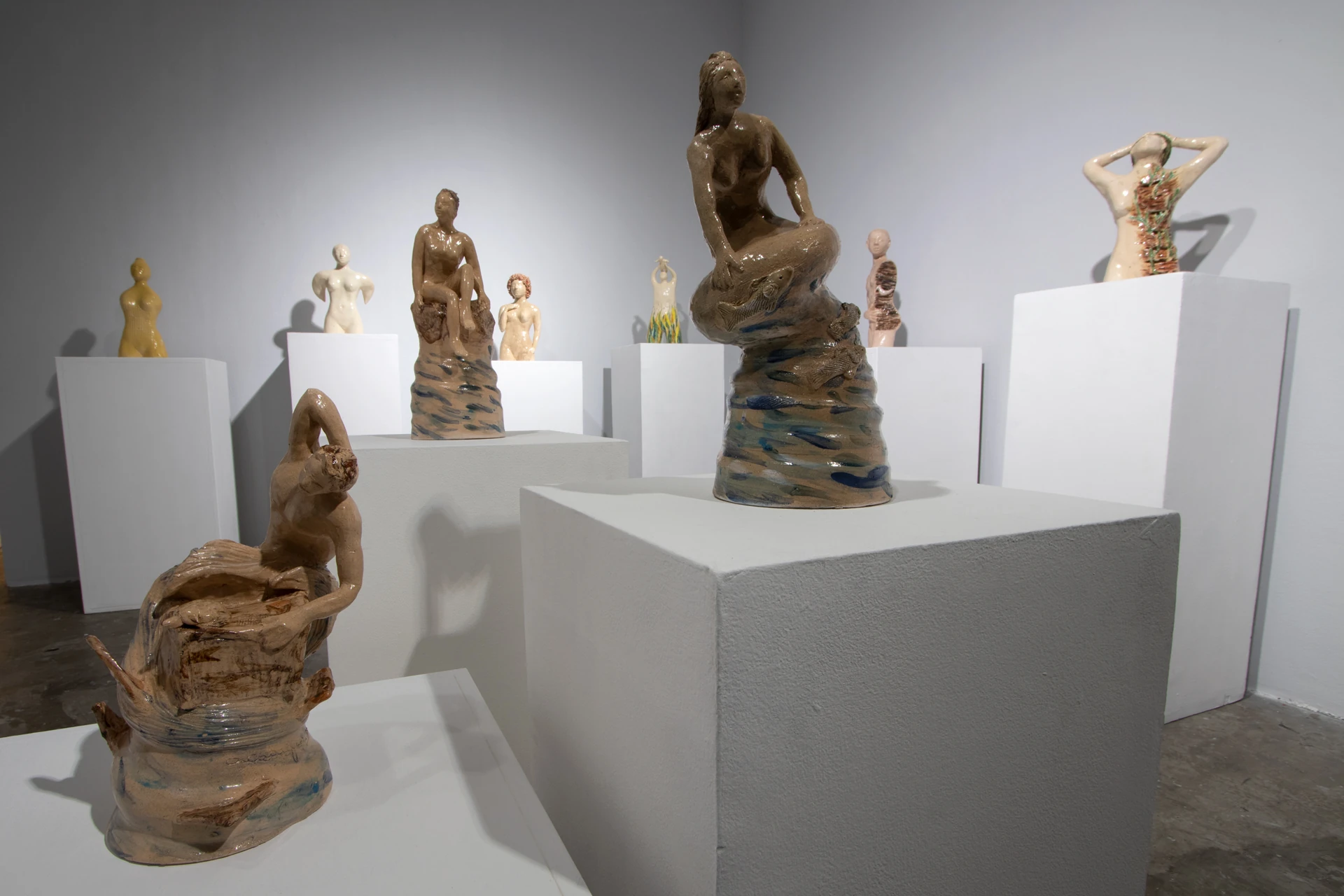
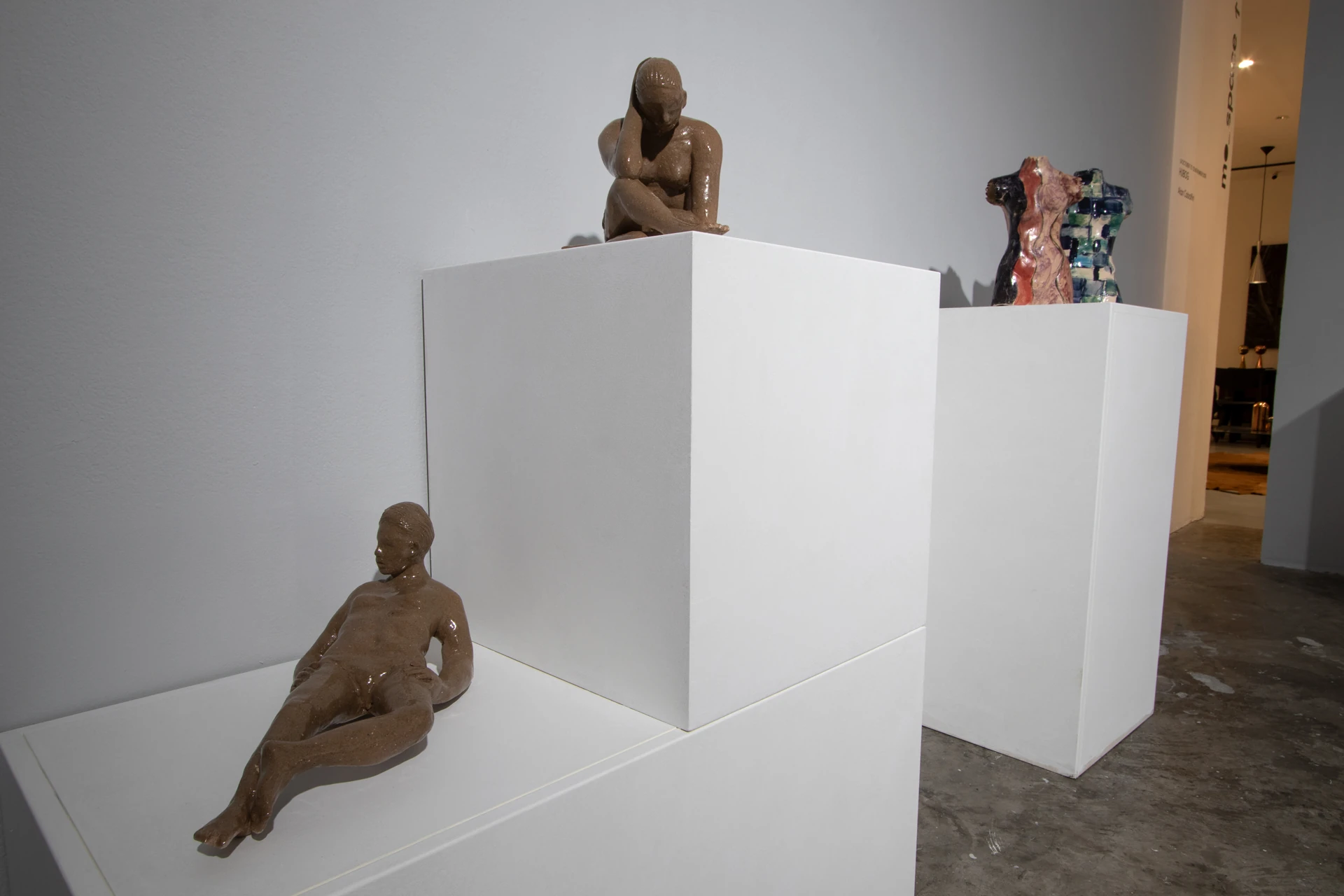
To this primordial practice of molding earth belong the works of Alan Cabalfin. His mimetic art gives uncanny resemblance to the age-old practice of making earth become shaped like humans, or animals, or any figure or vessel of infinite imagination. Working in his native Leon in southern Iloilo, Cabalfin’s wood-fired kiln serves as a cauldron from whence his dreams of shapes and colors, stories and desires, are formed. Cabalfin takes on the medium of clay and earth and turns them into a glazed menagerie of his fantasies and creations.
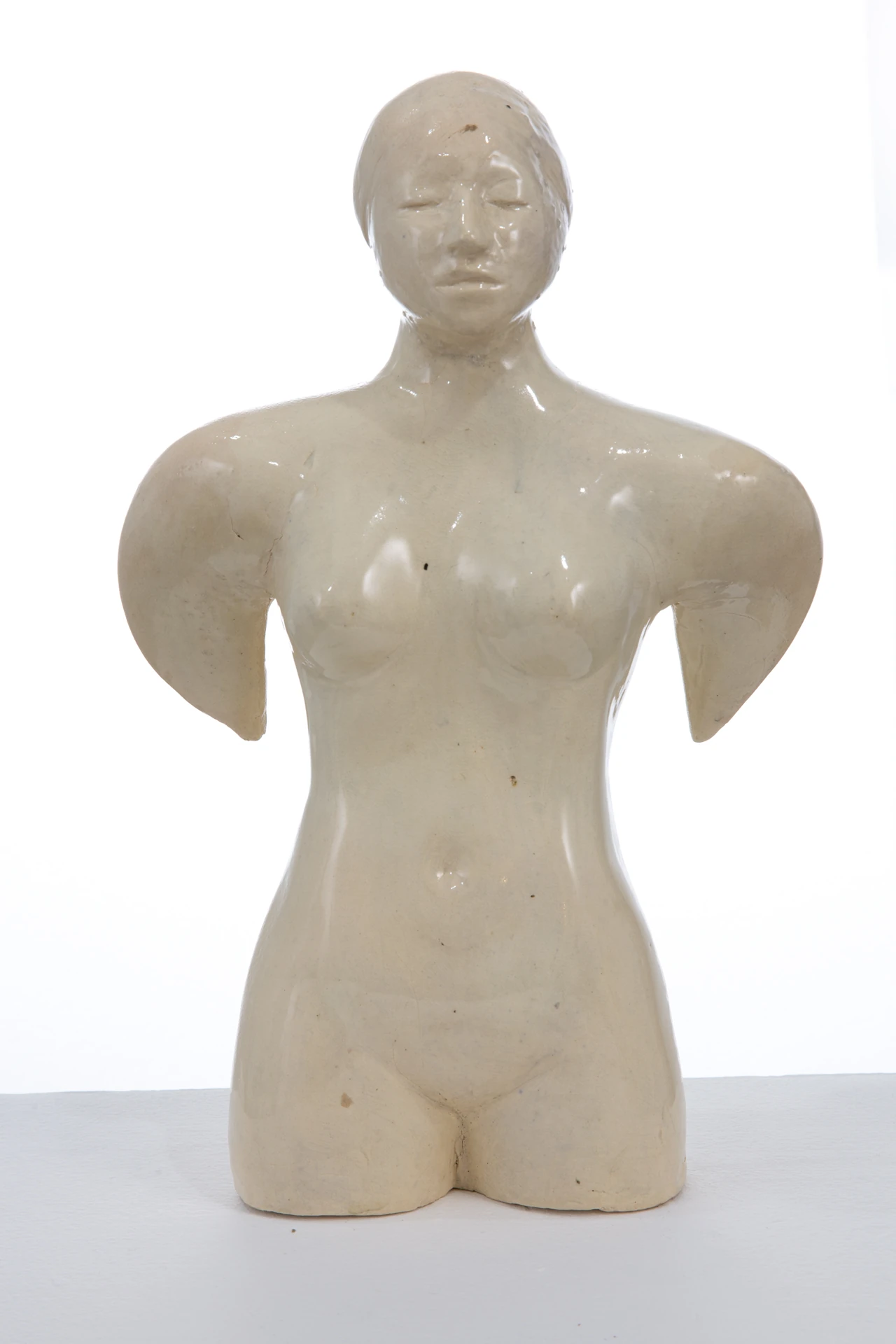
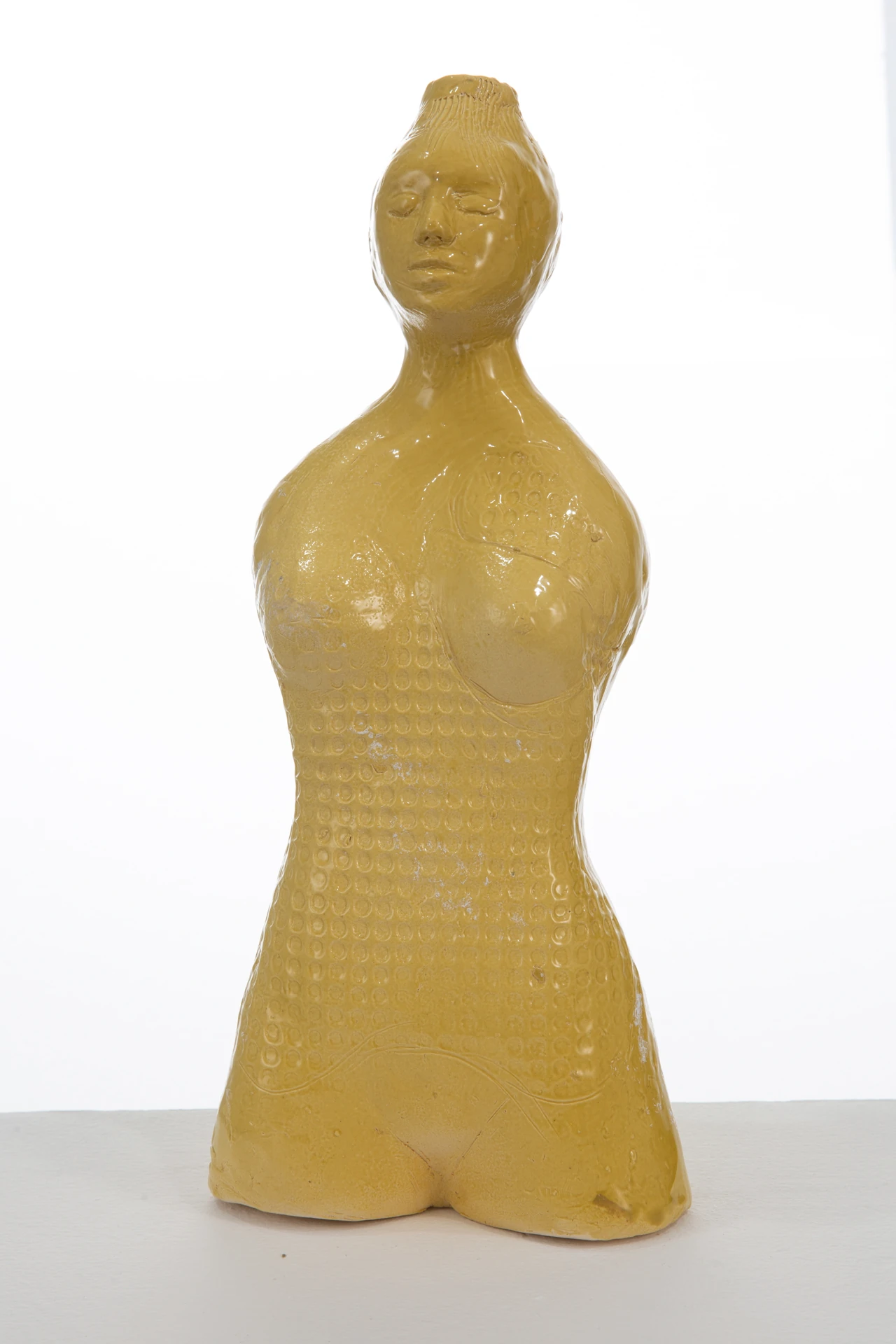
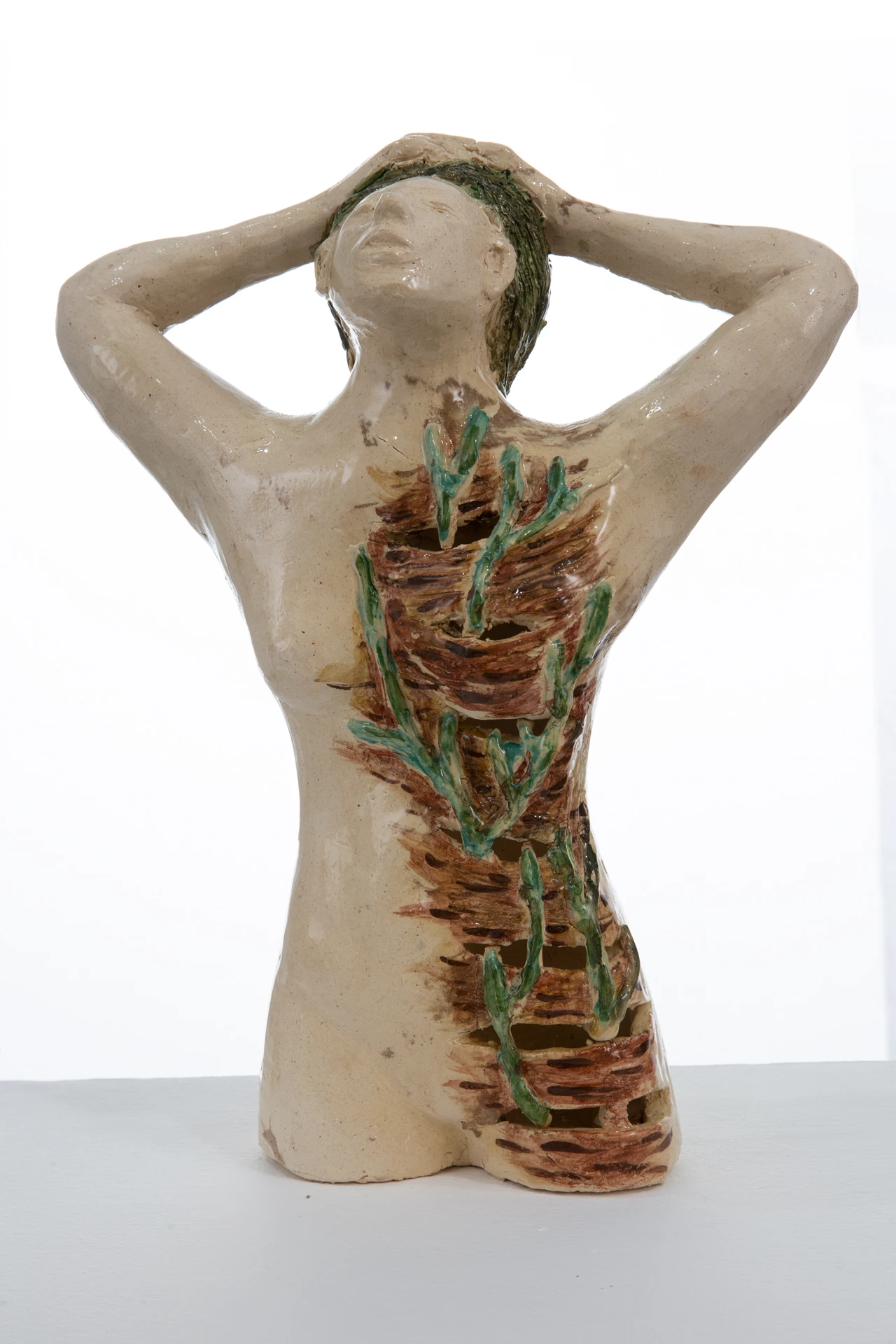
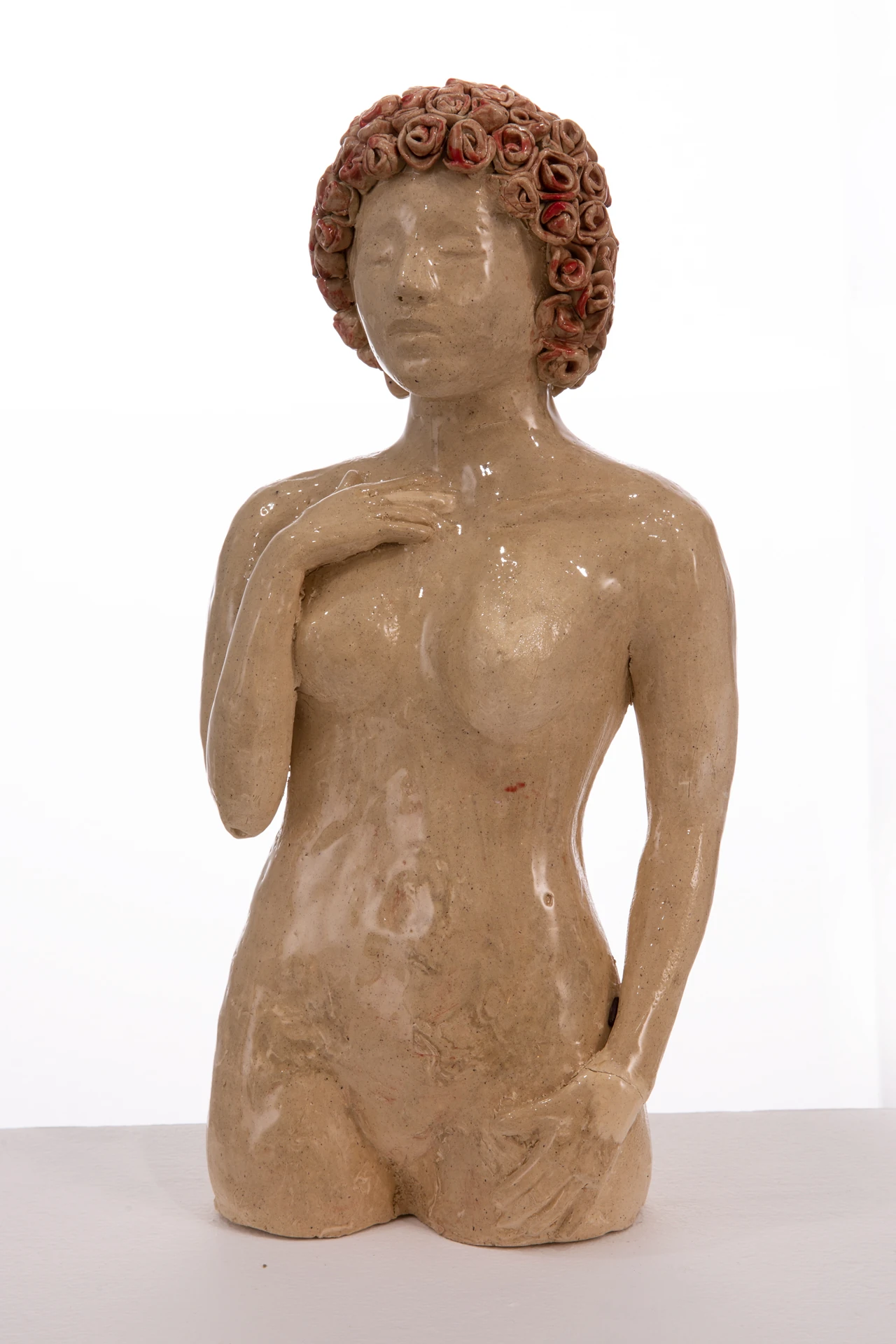
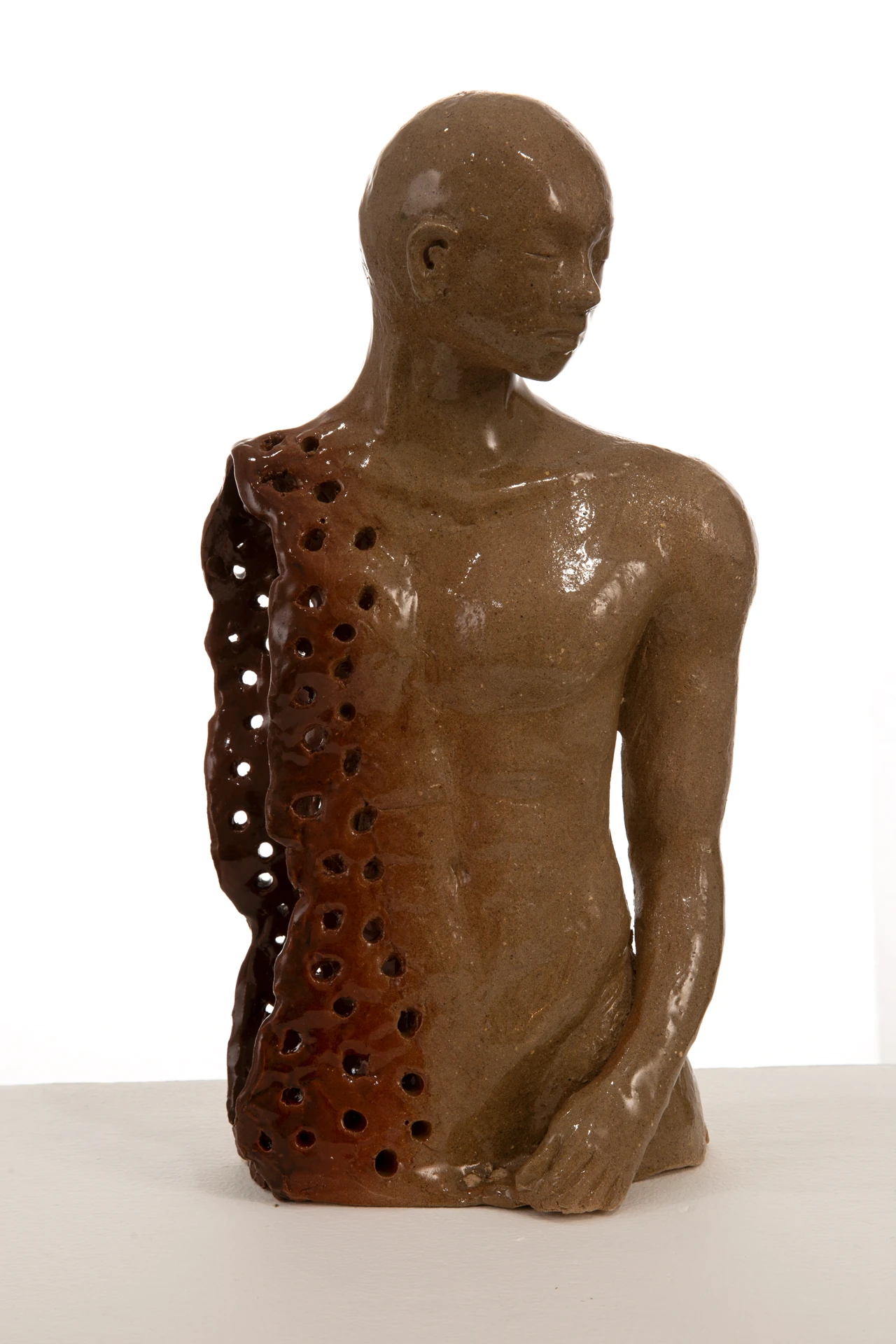
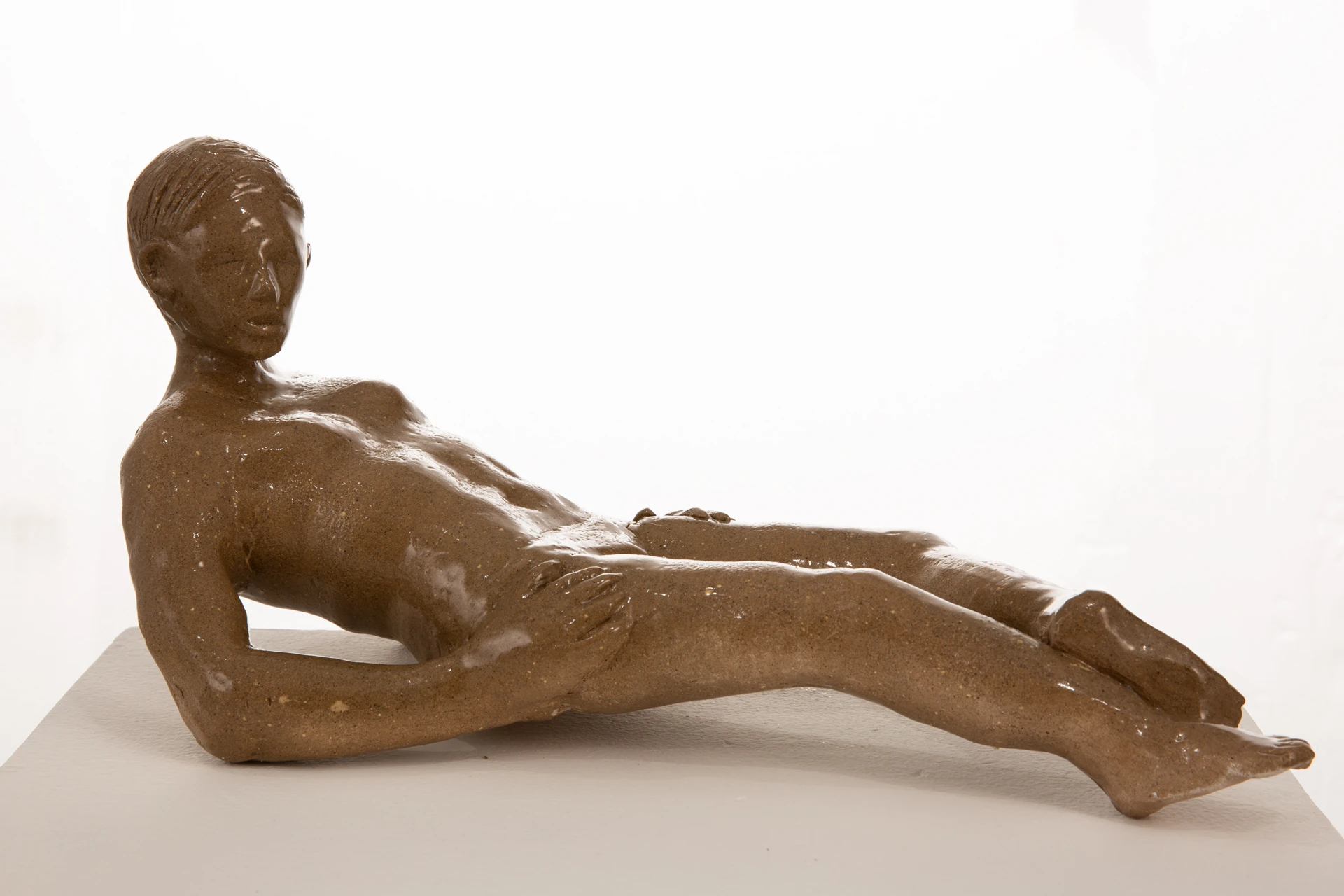
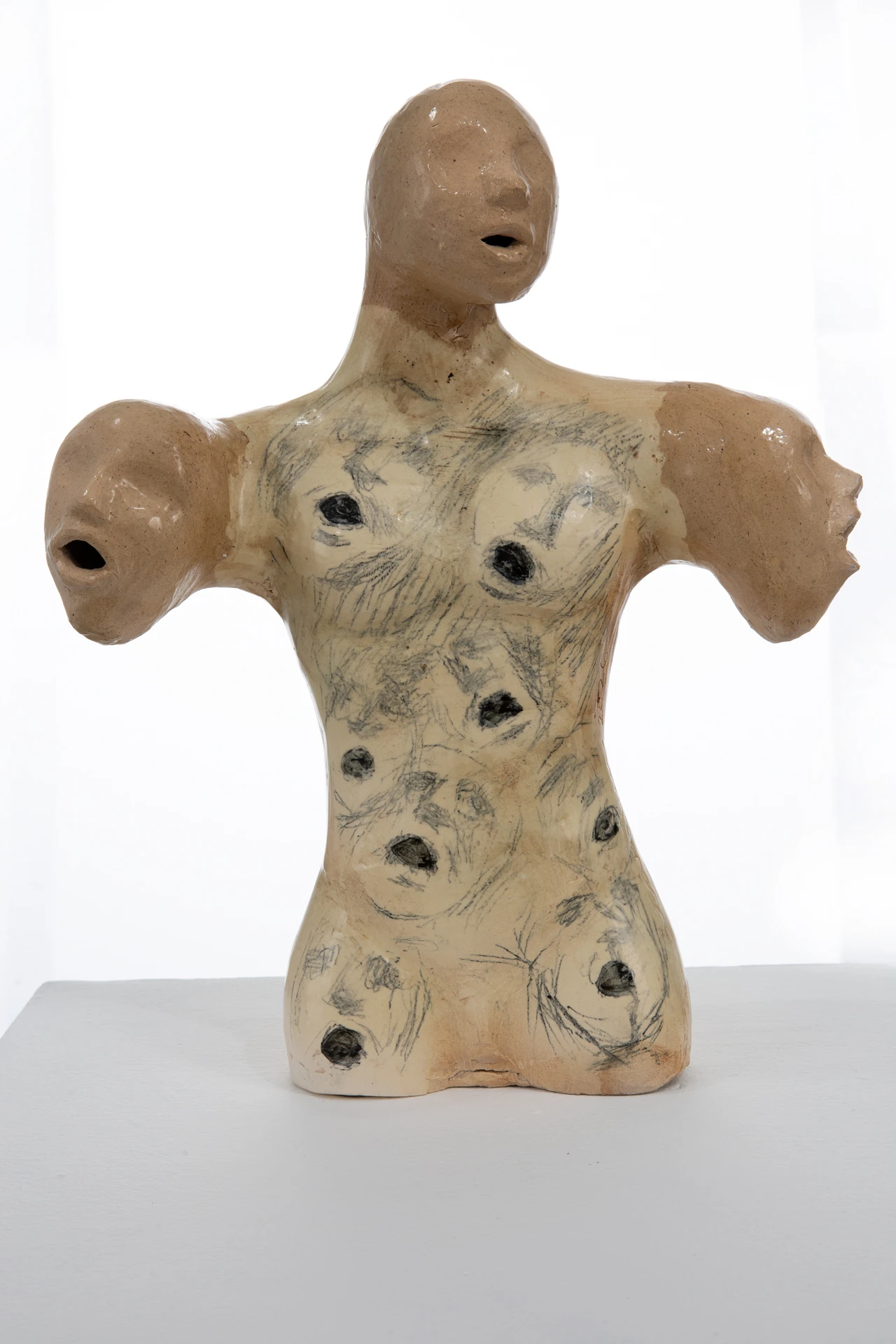
The artist’s obsession with the human form is evident. Beyond mere figurative simulation, he transforms the body into its many other possibilities and connects it with other natural elements—arboreal and fauna designs, fragmented and latticed patterns, even punctured bodies that evoke violence as well as elicit whimsicality. The sculptures he makes come from the workings of a searching, oftentimes playful, talent.
Cabalfin has come a long way in his creative journey. As a young student, he already showed promise by winning school competitions in art. He loved to draw and this led him to his early works of floral paintings, portraits, and sketches. His media were eclectic, from watercolor to oil to charcoal. His visual flair even found expression in stage designs and a breakthrough in producing among the earliest regional films in the country, Dihon (Form). No surprise that the subject of his first and only film in native Karay-a language depicted his intimacy with pottery. Not quite biographical but the film contained fragments that could only be inspired by his own life in the arts, particularly with his attachment to earthen sculpture.
In recent years, his works in pottery and earth art, sculpture and ceramic, have yielded an array of imaginative pieces that continue to explore and express his technique and artistry in molding the most elemental of all media: earth. It is here that Cabalfin tests his mettle as an artist, when the earth from where all humanity comes and returns is molded into creations of gifted imagination.
In his first one-man show, Alan Cabalfin continues kneading and shaping mudclayearth, producing creations that bring inert objects to life.
-Nick Deocampo

About the Artist
About the Artists
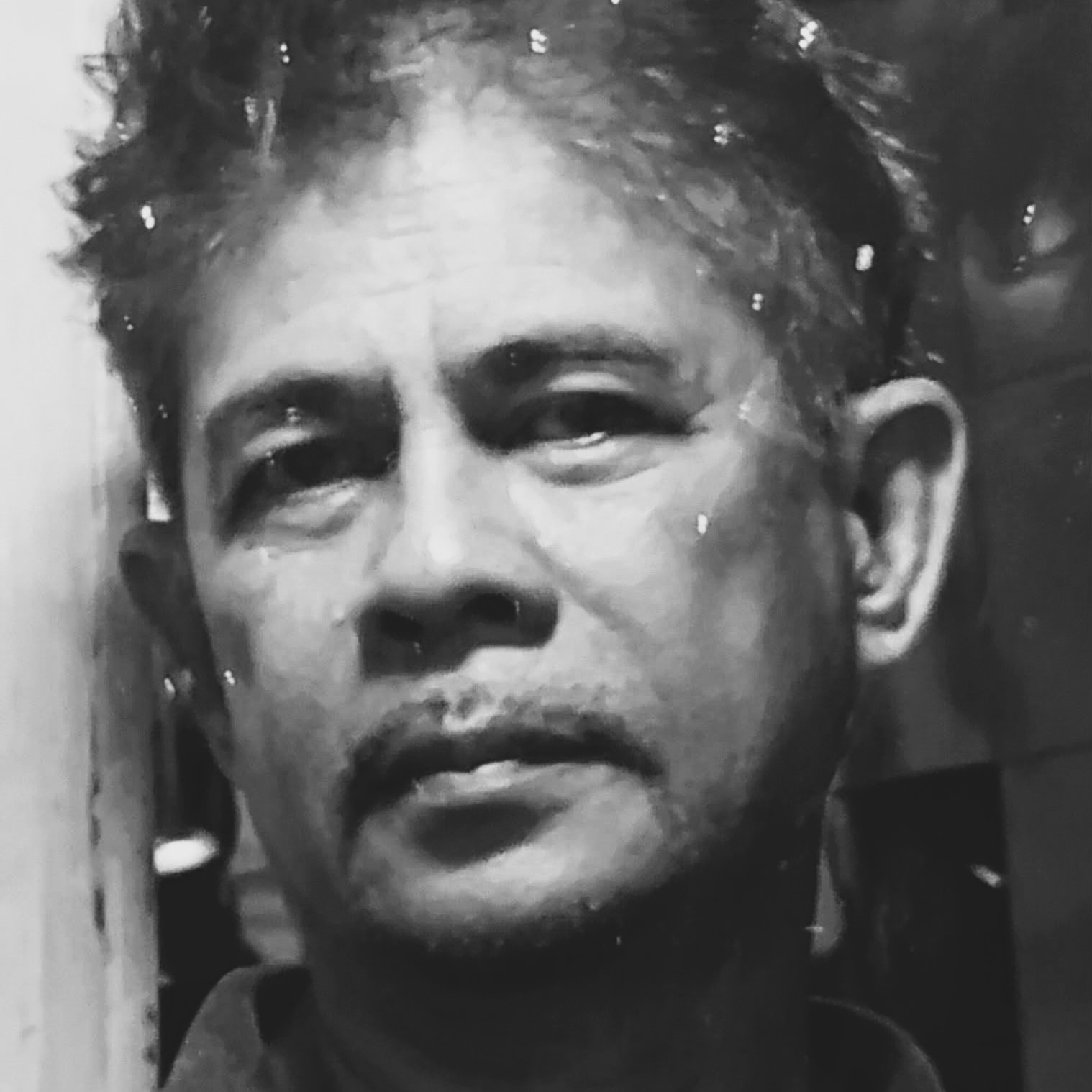
Alan Cabalfin is an accomplished Ilonggo multidisciplinary artist whose creative practice spans painting, ceramics, sculpture, filmmaking, and exhibition design. Based in Leon, Iloilo, he has built a distinguished artistic career rooted in the cultural heritage, traditions, and everyday life of Panay.
A graduate of Bachelor of Science in Architecture from the University of the Philippines Diliman, Cabalfin began his artistic journey in painting and watercolor before expanding into three-dimensional forms. His exploration of ceramics was significantly shaped by his apprenticeship under renowned ceramic artist Nelfa Querubin and his participation as a Philippine delegate in the 1995 International Workshop in Ceramics in Tokoname, Japan.
Throughout his career, Cabalfin has participated in numerous solo and group exhibitions in the Philippines and abroad, including a 2010 solo exhibition at the Philippine Center in New York titled Binanog: Panay Bukidnon on the Rise. Featuring paintings and ceramics inspired by the Panay Bukidnon people's traditional embroidery and dance, the exhibition reflected his enduring commitment to celebrating regional identity through contemporary artistic expression.
His artistic versatility extends into filmmaking. His short film Dihon (Mold), inspired by the pottery-making process, received recognition from prominent Philippine film institutions and won First Prize in the Kodak Cinematographers Competition, earning international representation in Sydney, Australia.
Beyond his studio practice, Cabalfin has contributed to the development of cultural spaces through museum and exhibition design, including projects in Iloilo, Antique, Guimaras, and other parts of the Philippines. He has also shared his knowledge through workshops and community collaborations, particularly with traditional potters, helping sustain and expand local craft practices.
Among his notable exhibitions is Dagway sang Pamatan-on (2016), a collection of 25 terracotta portraits of individuals from his hometown of Leon. Exploring youthfulness as a quality of spirit rather than merely a stage of life, the exhibition demonstrated his sensitivity to human character and his ability to transform ordinary faces into expressive works of art.
Cabalfin's work reflects a continuing dialogue between tradition and innovation, craftsmanship and experimentation, and personal expression and collective memory. Through his diverse artistic pursuits, he contributes to the preservation, reinterpretation, and celebration of the rich cultural heritage of Western Visayas.
Related Exhibitions
About the Artists
About the Artist
Alan Cabalfin is an accomplished Ilonggo multidisciplinary artist whose creative practice spans painting, ceramics, sculpture, filmmaking, and exhibition design. Based in Leon, Iloilo, he has built a distinguished artistic career rooted in the cultural heritage, traditions, and everyday life of Panay.
A graduate of Bachelor of Science in Architecture from the University of the Philippines Diliman, Cabalfin began his artistic journey in painting and watercolor before expanding into three-dimensional forms. His exploration of ceramics was significantly shaped by his apprenticeship under renowned ceramic artist Nelfa Querubin and his participation as a Philippine delegate in the 1995 International Workshop in Ceramics in Tokoname, Japan.
Throughout his career, Cabalfin has participated in numerous solo and group exhibitions in the Philippines and abroad, including a 2010 solo exhibition at the Philippine Center in New York titled Binanog: Panay Bukidnon on the Rise. Featuring paintings and ceramics inspired by the Panay Bukidnon people's traditional embroidery and dance, the exhibition reflected his enduring commitment to celebrating regional identity through contemporary artistic expression.
His artistic versatility extends into filmmaking. His short film Dihon (Mold), inspired by the pottery-making process, received recognition from prominent Philippine film institutions and won First Prize in the Kodak Cinematographers Competition, earning international representation in Sydney, Australia.
Beyond his studio practice, Cabalfin has contributed to the development of cultural spaces through museum and exhibition design, including projects in Iloilo, Antique, Guimaras, and other parts of the Philippines. He has also shared his knowledge through workshops and community collaborations, particularly with traditional potters, helping sustain and expand local craft practices.
Among his notable exhibitions is Dagway sang Pamatan-on (2016), a collection of 25 terracotta portraits of individuals from his hometown of Leon. Exploring youthfulness as a quality of spirit rather than merely a stage of life, the exhibition demonstrated his sensitivity to human character and his ability to transform ordinary faces into expressive works of art.
Cabalfin's work reflects a continuing dialogue between tradition and innovation, craftsmanship and experimentation, and personal expression and collective memory. Through his diverse artistic pursuits, he contributes to the preservation, reinterpretation, and celebration of the rich cultural heritage of Western Visayas.
Related Exhibitions

Share