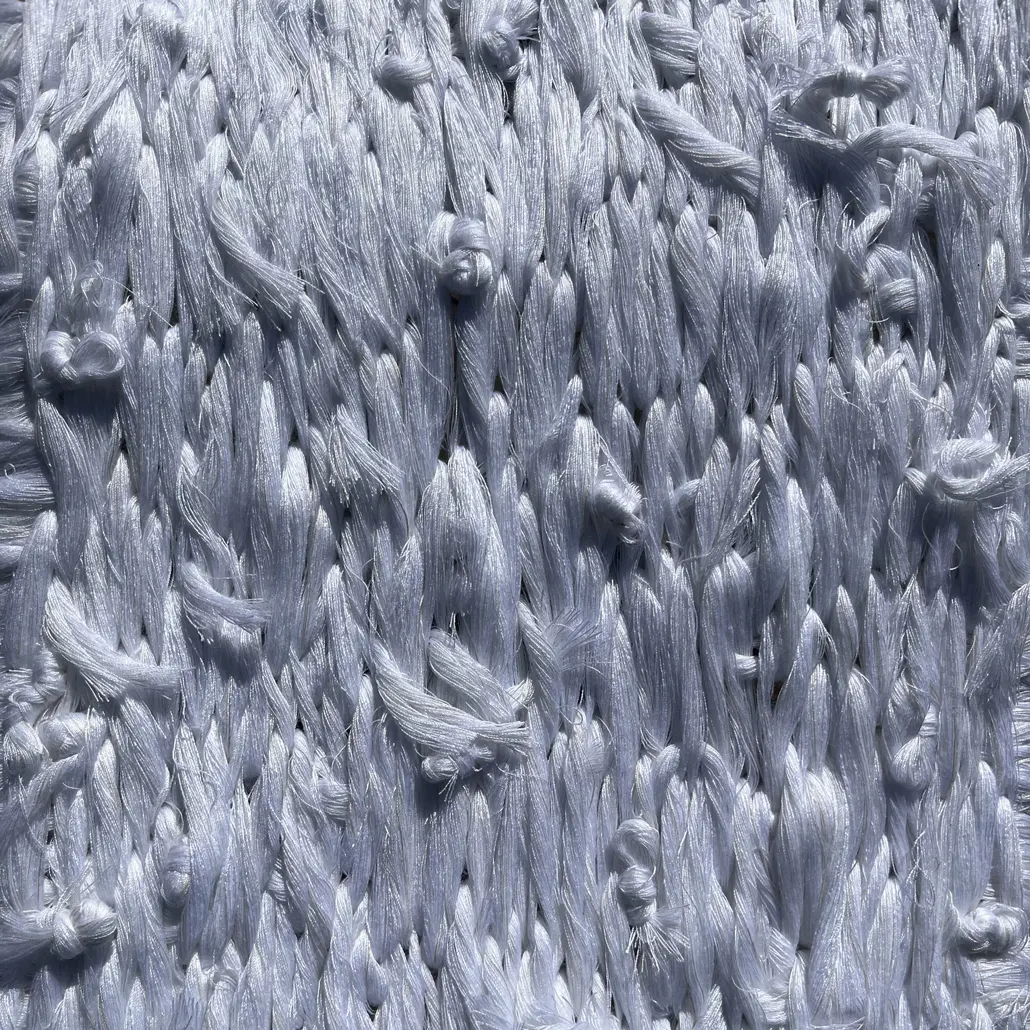
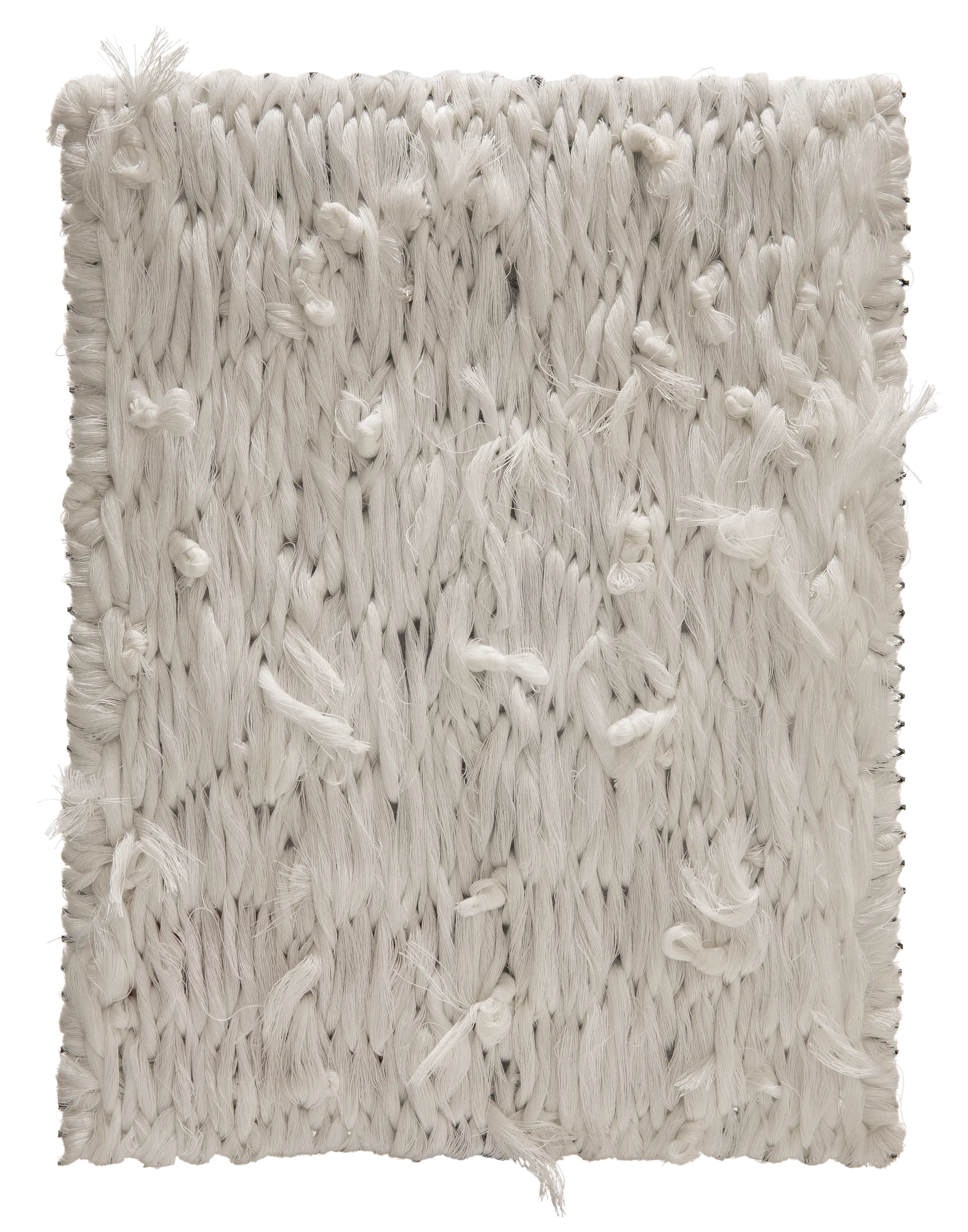
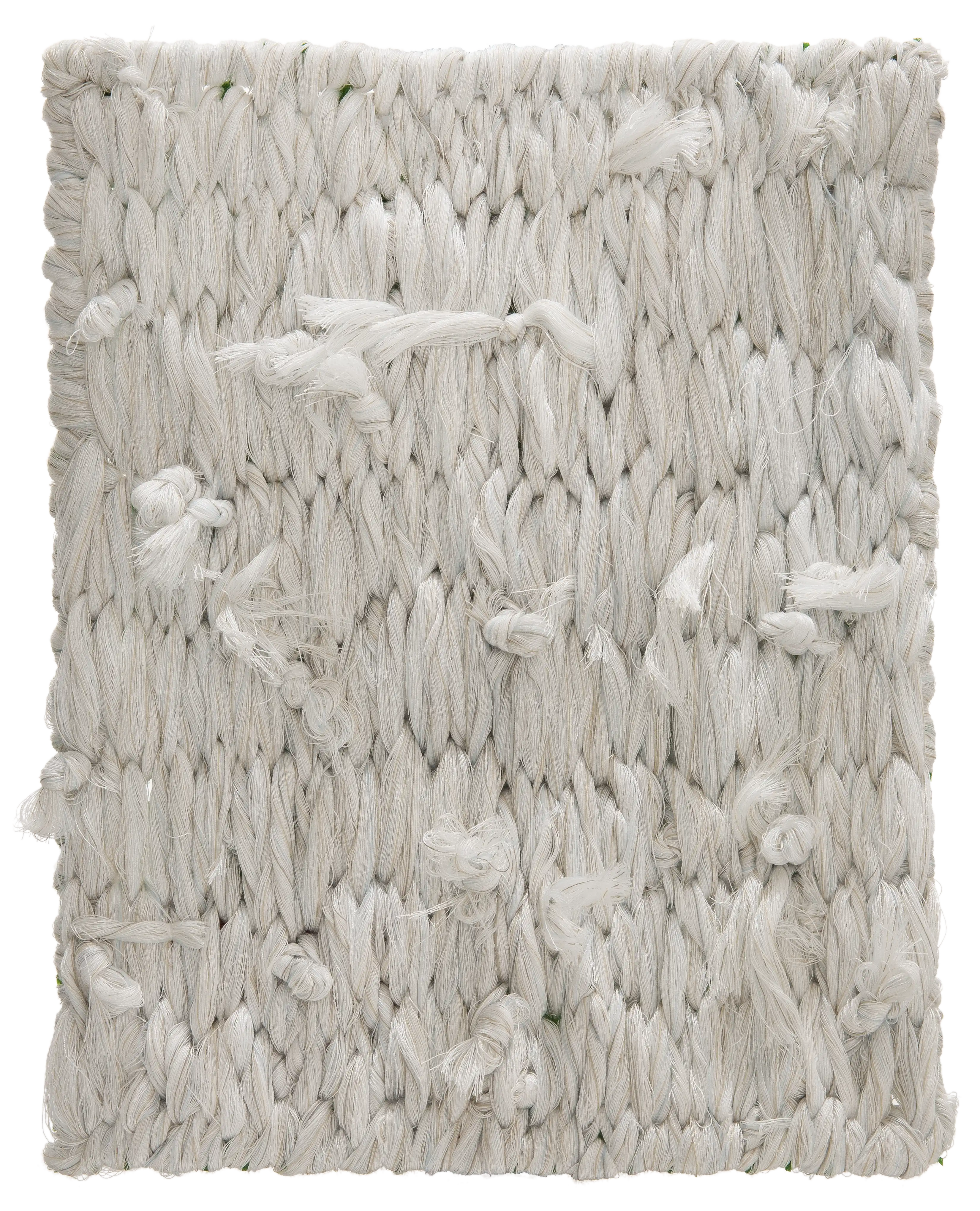
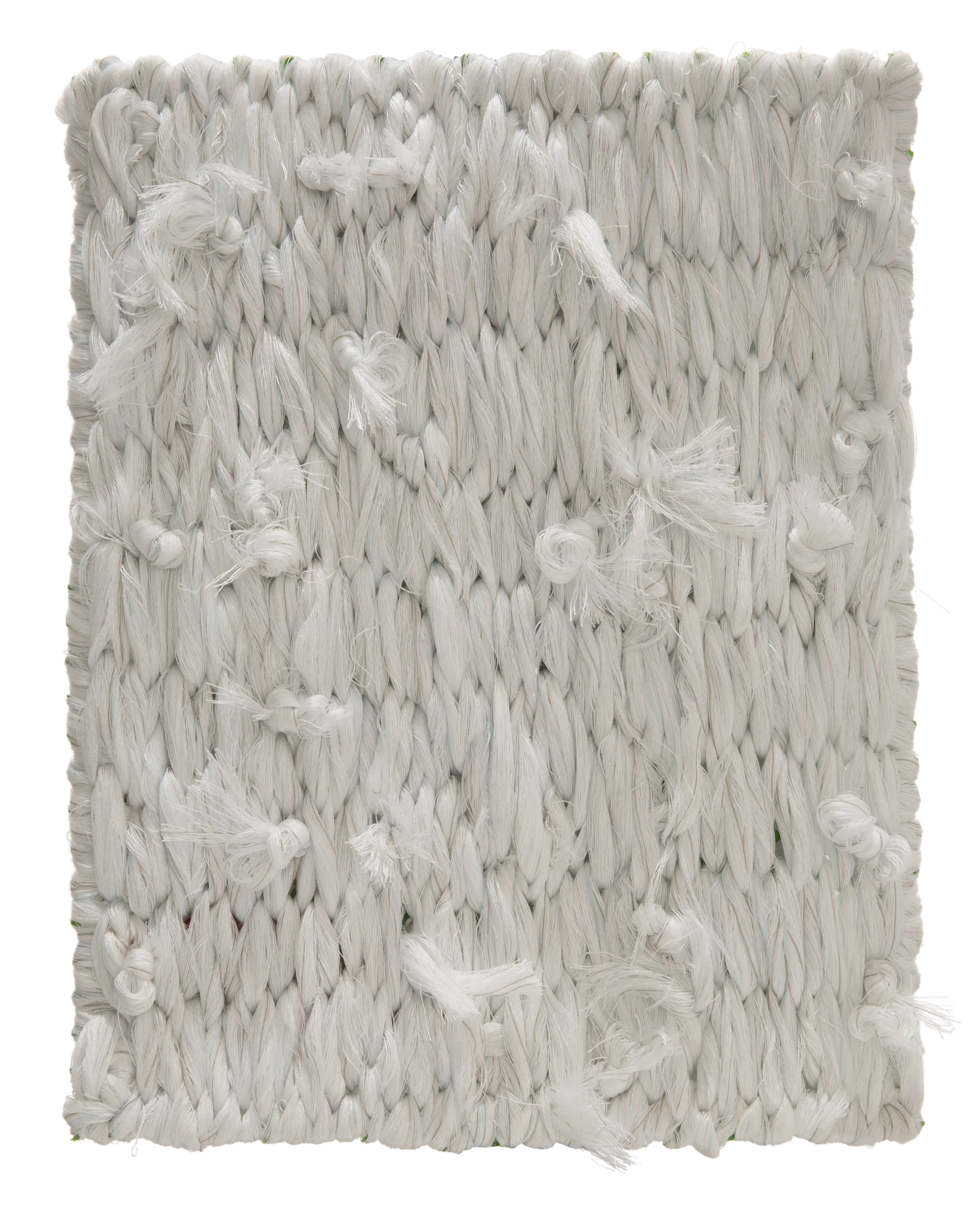
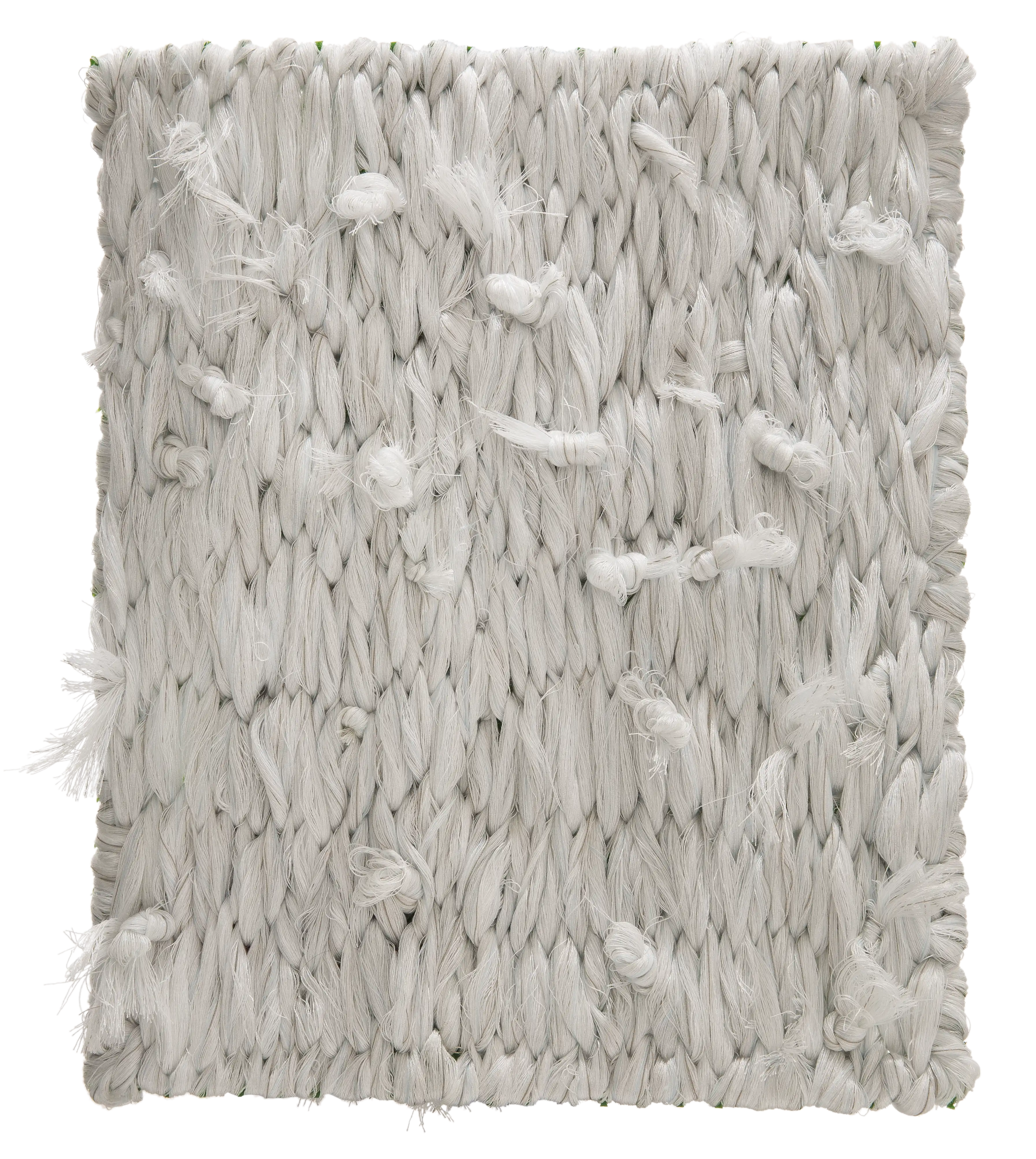
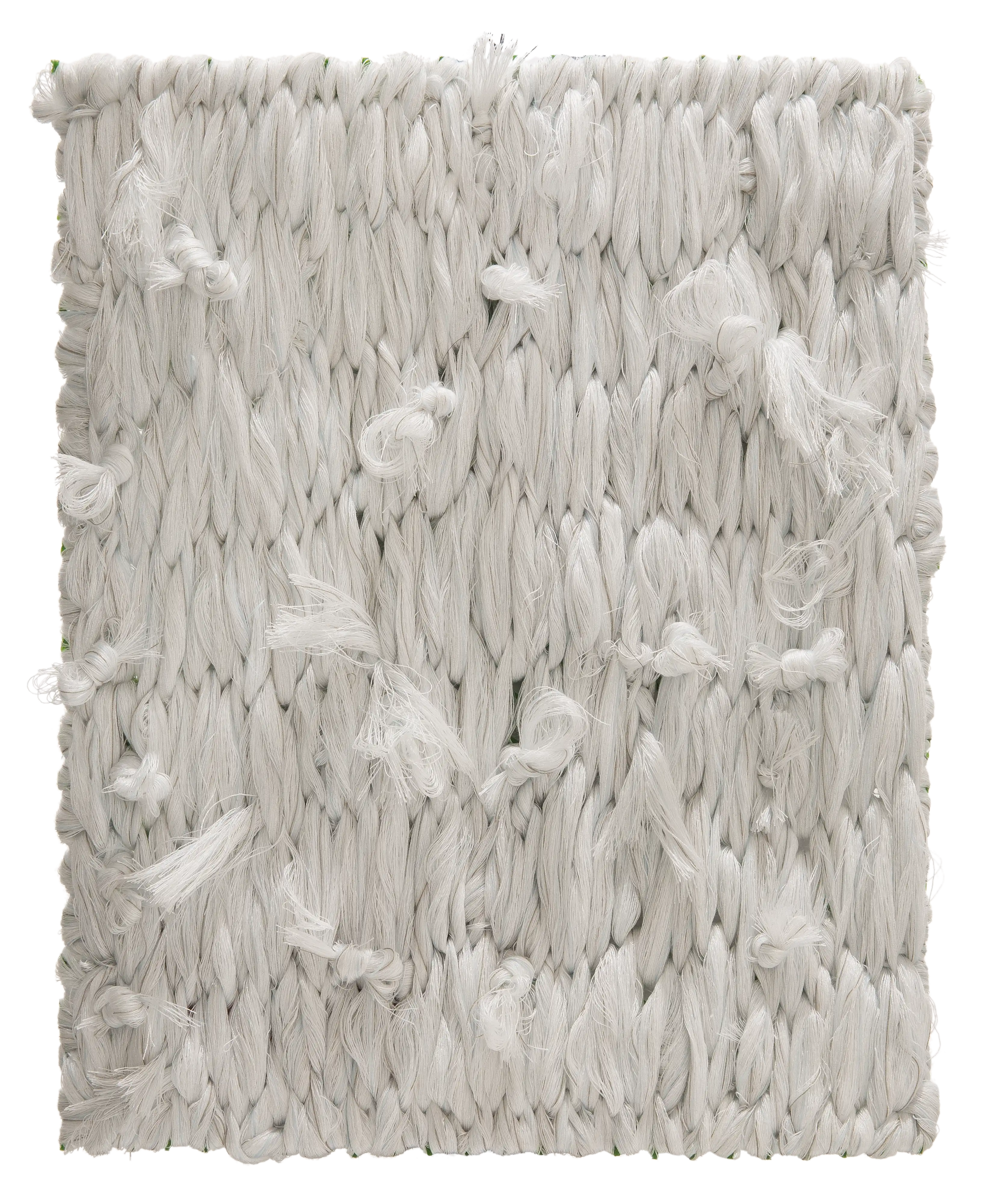
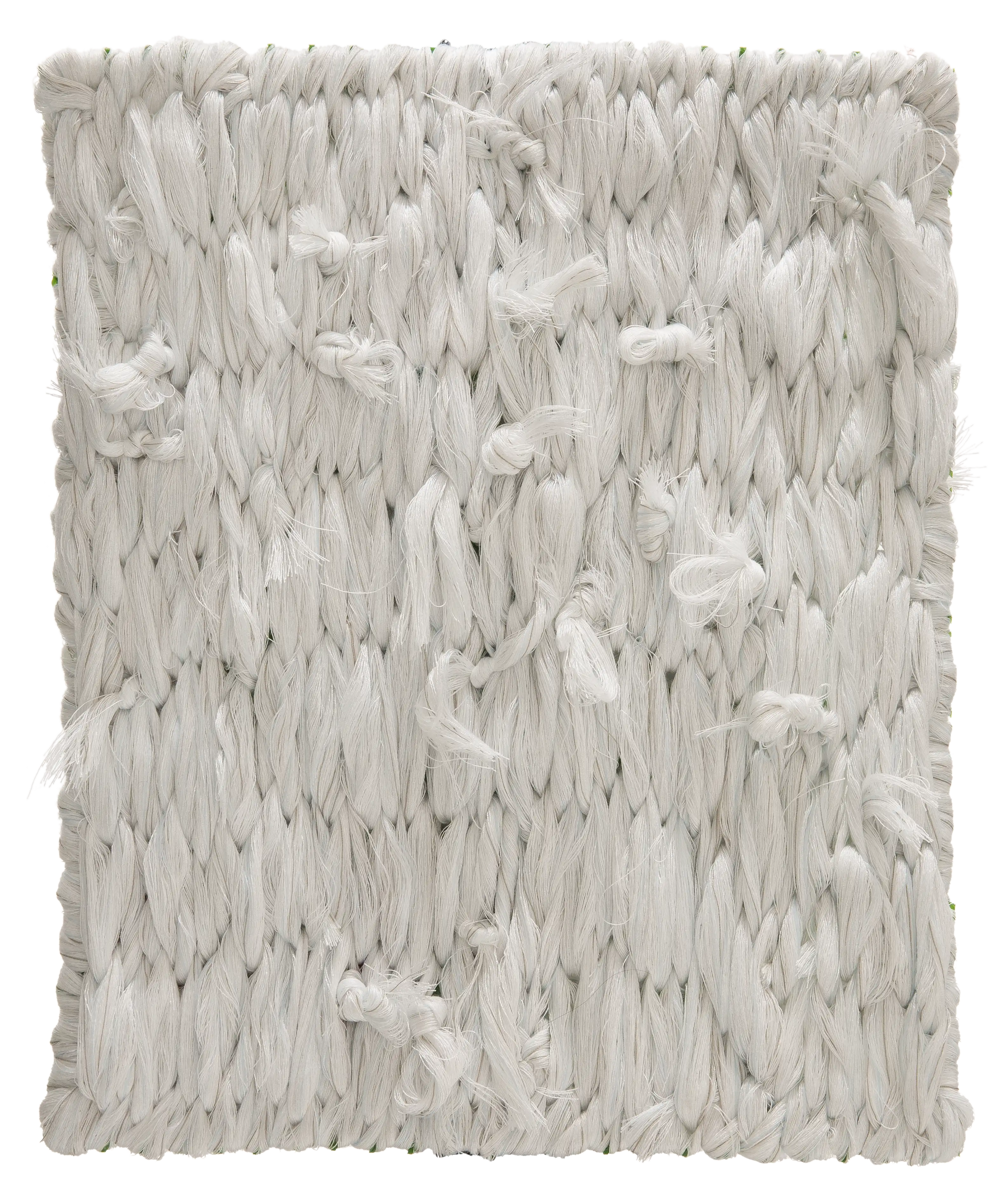
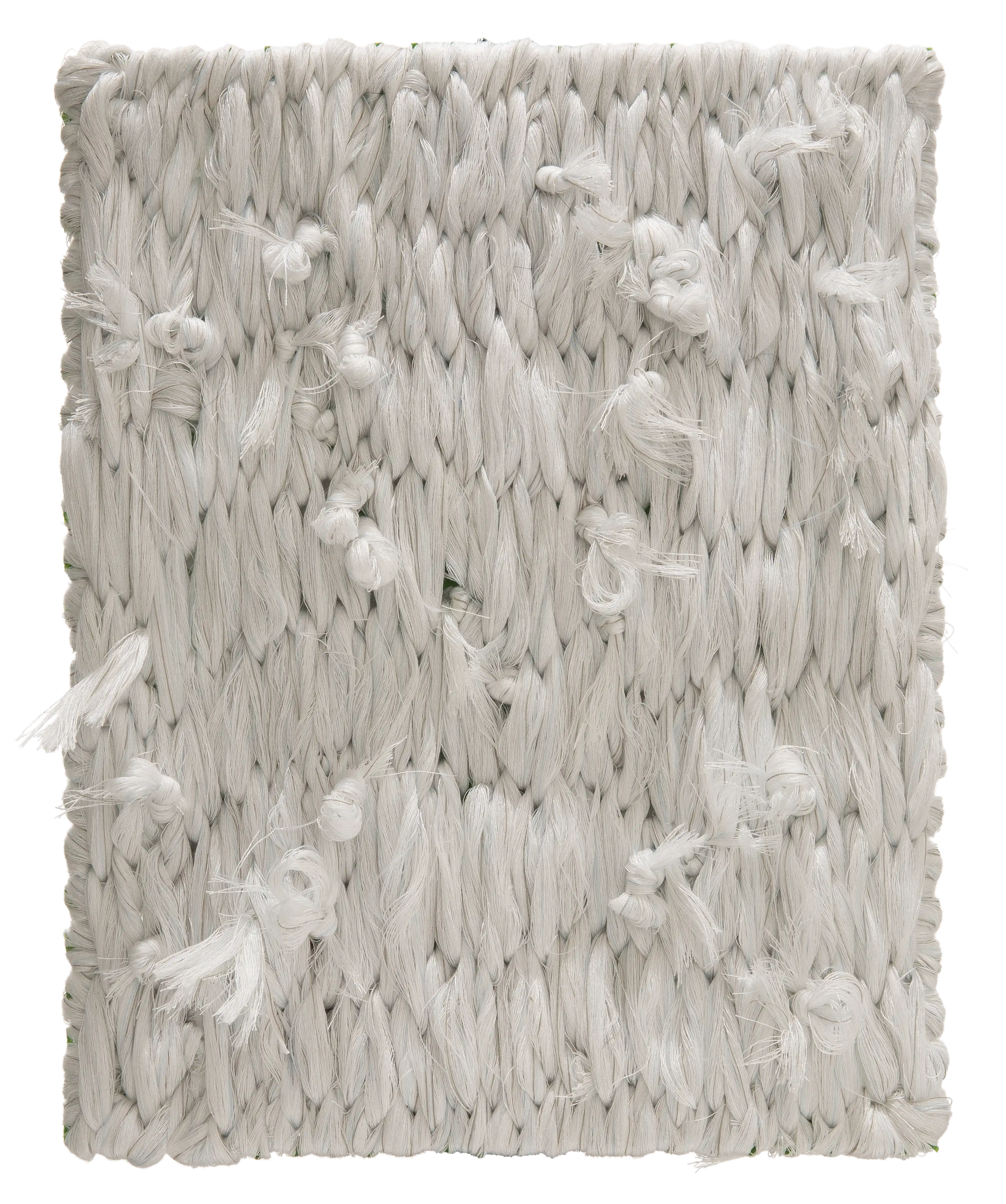
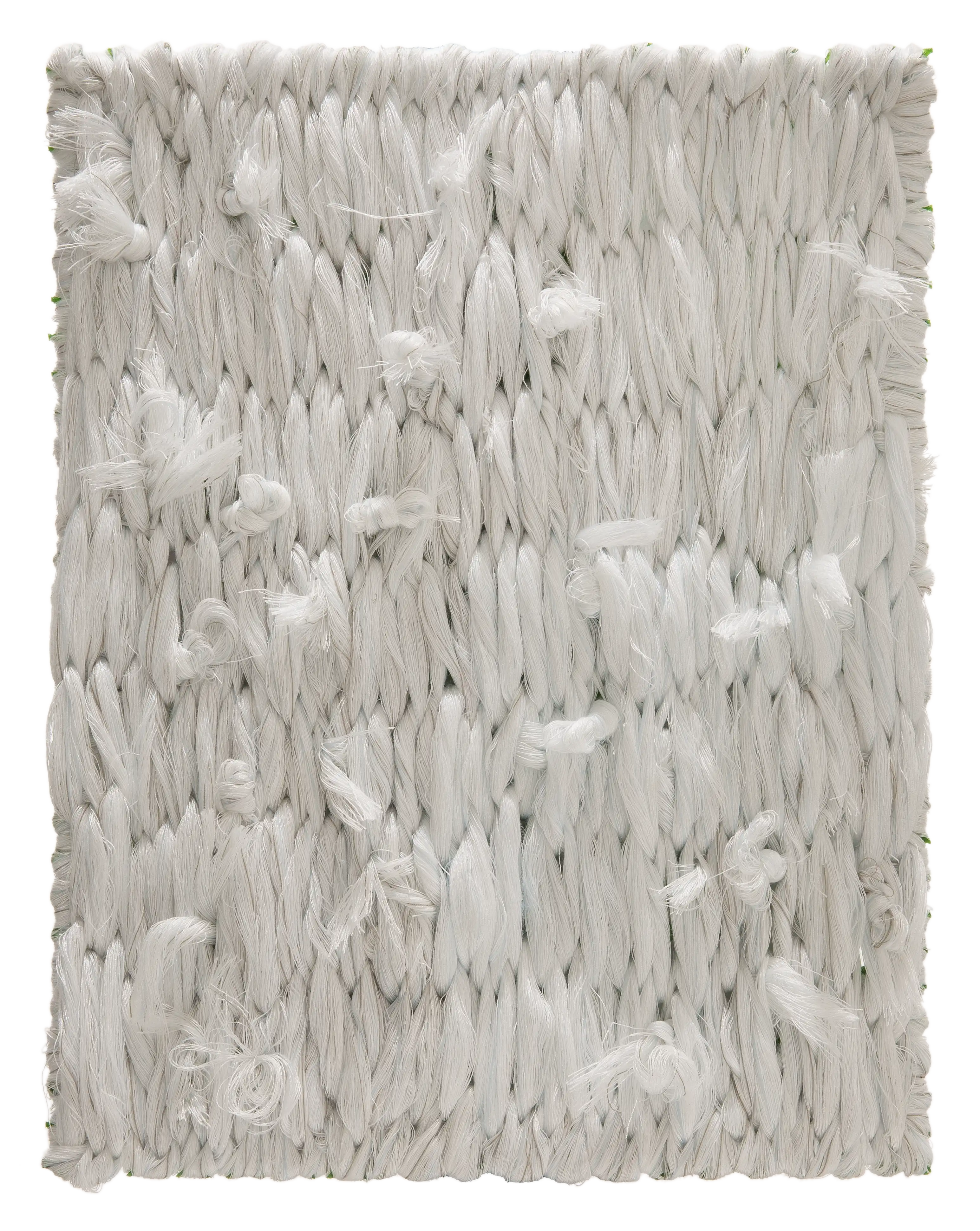
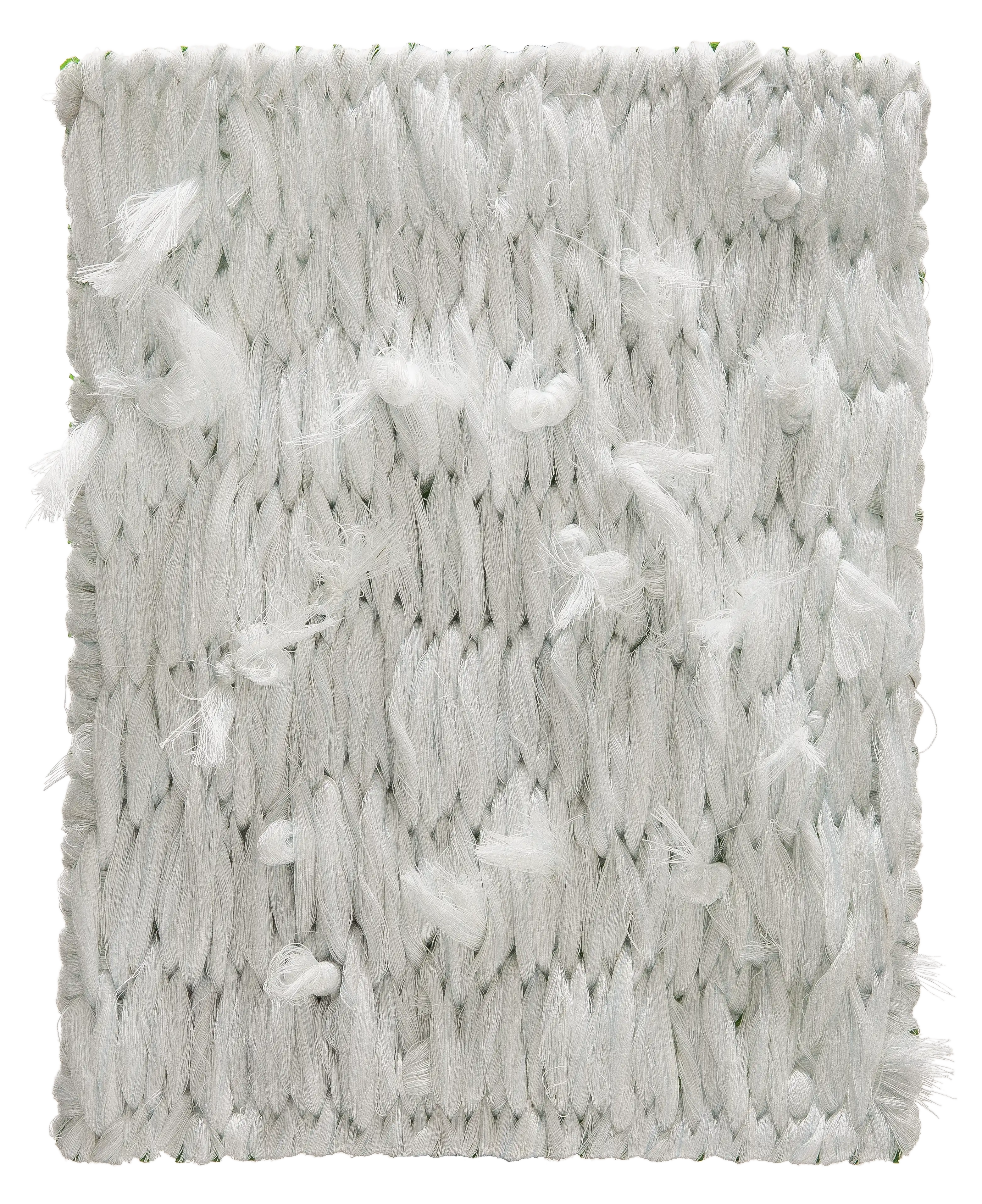
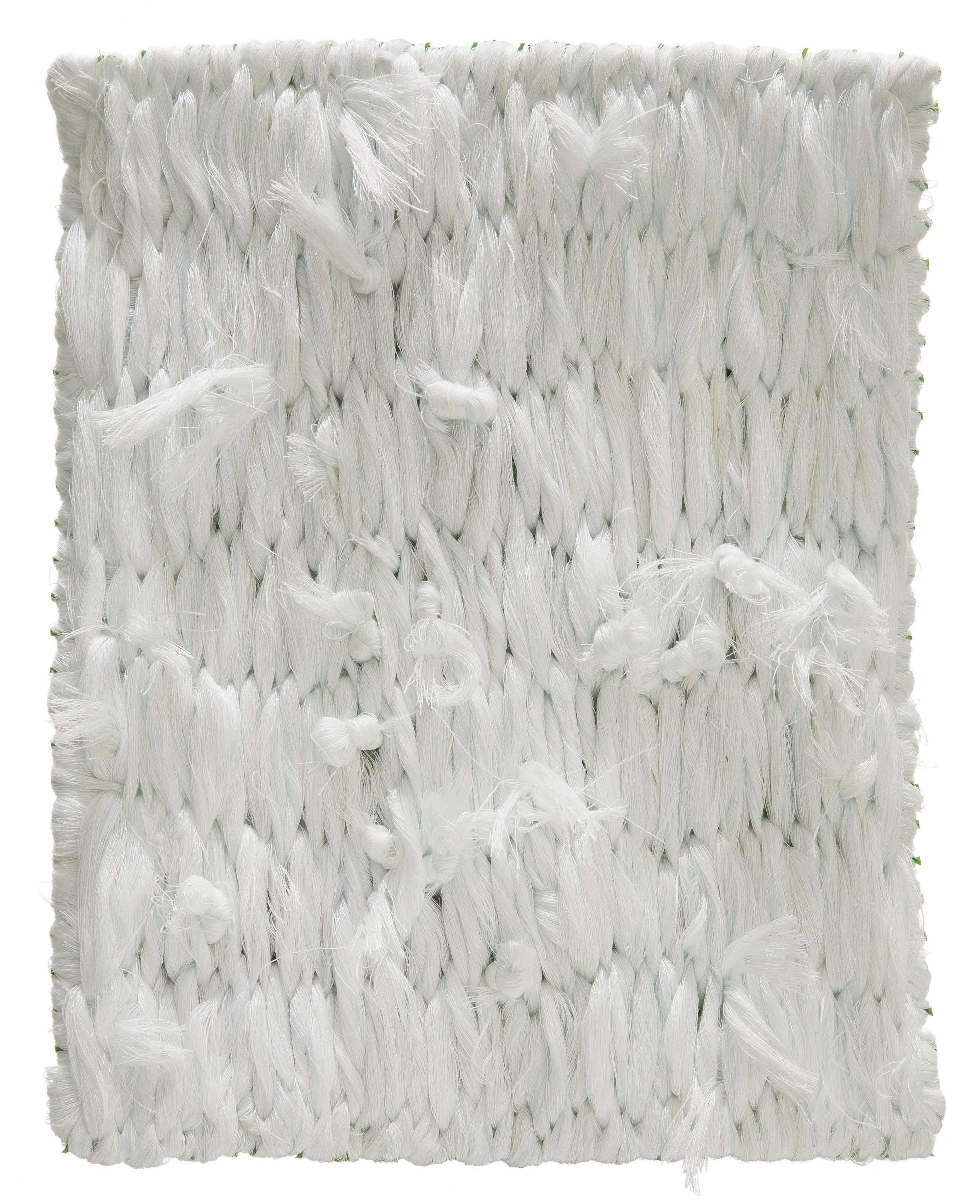
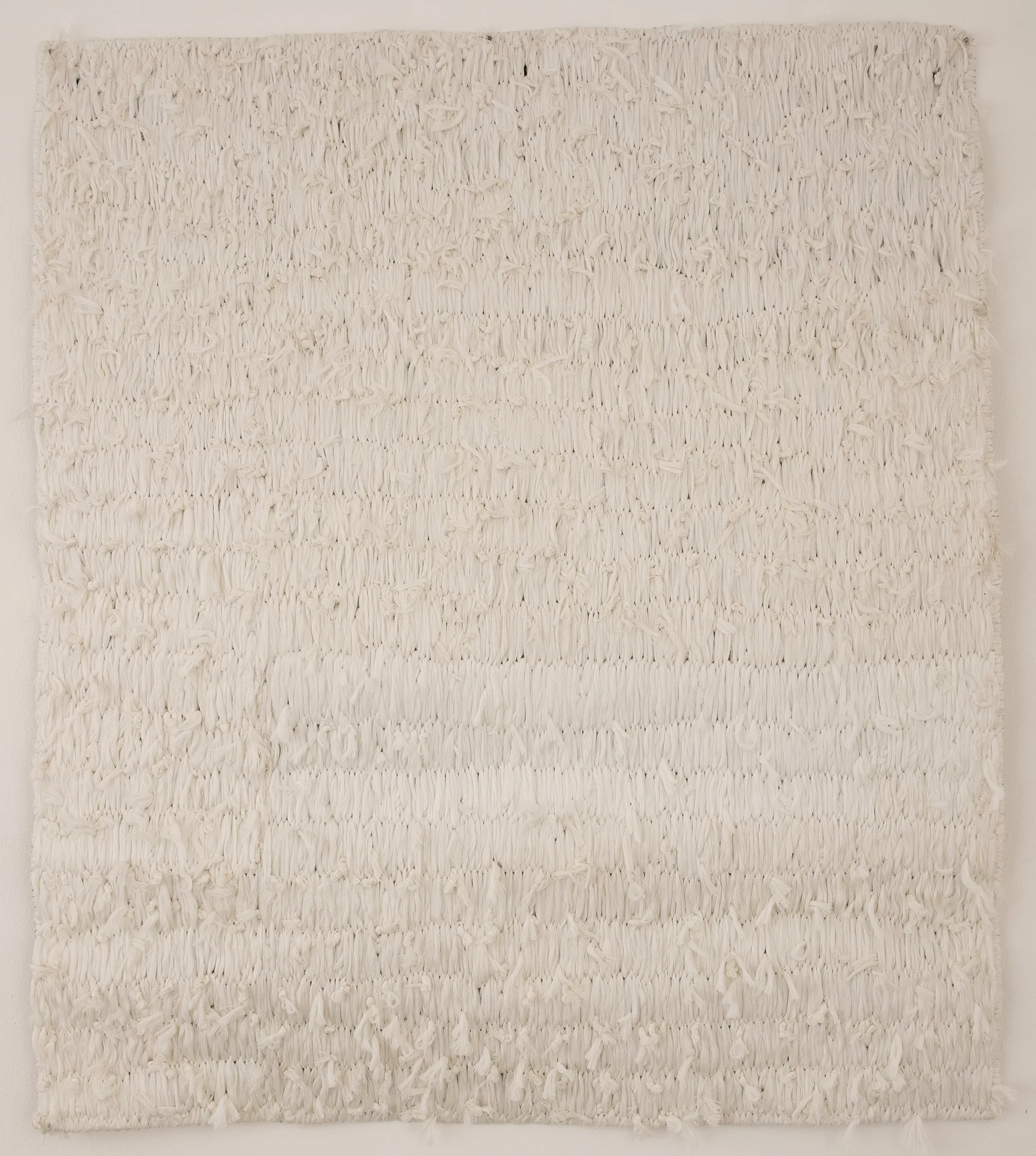
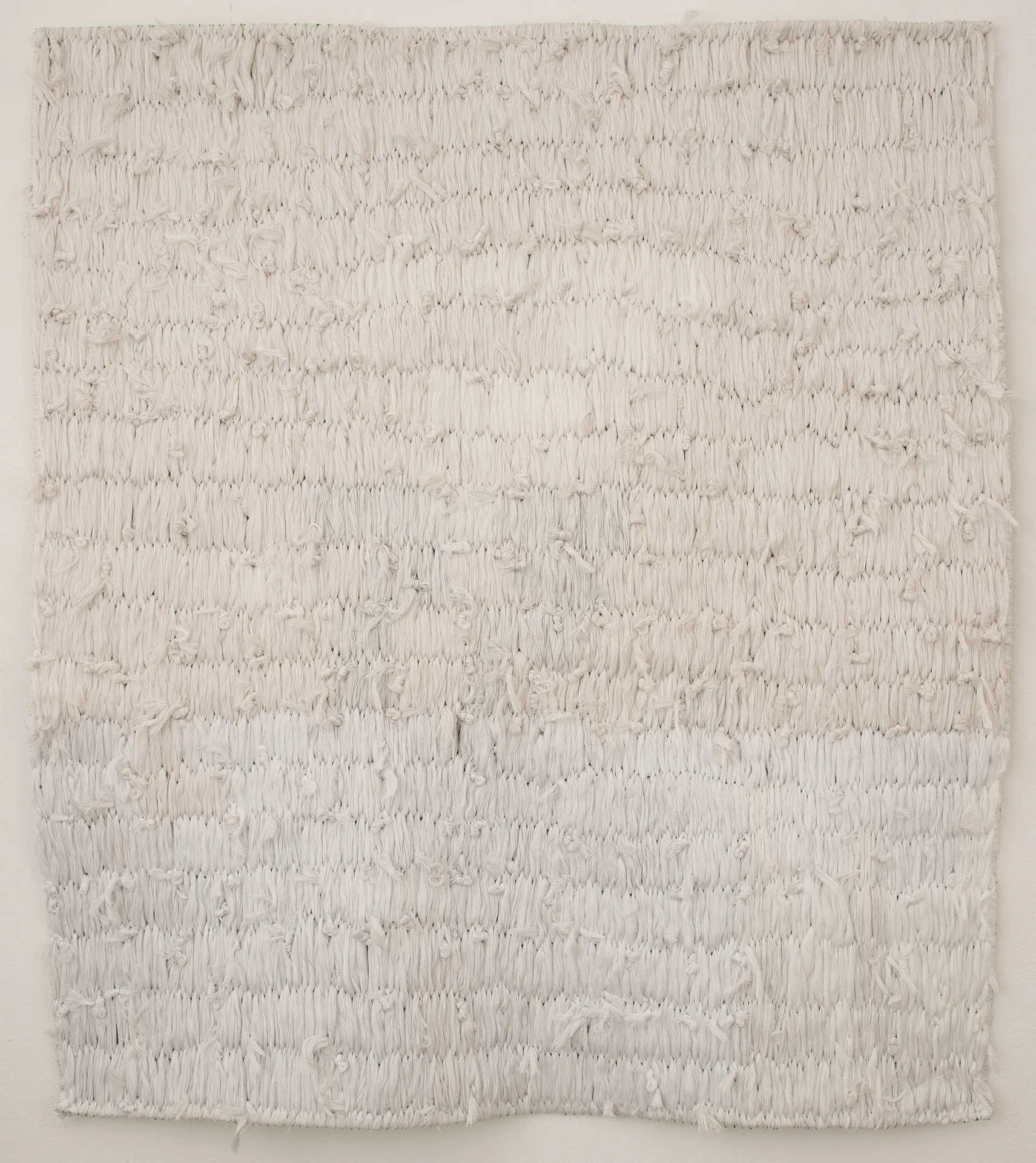
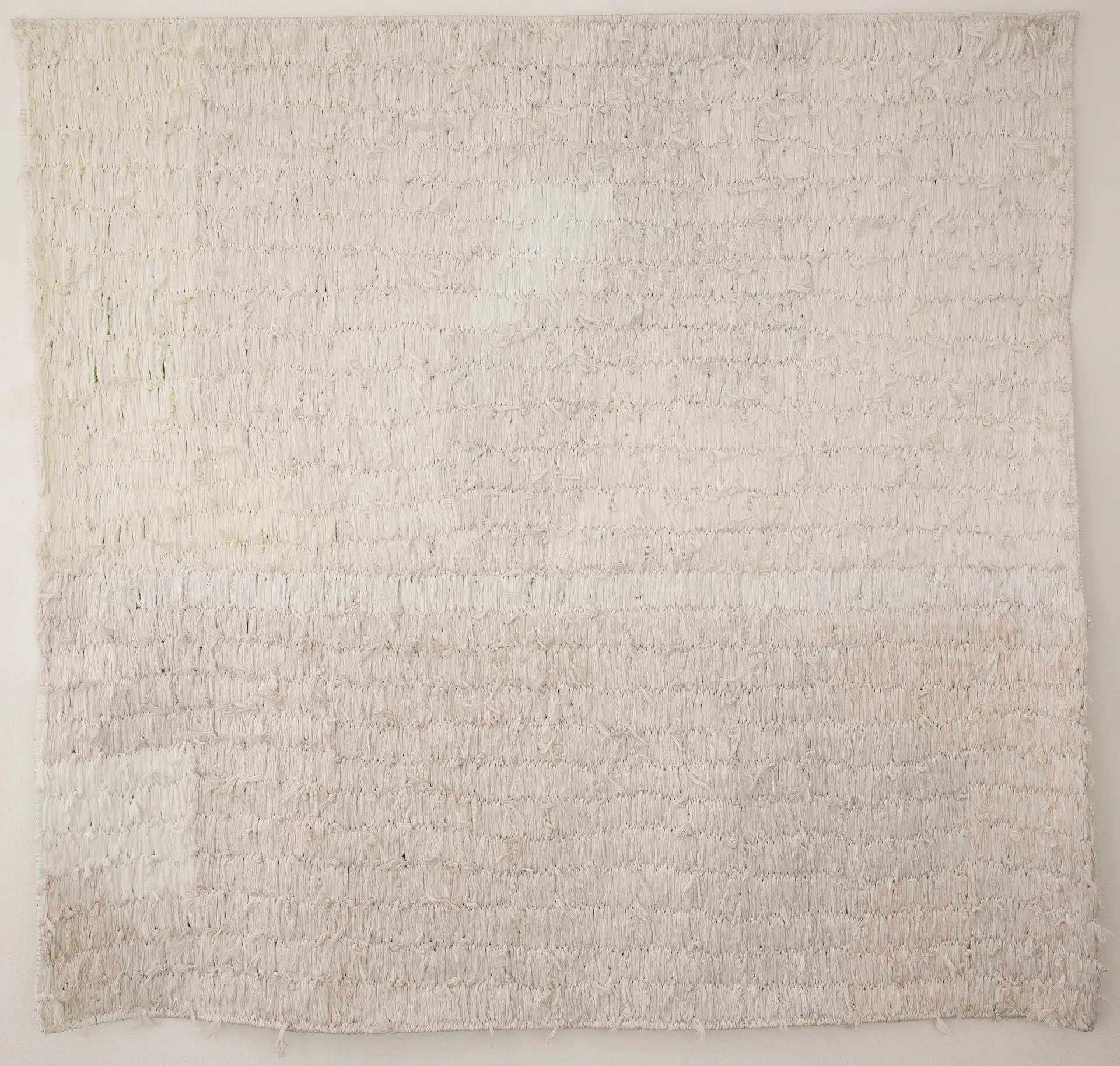
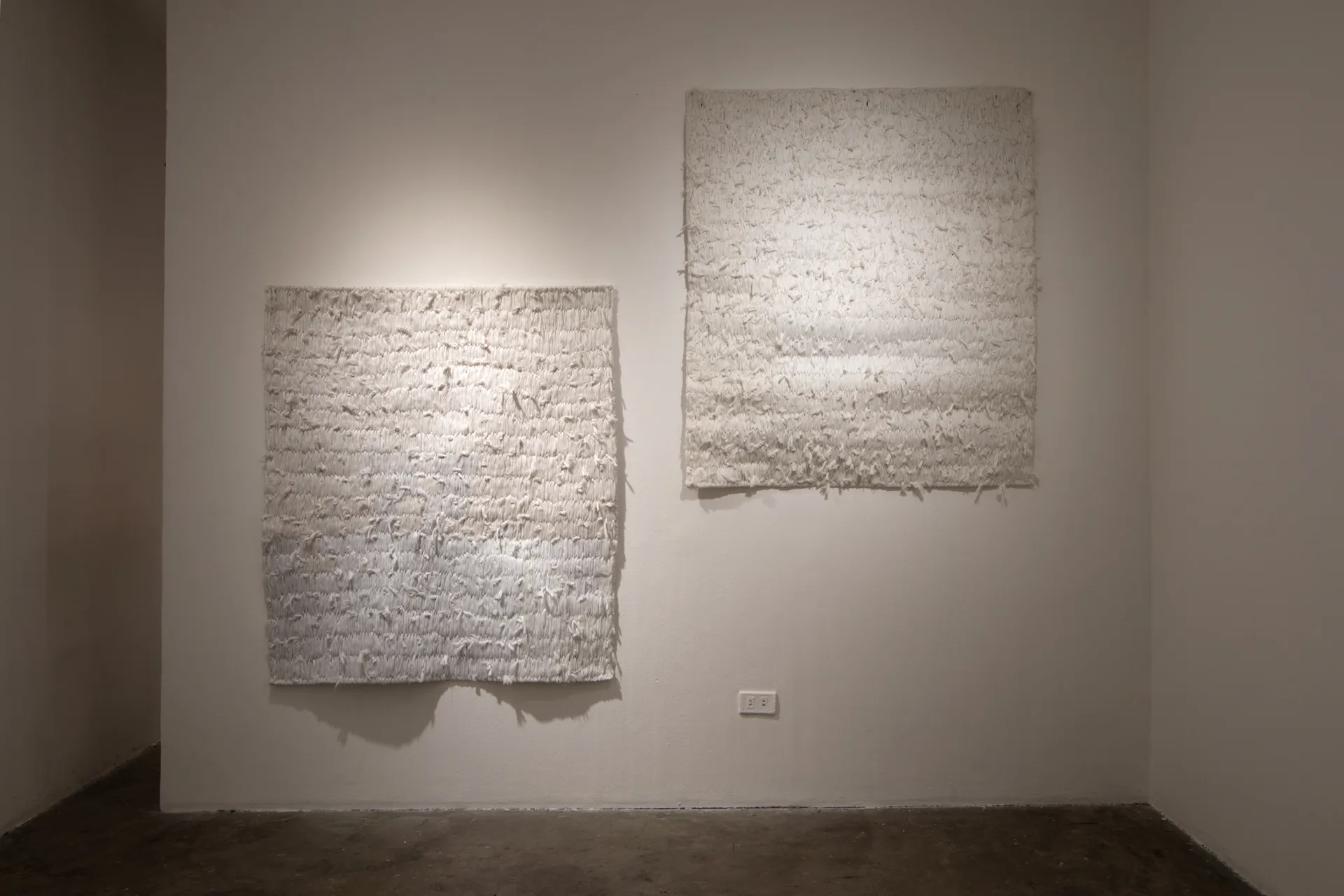
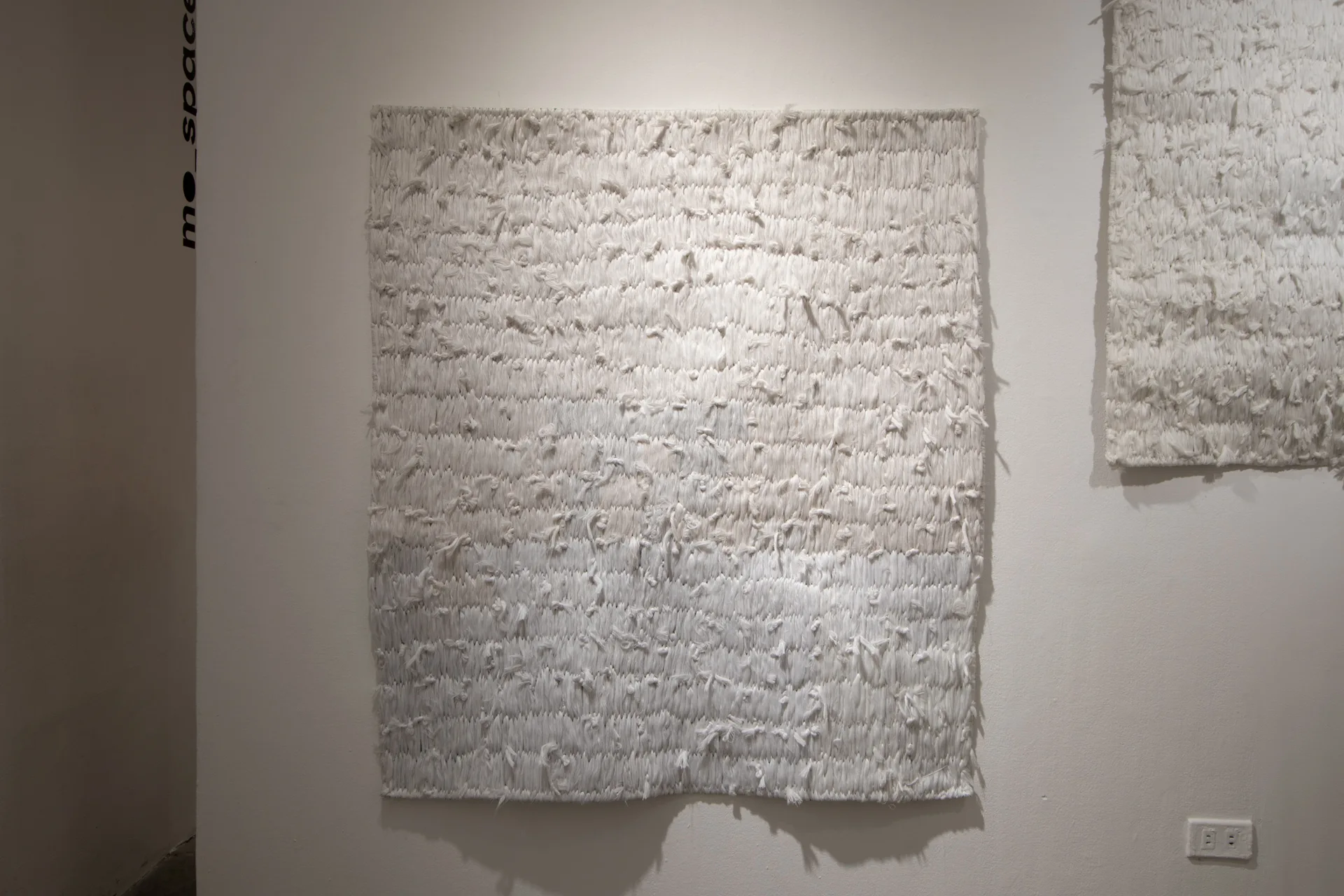
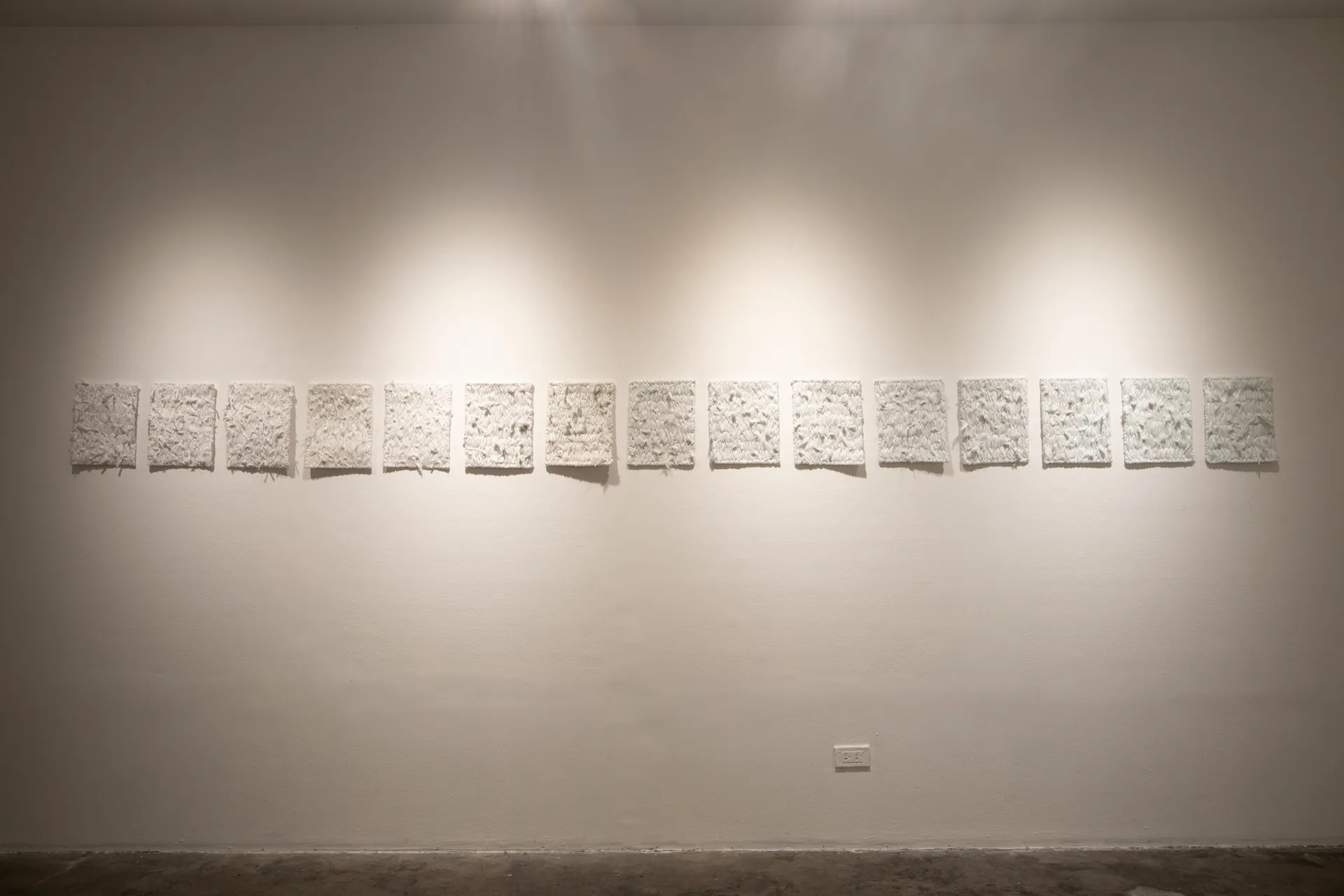
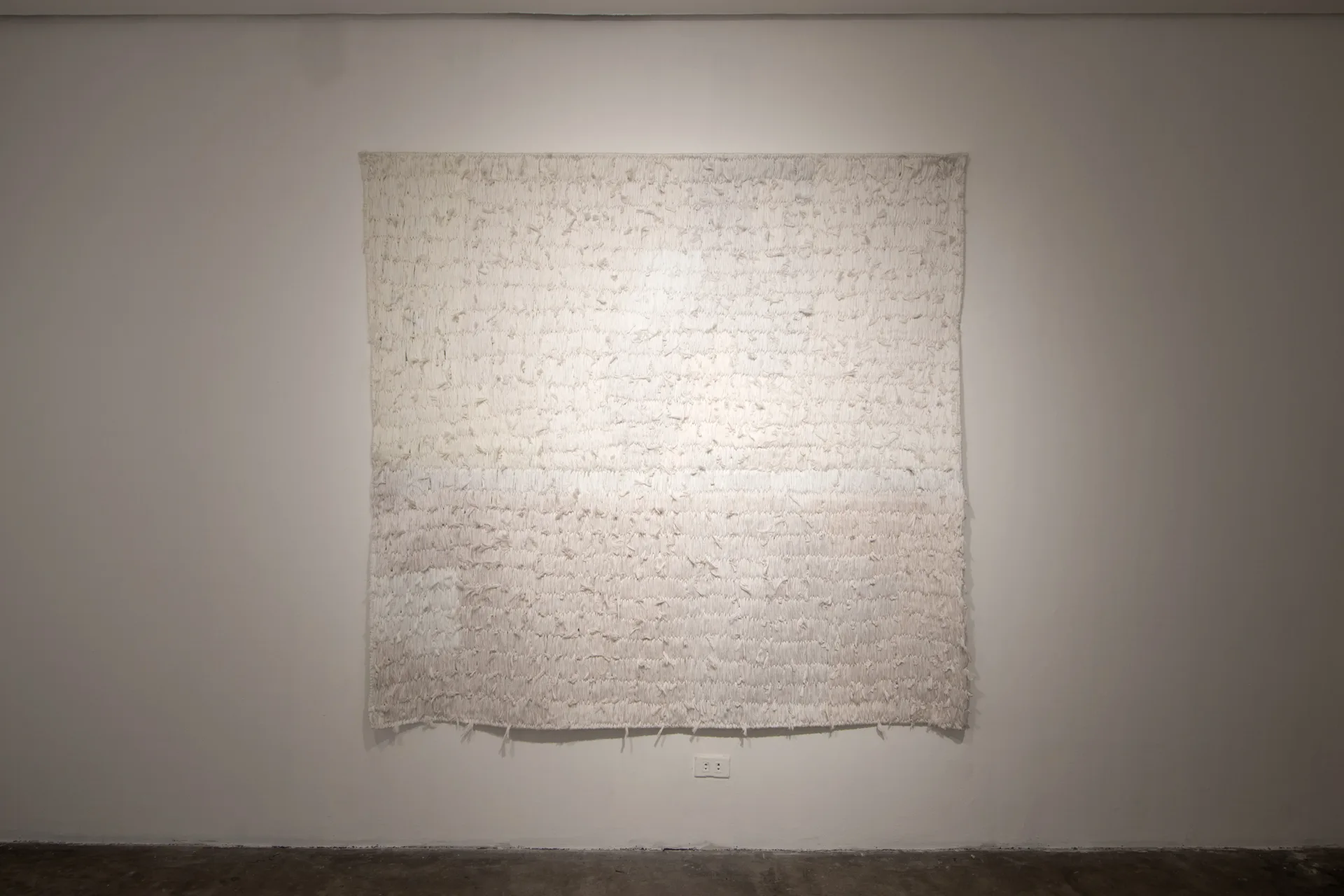
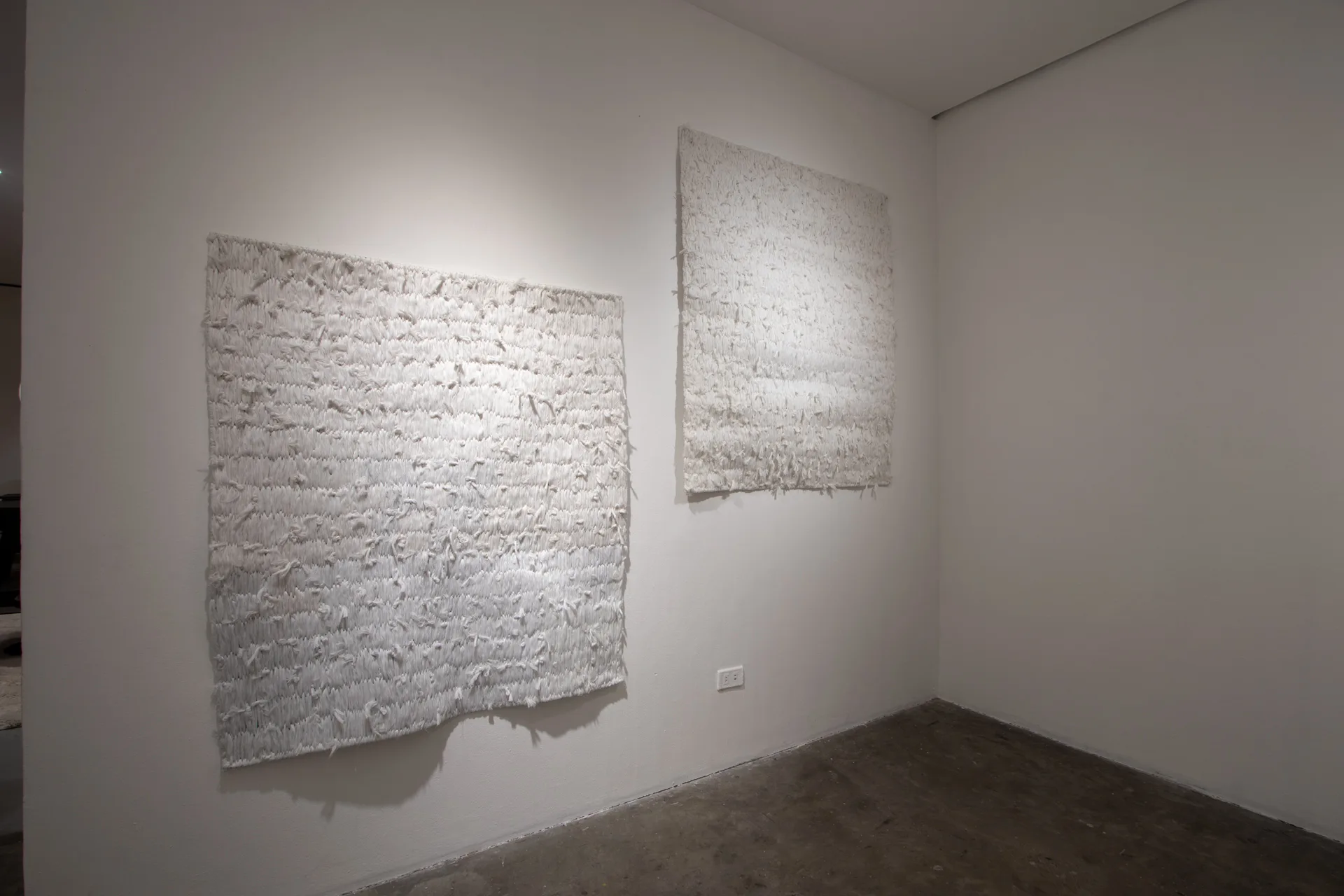
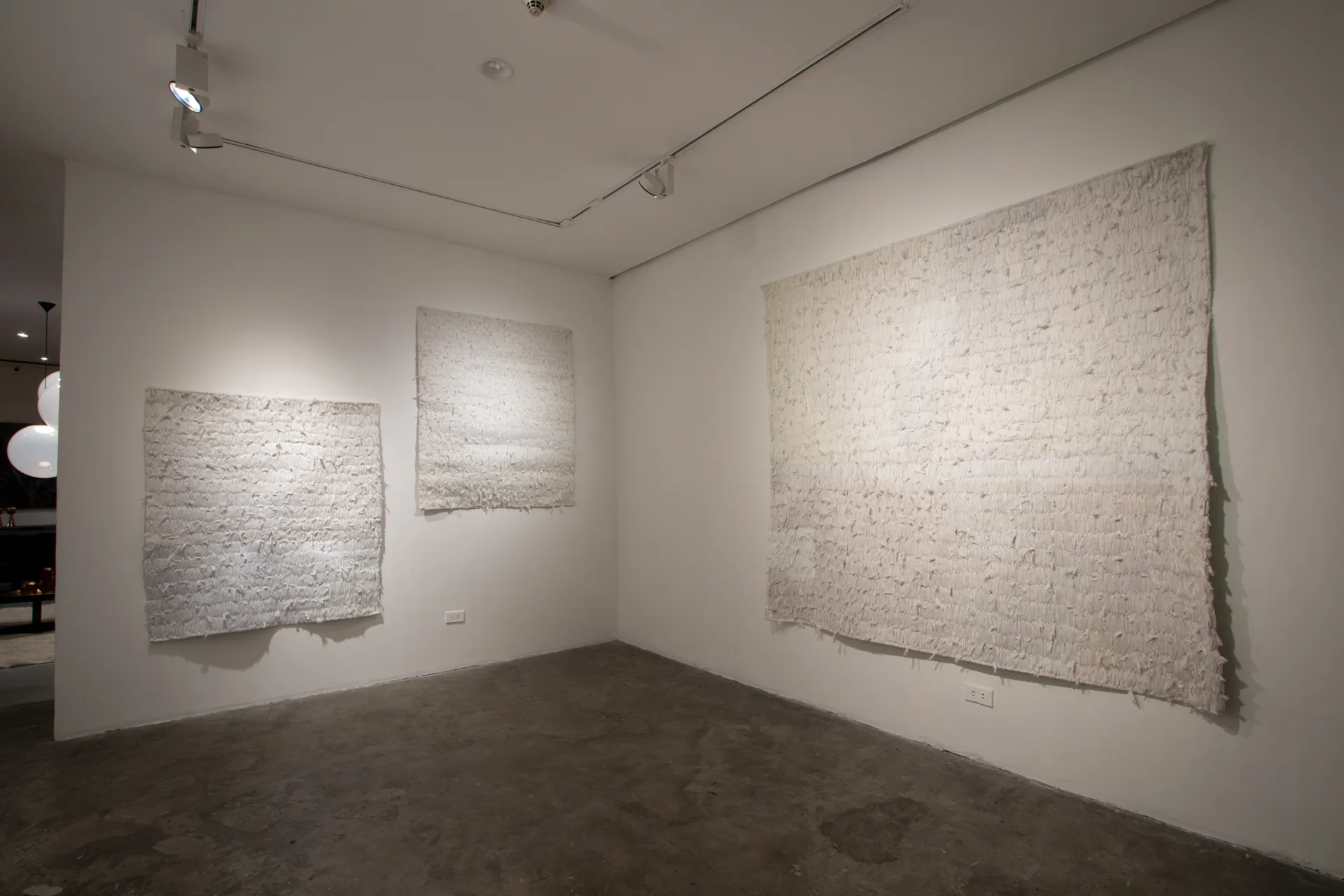
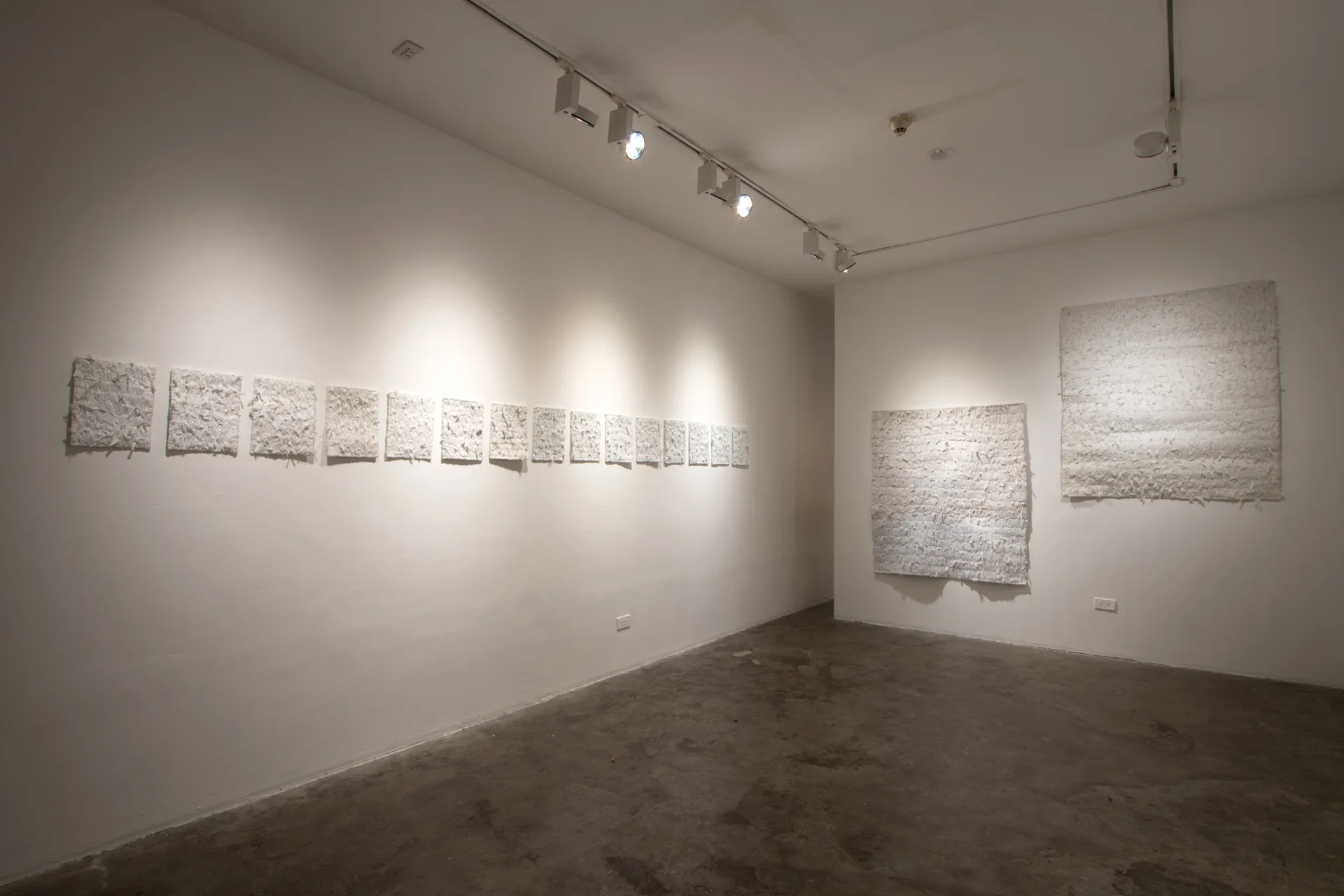
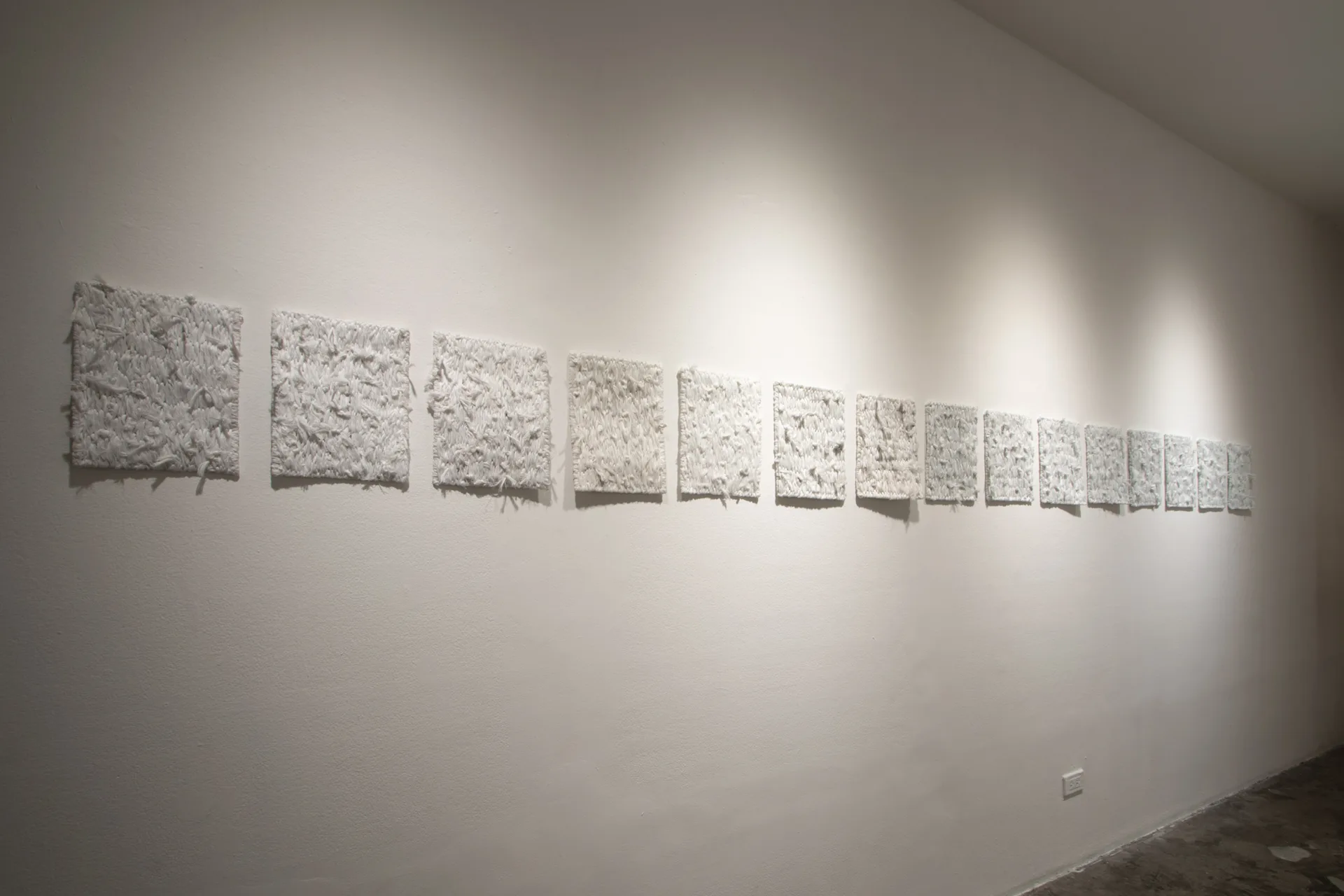
The hand moves through fabric, nearly disappearing into itself. Over hours, over days, over weeks, and months. You search for that labor and find almost none.
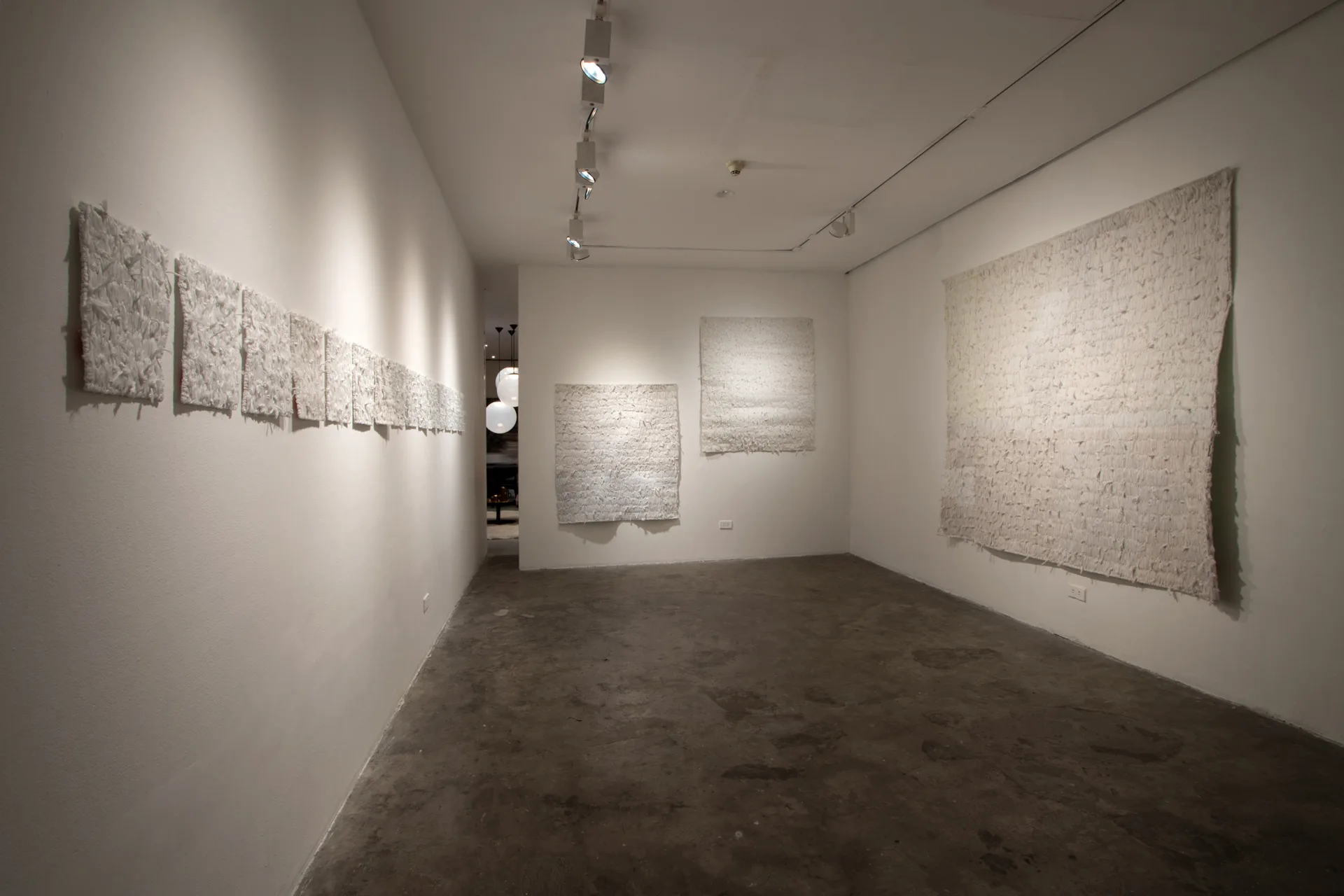
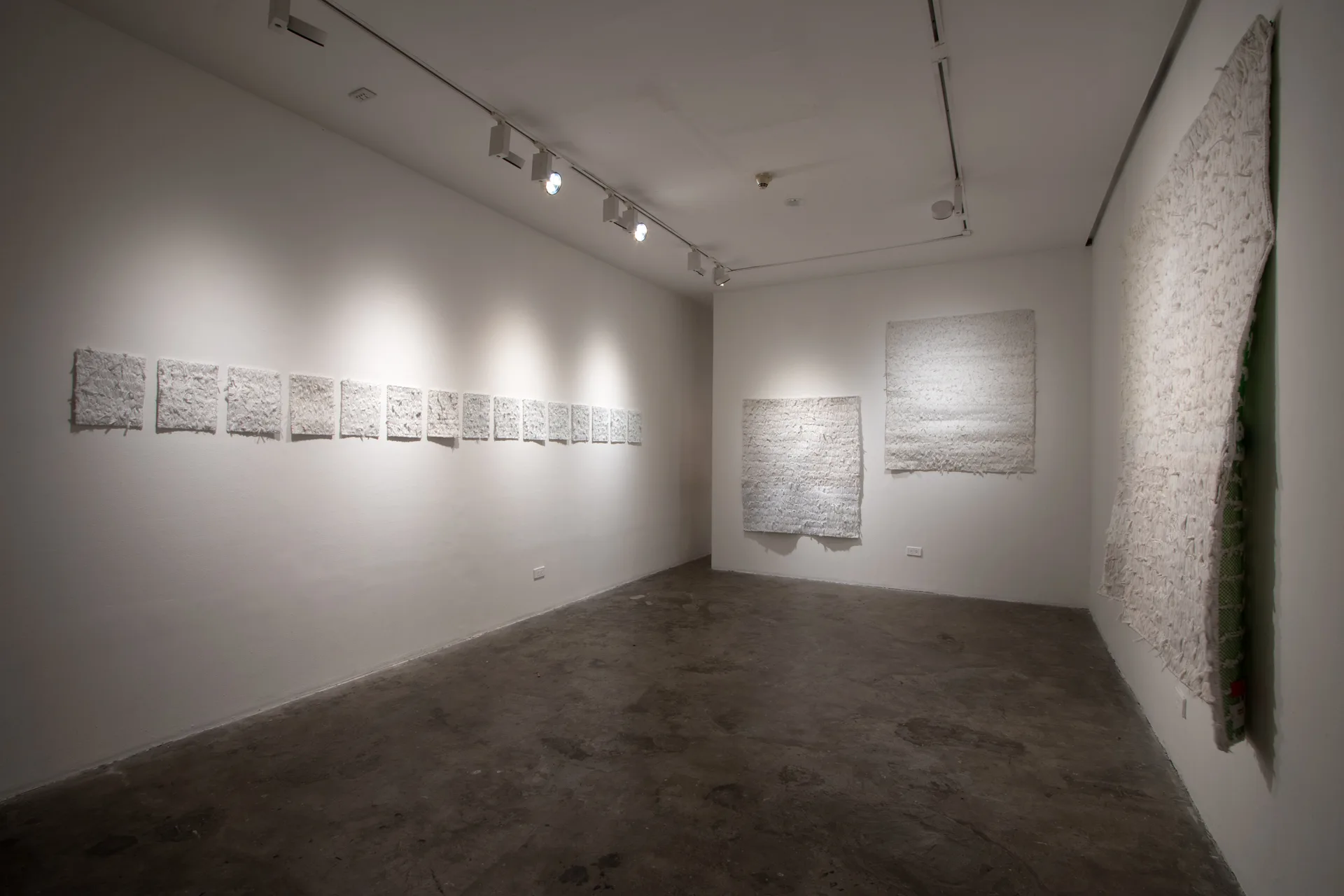
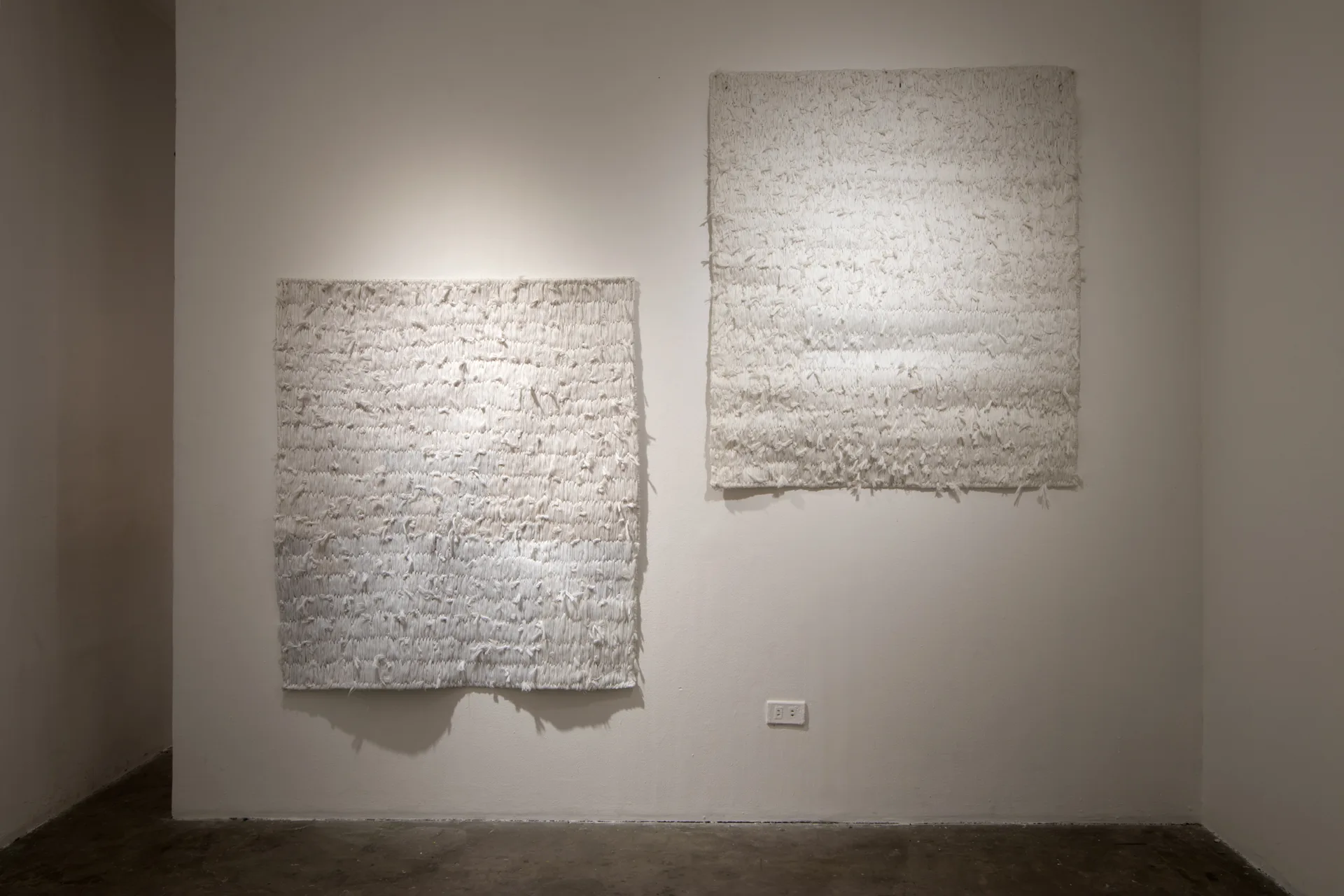
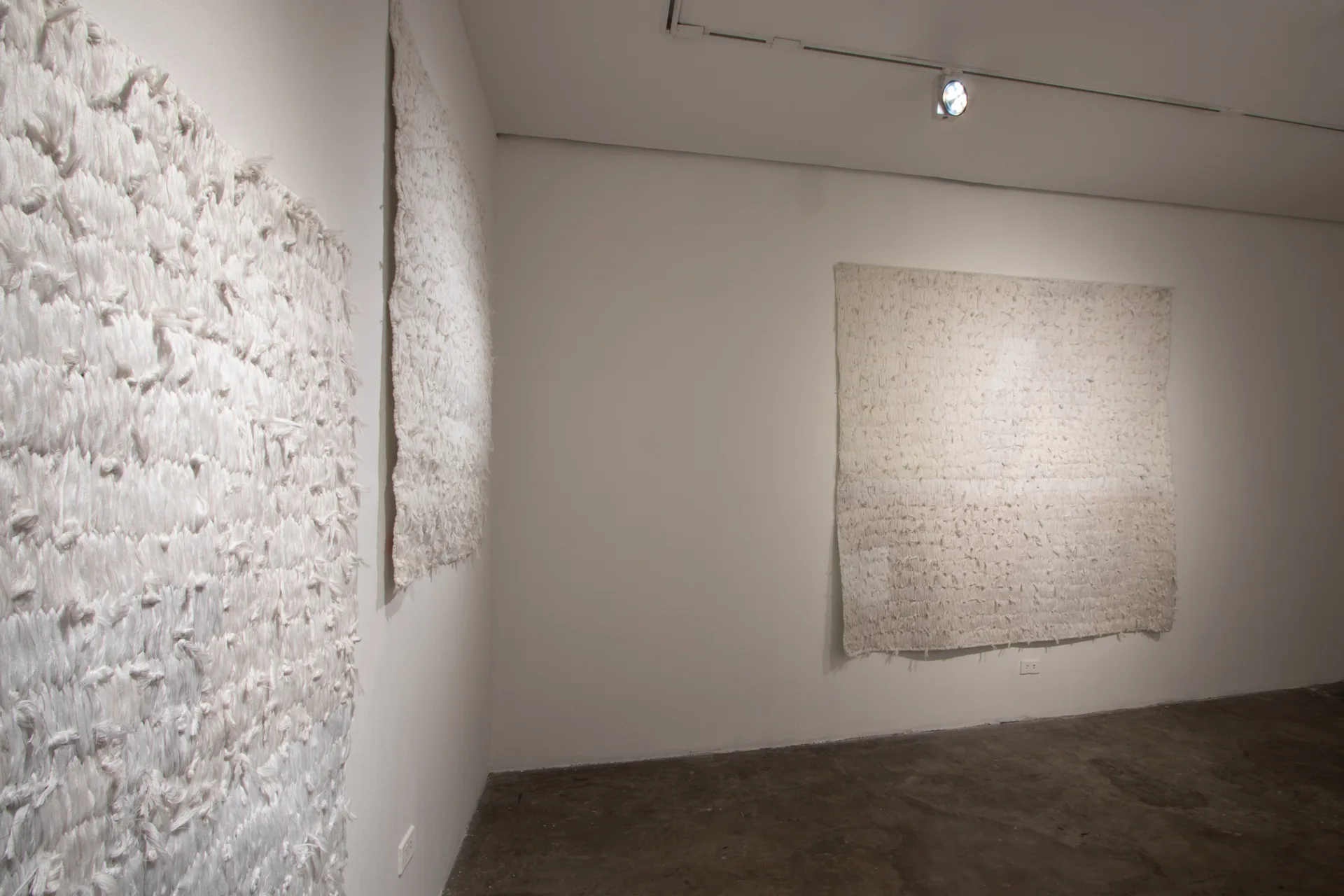
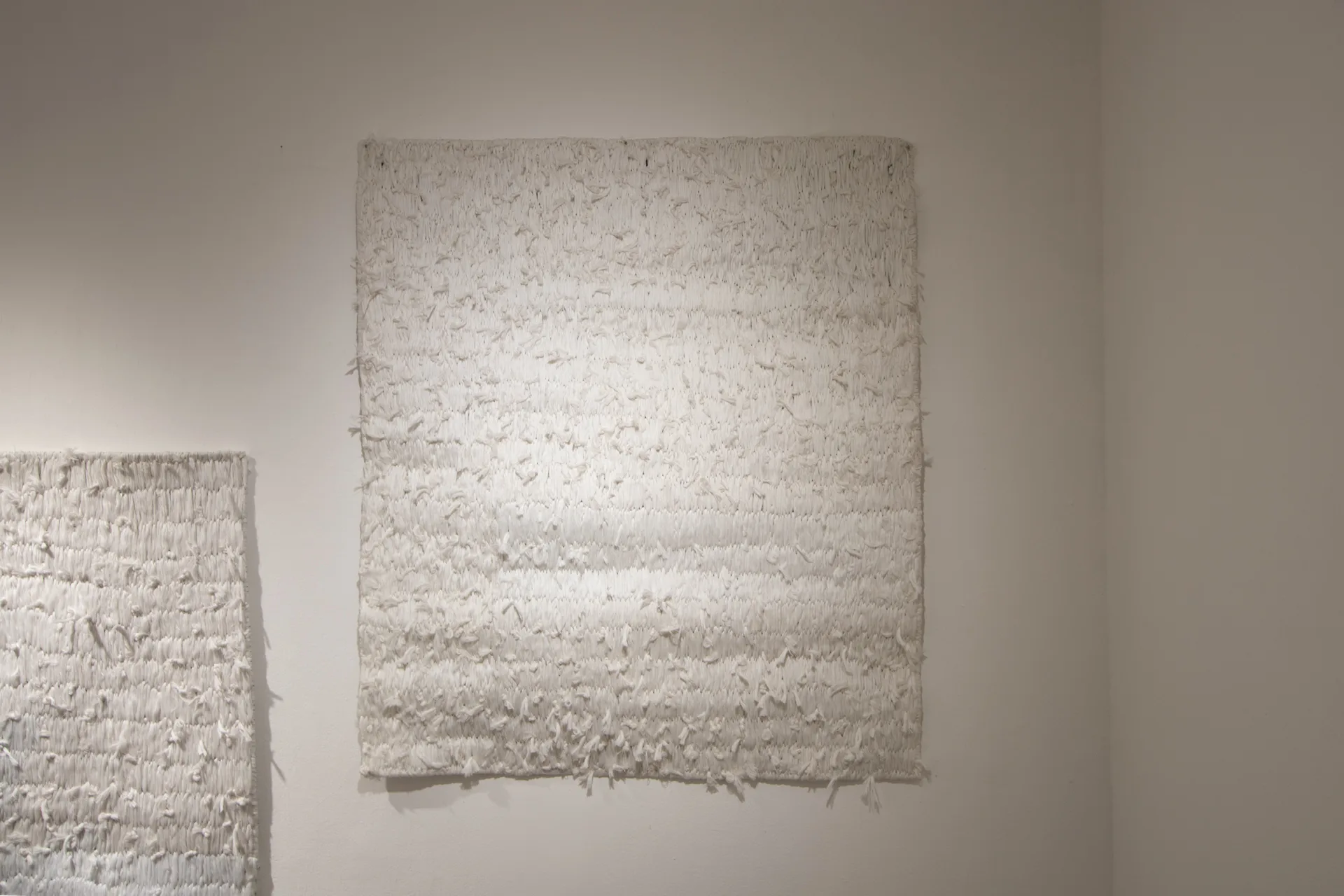
Maricar Tolentino sets down everything she has previously practiced, the density of color, the insistence of the figure, and the work that declares itself as hers. What fills the space instead is more space. Less legible, barer, and perhaps more exposed. The making is still there. It has simply stopped meeting the eye halfway.
When we live in a spectacle, how we relate to the world and to ourselves is governed by images. This relationship morphs into that: what cannot be represented cannot be said to exist. Or has any form of value. Guy Debord argues that the dominance of the visual is not merely aesthetic. It is how commodity culture actively dictates what labor gets to exist. When labor is determined by whether it can be monetized, reproduced, and measured, some forms of labor are stripped of recognition outside their economic value.
This erasure surfaces in Eloisa Hernandez's research in art history, where needlework, weaving, and embroidery were classified by fine art institutions as domestic. It was simply not an act of making that counted, even with the demand of technicality, exhaustion of the body, and hours consumed. This prejudice is not only cultural. Silvia Federici saw this stitched in the foundations of capitalism, with the systematic devaluation of domestic and reproductive toil set into obligation, to nature, into nothing.
To return to thread and fabric and refuse to make them pleasing and immediately understood is to refuse those terms and reopen the exclusion from inside.
This refusal has a thread in durational and process-based works, in which time and the laboring body are not how the works get made but are the works themselves. Tolentino then frays that bureaucratic logic of valuation: submitting the self entirely to a system that could not care less what the body was doing in between.
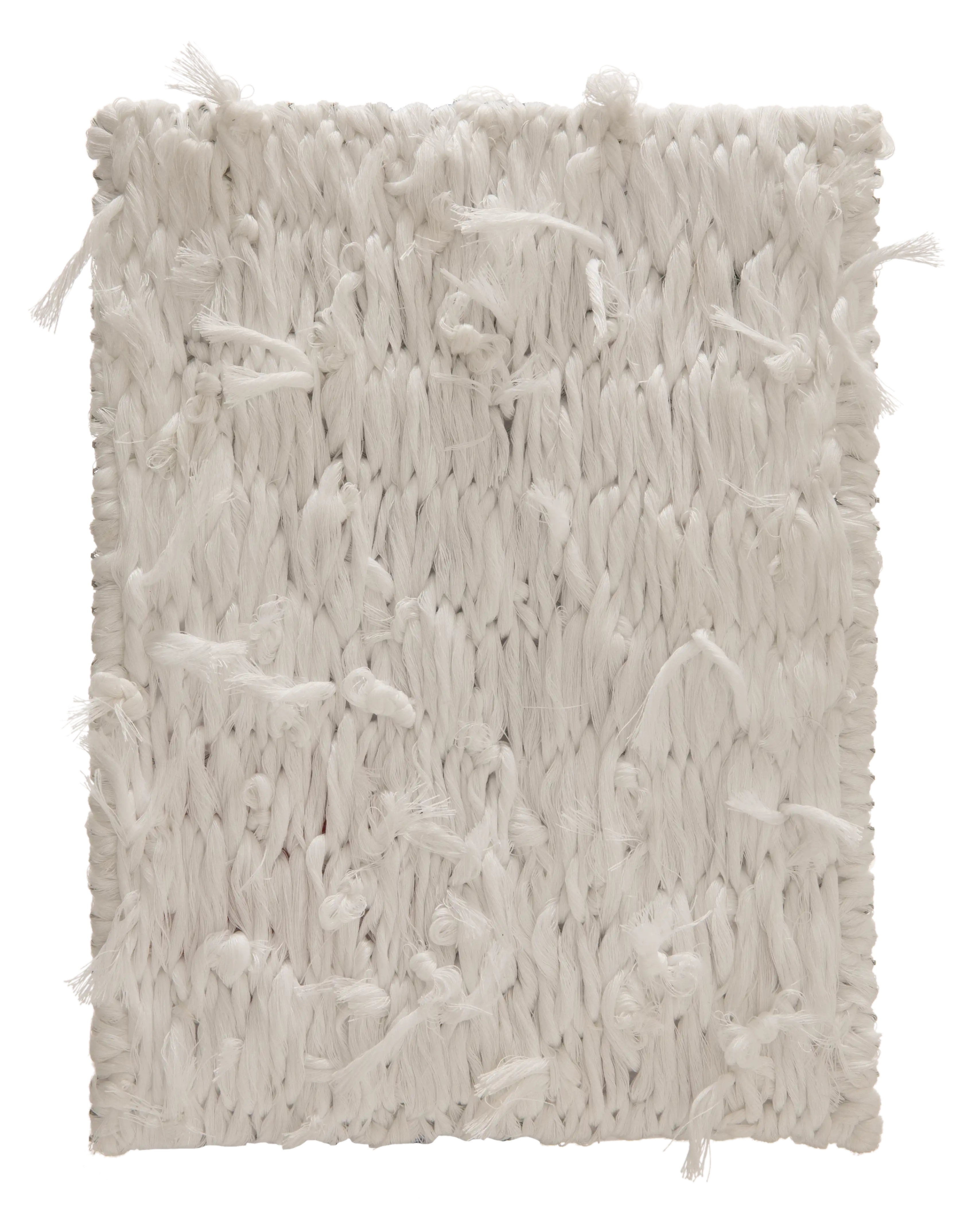
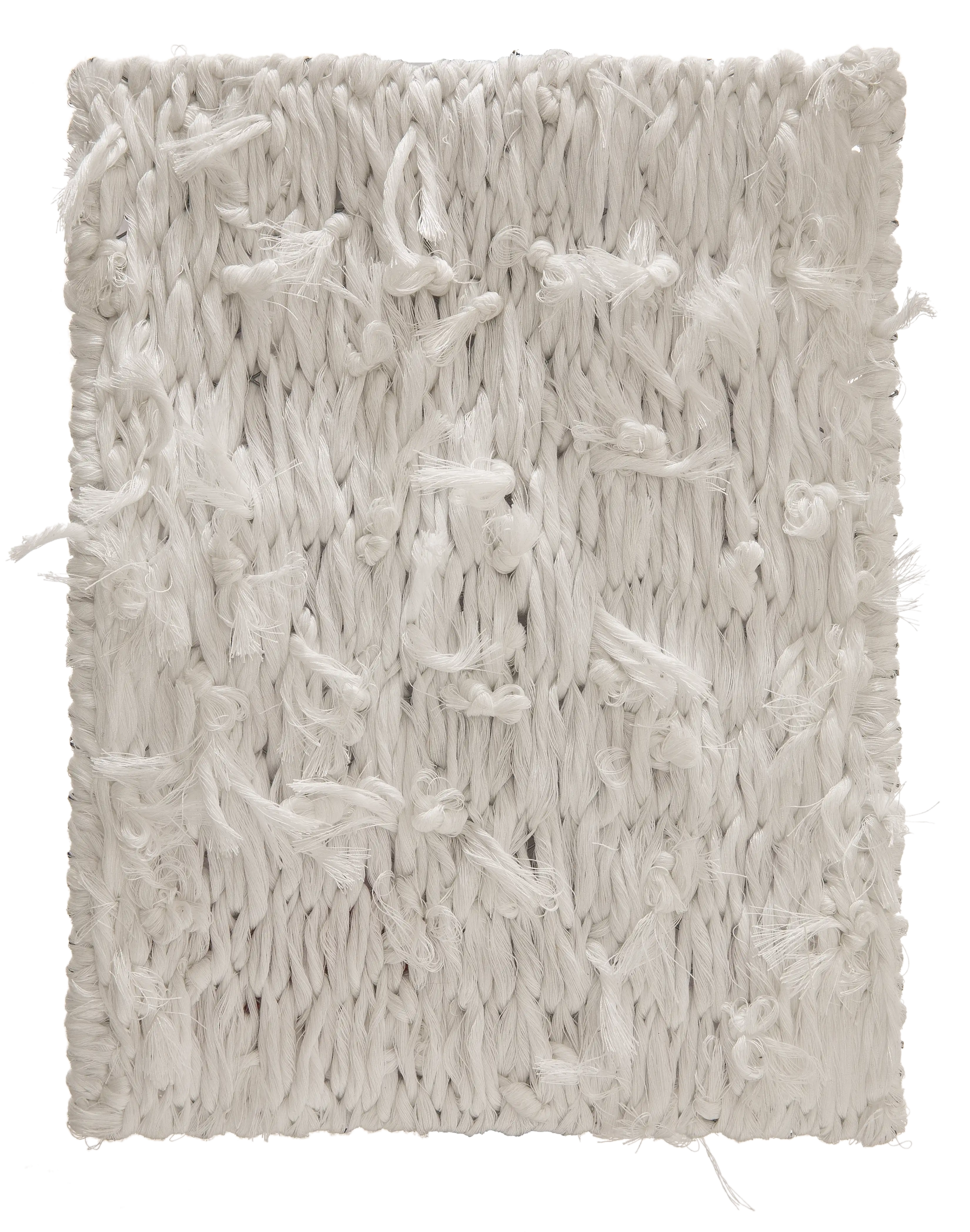
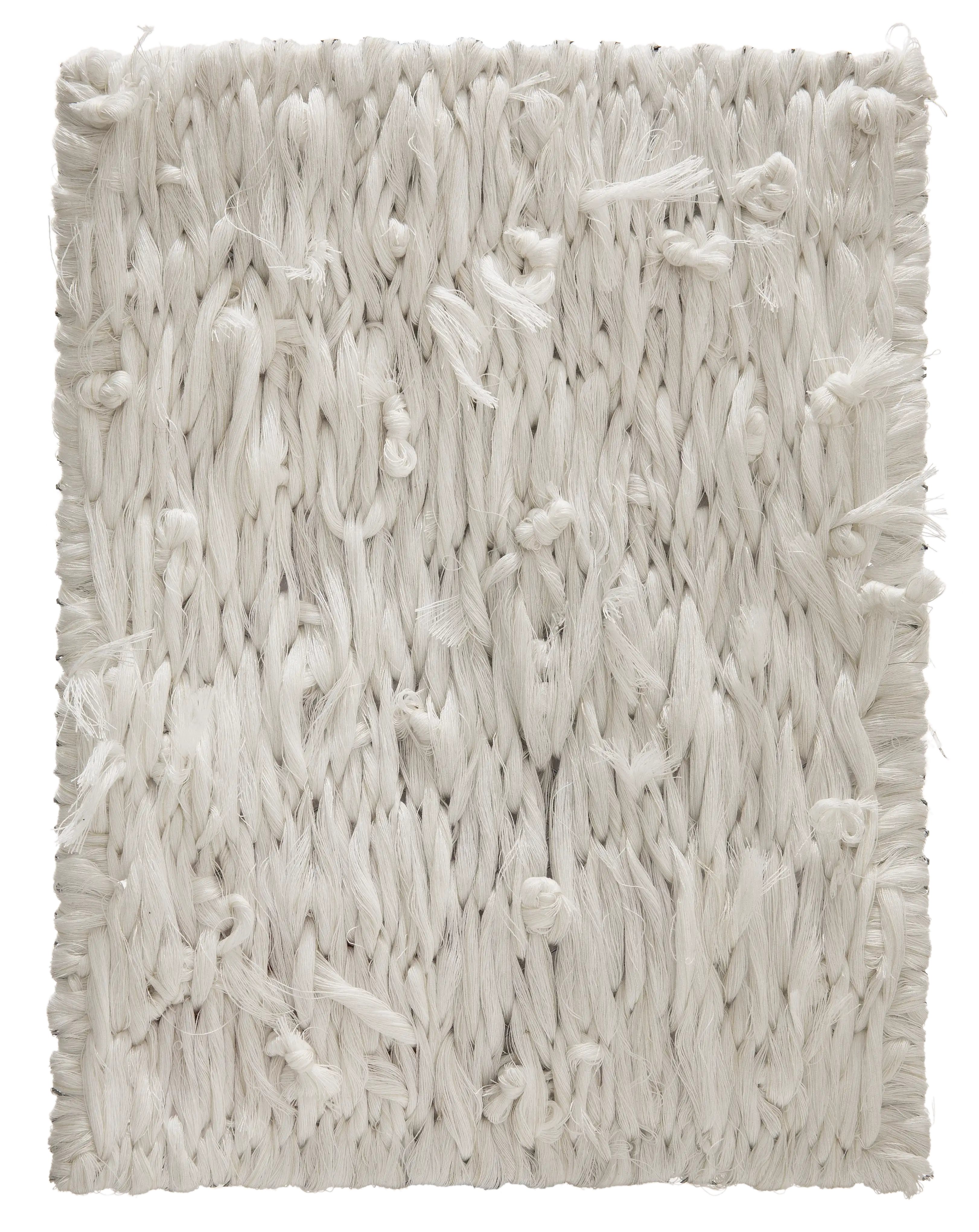
Tolentino draws this condition taut against her practice. The studio holds the hours of a working day. She is its laborer, bound to a self-imposed schedule that mirrors the temporal contract of ordinary compensated work. Her wage is split down the middle with the institution that sells it. And still the hours were not enough. The minimum, as it turns out, is not livable. It demanded more than the threadbare system was willing to count. Her toil accumulated in private performance, in repetition, in the sustained movement of a hand that knows itself only through contact with material.
This work morphs from a body of work to a body of days. If labor and value are argued to exist in this materiality, then this is proof. Something tangible is here, and it was made. And then to watch the institution decide. If numbers are needed, the numbers are here, and here is exactly what it accounts for. It was eight hours. And more. One week. And more. One month. And more.
—Taco Borja



About the Artist
About the Artists
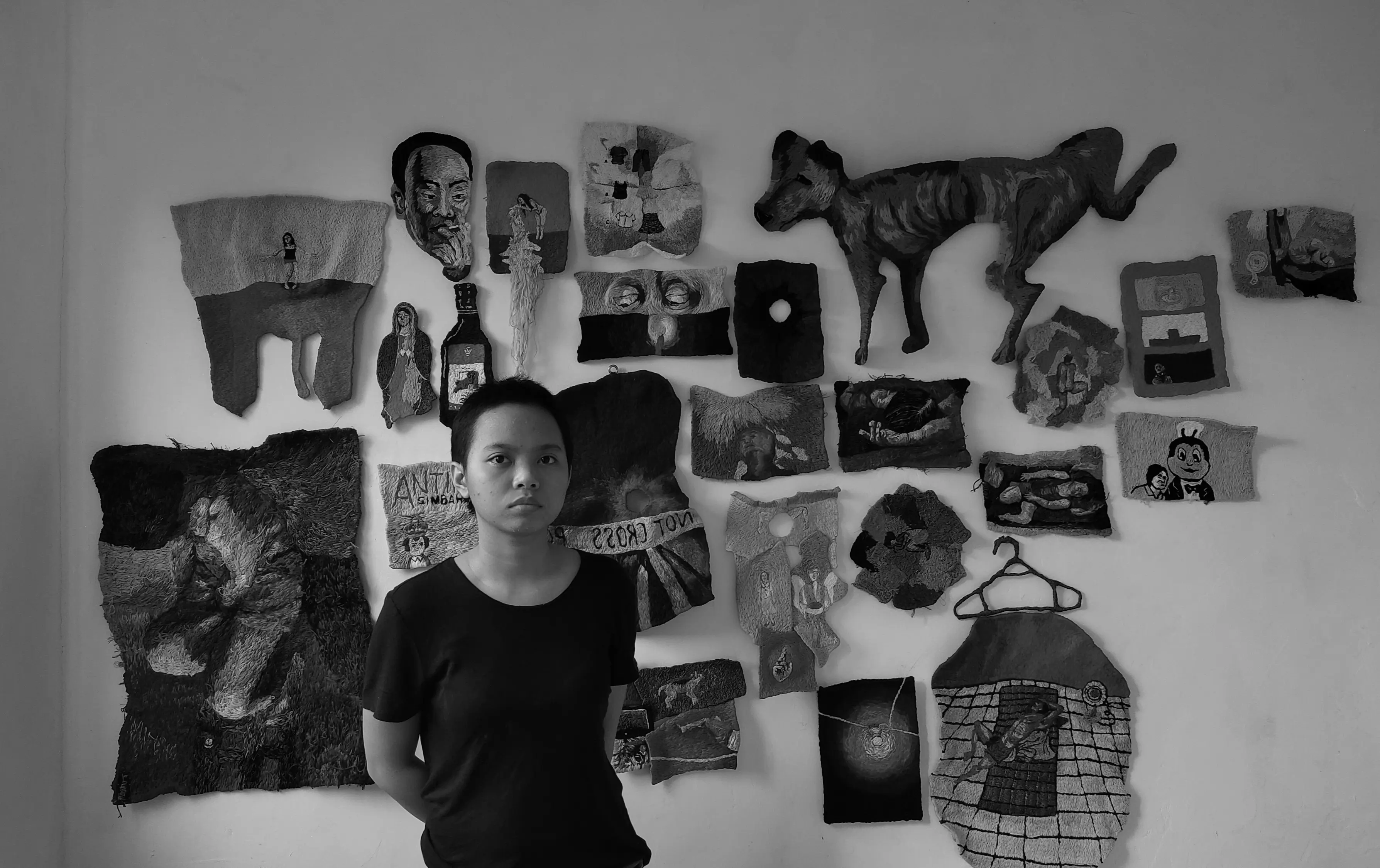
Maricar Tolentino (b. 1994) is a Luzon-based visual artist working primarily in thread and fabric. She works from lived experience, within domesticity, femininity, and the conditions of everyday life, drawing from urban Filipino life, from the home, from the self. Her work is a persistent questioning of her own convictions, with herself at the center as subject, as maker, as witness, unmasking and exposing only what is hers to expose. Tolentino earned her Certificate in Fine Arts from the University of the Philippines, Diliman. She has participated in Philippine art residencies and held group and solo exhibitions in Metro Manila since 2015.
Related Exhibitions
About the Artists
About the Artist
Maricar Tolentino (b. 1994) is a Luzon-based visual artist working primarily in thread and fabric. She works from lived experience, within domesticity, femininity, and the conditions of everyday life, drawing from urban Filipino life, from the home, from the self. Her work is a persistent questioning of her own convictions, with herself at the center as subject, as maker, as witness, unmasking and exposing only what is hers to expose. Tolentino earned her Certificate in Fine Arts from the University of the Philippines, Diliman. She has participated in Philippine art residencies and held group and solo exhibitions in Metro Manila since 2015.
Related Exhibitions

Share