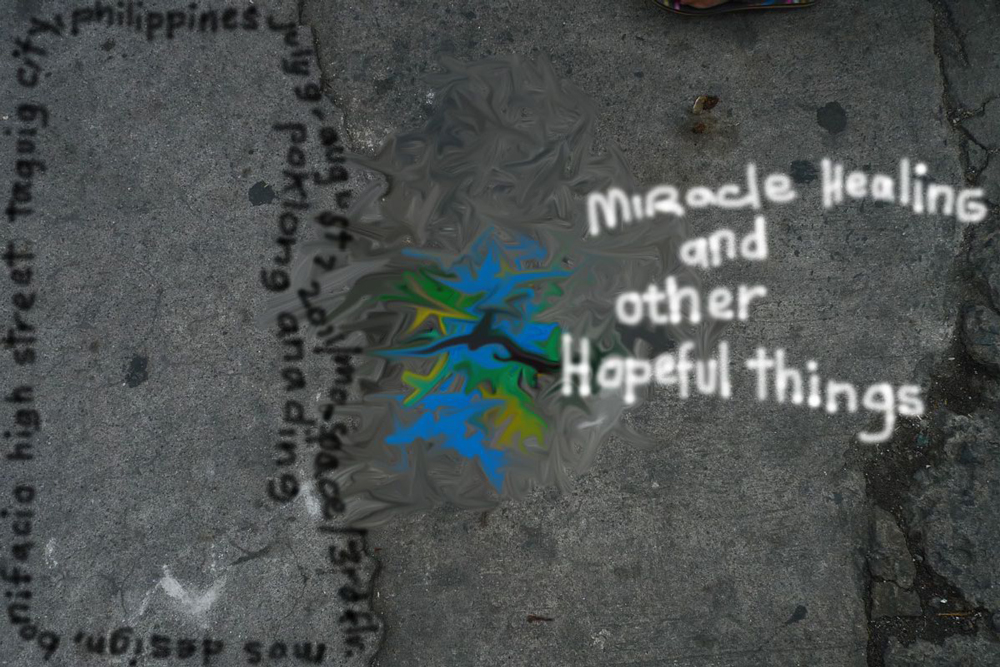
Miracle Healing and Other Hopeful Things
Poklong Anading
09 July – 07 August 2011
Curated by
09 July – 07 August 2011
Dreams from Discards
If there is a singularly strong thread running through Poklong Anading’s visual art practice,then perhaps it is his raw gut feel for constructing desire out of the banal and the discarded, for creating art from materials that would have normally been junked and passed over, out of sight and out of mind.
Anading’s basic aesthetic premise—the act of recreating rubbish and refuse into objects of value—is hardly new when viewed in the larger sweeping narratives of art history. But judging how his works have been received over the years, his is a message delivered at the right time, in the right place within the current context of Philippine art, and in the right manner. Anading has managed to maintain an open, almost maverick attitude towards introducing art forms and materials that have not been maximized of late in our context: he has, at various points in his work, made use of dust, concrete rubble, and rags for instance. In any case, it’s his boldness and willingness to take risks with the medium that is amply recognized and rewarded.
His latest show entitled Miracle Healing and Other Hopeful Things is a precise indicator of Anading’s level of comfort in yielding his chosen medium of expression. Here, the artist has created installation pieces from rags, metal rods, paint tins, and old tires—all discarded composites resurrected from complete collapse.
Alien playgrounds
Anading’s installations for the show engage both space and spectacle, producing not only new art pieces, but also a more novel experience of viewing and going through an exhibition. His large-scale works are constructed using colorful rags sewn around to cover the length of bendable steel rods, all attached to solid bases improvised from old paint cans and tires. Looking like soft, interconnected bollards randomly placed around the gallery, these forms exhibit a curious balance between the yielding softness of fabric and the tensile strength of iron rods, between flexibility and stability.
What is visually striking about this particular show is its reveling in the use of locally-abundant trapo or basahan: ubiquitous, whimsically colored round rags sold by street hawkers used by humble households, dusty jeepneys,and small stores all around the metropolis. As utilitarian objects, these rags created from throwaway cloth swatches serve a short-lived and straightforward purpose as cleaning implements destined to be discarded again. Anading went around the city, collecting and giving them a second chance at life: this time reviving them as art objects. Anading also fills the place with fabric confetti and old rags, strewn gaily and abundantly all over neutral concrete floor like fiesta décor—intentionally blurring the boundaries between the specific art object and decorative excess. This shower of confetti and similar elements contribute to the ephemeral and situational nature of the exhibition.
The power of Anading’s art is that it compels one to consider the exhibition as an entire experience, and not just as a collection of disparate objects on display. It is comfortably unnerving to go through this whimsical playground of familiar, yet strangely alien, forms. Some resemble rainbows spiraling into the sky or portals and strange connectors to some unknown dimension. Somehow, Anading’s sense of play makes it possible for the weary viewer to again take a childlike delight in the vividly mixed colors and forms, and to ask why is it that we have ever failed to wonder.
Personal progression
In terms of the artist's personal progression, the show underscores his steadily widening use of overtly discarded objects as a medium for art-making. Anading first focused on experimental video projects as an art student more than a decade back at the University of the Philippines, and increasingly explored more installation, painting, and concept-based works during his involvement with various alternative artist-run spaces of that time.
He started incorporating discarded rags as a source of visual materials into his installation works, notably during a landmark exhibition entitled Fallen Map (2008, Mag:net Gallery), where he filled an entire gallery with over 200 chunks of concrete rubble salvaged from a construction site and painted with abstract, jarring patterns and colors sourced from rags sewn together. The show clinched for Anading a place in the 2008 Ateneo Art Awards and a Bandung, Indonesia Common Room Residency grant, further cementing his reputation in the public eye. Anading also extended the use of rags as images for a series of light box installations, suspending and illuminating them as abstract, non-utilitarian objects.
But while the two previous series focused mainly on the visual patterns of rags as a source of imagery, the trajectory of Miracle Healing and Other Hopeful Things focuses on the qualities of rags as materials in themselves. In his “Fallen Map” series, Anading previously drew parallels between the process of painting (that he, as a formally-schooled artist, is exposed to) and the workers’ craft of collage involved in mass-producing these objects by machine and by hand, finding fascination in the abstraction of form. In this new series of works, Anading extends the parameters of what he can do using this medium,and further probes the relations between discarding, assembling and collecting mundane objects, accumulating the discarded and layering objects on the verge of crumbling apart. On a broader note, Anading’s continuing body of work continues to raise the existing bar of what Philippine contemporary art encompasses even higher. Distilling the aesthetic in the functional, his work re-presents these discards as a medium with intrinsic value, not as things that have merely outlived their utility. Intentionally and gaily grotesque, these pliant bollards mark the connections and intersections between artistic territories previously staked out and delineated. Perhaps this is why, in contrast to the connotations of crisis and unease in Fallen Map, Anading now seems to have intentionally titled this exhibit populated by ‘hopeful things’ on a note of optimism, risking faith in what has been previously thought of as impossible or irreversible. If having hope entails the willingness to explore, dare, and push one's aesthetic, conceptual, and political boundaries further, then by all means, let us keep the faith.
.jpg)

-02.jpg)
-01.jpg)
.jpg)
.jpg)
.jpg)
.jpg)
.jpg)


About the Artist
About the Artists
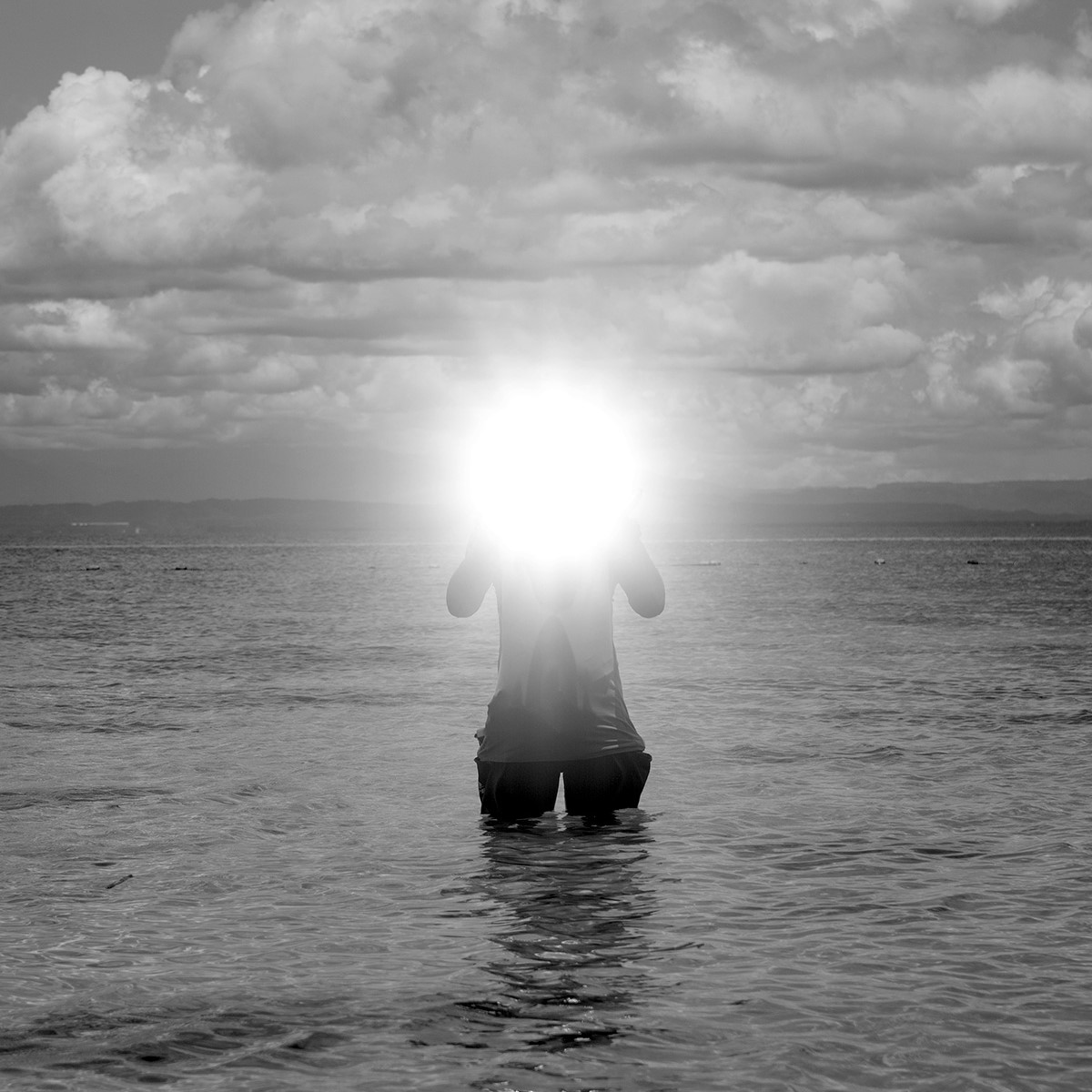
Poklong Anading (b. 1975, Manila, Philippines; lives and works in Manila) works with a wide range of mediums and is acclaimed for his pieces that investigate photography and travel. Fascinated with the process of creation and permutation, Anading explores different mediums to engage with a range of sociopolitical and environmental questions. Having begun his career as a painter, he is not driven by an overt agenda, but prefers to let his mind wander, thinking with and through his materials as they undergo their transformations. He frequently uses found objects and discarded materials that lead him to investigate notions of worth and value, and to explore what it means for art to exist inside and beyond capitalist production.
Anading has completed residencies with Big Sky Mind, Manila, Philippines (2003 to 2004), Common Room, Bandung, Indonesia (2008), Bangkok University Gallery, Thailand (2013), Selasar Sunaryo Art Space, Bandung, Indonesia (2013), Philippine Art Residency Program - Alliance Francaise de Manille in Cite Internationale des Arts, Paris, Centre Intermondes, La Rochelle in France (2014) and das weisse haus, Vienna Austria (2018). He had solo exhibitions in Galerie Zimmermann Kratochwill, Graz, Austria (2010 and 2012), Taro Nasu in Japan and Athr Gallery in Jeddah (2016), 1335MABINI in Manila, Philippines (2013, 2015 and 2017). He has been included in notable group exhibitions such as: Gwangju Biennial, South Korea (2002 and 2012), No Country: Contemporary Art for South and Southeast Asia, the first exhibition of the Guggenheim UBS Map Global Art Initiative in New York, Hong Kong and Singapore (2013 to 2014), 5th Asian Art Biennial: Artist Making Movement, National Taiwan Museum of Fine Arts, Taiwan (2015), The Shadow Never Lies, Minsheng Art Museum, Shanghai, Afterwork, Para Site, Hong Kong, China and in the Architecture Biennale for the 15th International Architecture Exhibition, Philippine Pavilion: Muhon: Traces of an Adolescent City at Palazzo Mora, Venice, Italy (2016), Constellations, Photographs in Dialogue, SFMOMA, California, USA (2021), Living Pictures: Photography in Southeast Asia at National Gallery Singapore (2022) and The Open World, Thailand Biennale (2023).
Related Exhibitions
About the Artists
About the Artist
Poklong Anading (b. 1975, Manila, Philippines; lives and works in Manila) works with a wide range of mediums and is acclaimed for his pieces that investigate photography and travel. Fascinated with the process of creation and permutation, Anading explores different mediums to engage with a range of sociopolitical and environmental questions. Having begun his career as a painter, he is not driven by an overt agenda, but prefers to let his mind wander, thinking with and through his materials as they undergo their transformations. He frequently uses found objects and discarded materials that lead him to investigate notions of worth and value, and to explore what it means for art to exist inside and beyond capitalist production.
Anading has completed residencies with Big Sky Mind, Manila, Philippines (2003 to 2004), Common Room, Bandung, Indonesia (2008), Bangkok University Gallery, Thailand (2013), Selasar Sunaryo Art Space, Bandung, Indonesia (2013), Philippine Art Residency Program - Alliance Francaise de Manille in Cite Internationale des Arts, Paris, Centre Intermondes, La Rochelle in France (2014) and das weisse haus, Vienna Austria (2018). He had solo exhibitions in Galerie Zimmermann Kratochwill, Graz, Austria (2010 and 2012), Taro Nasu in Japan and Athr Gallery in Jeddah (2016), 1335MABINI in Manila, Philippines (2013, 2015 and 2017). He has been included in notable group exhibitions such as: Gwangju Biennial, South Korea (2002 and 2012), No Country: Contemporary Art for South and Southeast Asia, the first exhibition of the Guggenheim UBS Map Global Art Initiative in New York, Hong Kong and Singapore (2013 to 2014), 5th Asian Art Biennial: Artist Making Movement, National Taiwan Museum of Fine Arts, Taiwan (2015), The Shadow Never Lies, Minsheng Art Museum, Shanghai, Afterwork, Para Site, Hong Kong, China and in the Architecture Biennale for the 15th International Architecture Exhibition, Philippine Pavilion: Muhon: Traces of an Adolescent City at Palazzo Mora, Venice, Italy (2016), Constellations, Photographs in Dialogue, SFMOMA, California, USA (2021), Living Pictures: Photography in Southeast Asia at National Gallery Singapore (2022) and The Open World, Thailand Biennale (2023).
Related Exhibitions

Share